

Class A Motorhome Rental in the USA

    Leave a number with WhatsApp / Telegram
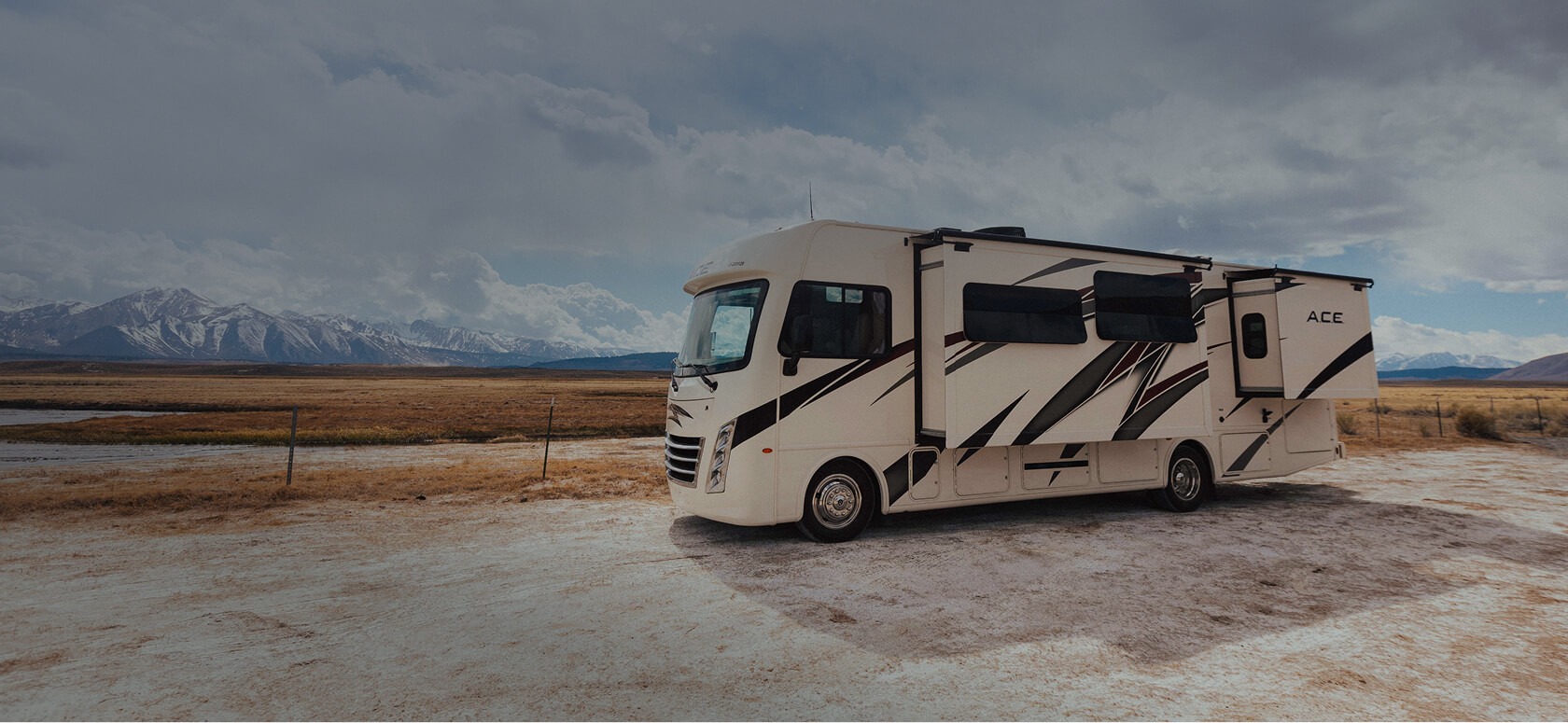
    A Class A motorhome is one of the largest self-propelled RV types available in the United States. It has a wide, bus-shaped body, a panoramic windscreen and a living area that begins directly behind the driver. Many models add one or more slide-outs at the campsite, creating more room around the lounge, kitchen or bedroom.

    For travelers who already know European motorhomes, the closest comparison is an A-class or fully integrated motorhome. The concept is familiar, but the American version is usually longer, wider and heavier, with larger living areas and more reliance on campsite hookups or an onboard generator. A European liner is often a closer comparison in scale, although the chassis, systems and interior layout can still be very different.

    Class A works well for longer road trips, families and groups that value living space. The trade-off is that the vehicle needs more careful route planning, larger campsites and a driver who is comfortable managing its length, height and rear overhang.

    Tell us your travel dates, pickup city, route and number of travelers. We will compare suitable Class A options and explain the full rental conditions before you book.

    Class A at a glance

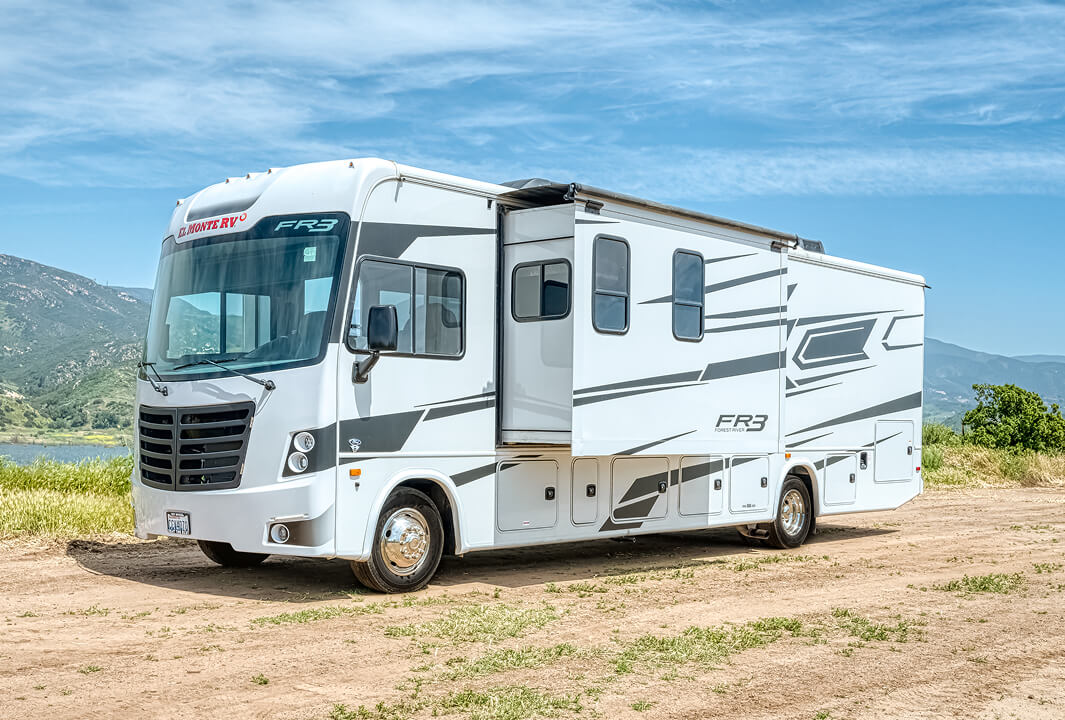
    Class A motorhome exterior

    Body

    A fully integrated, bus-shaped motorhome with a flat front and panoramic windscreen.
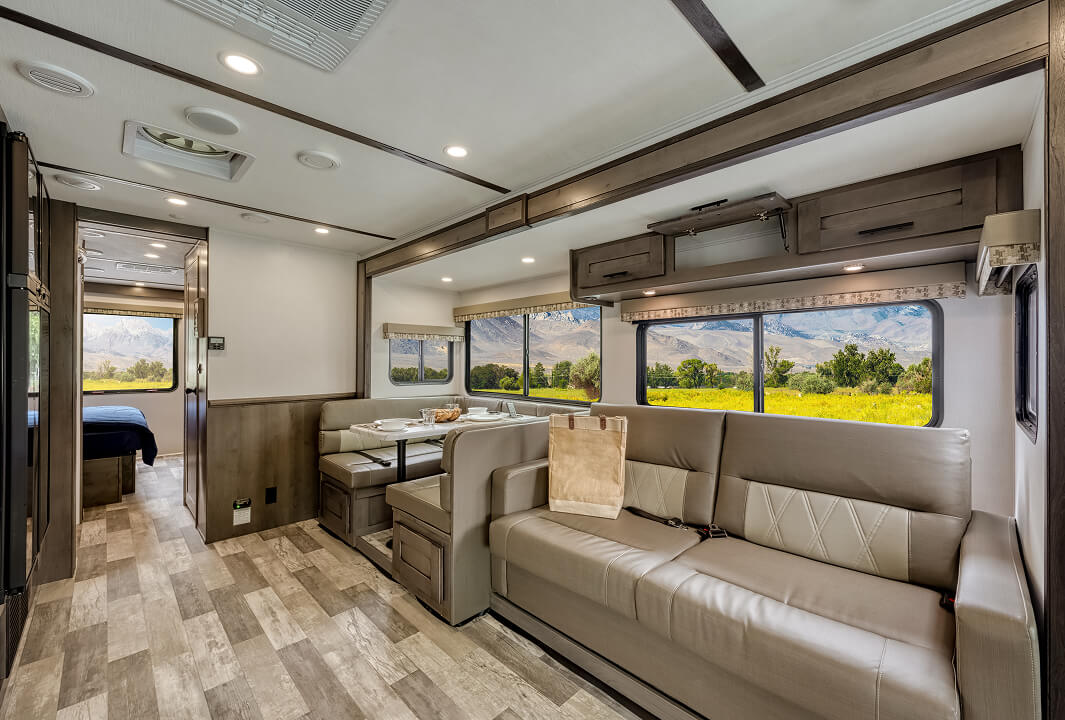
    Sleeping area inside a Class A motorhome

    Sleeping capacity

    Commonly four to six people in rental fleets, although the number of beds and the number of approved belted seats may differ.
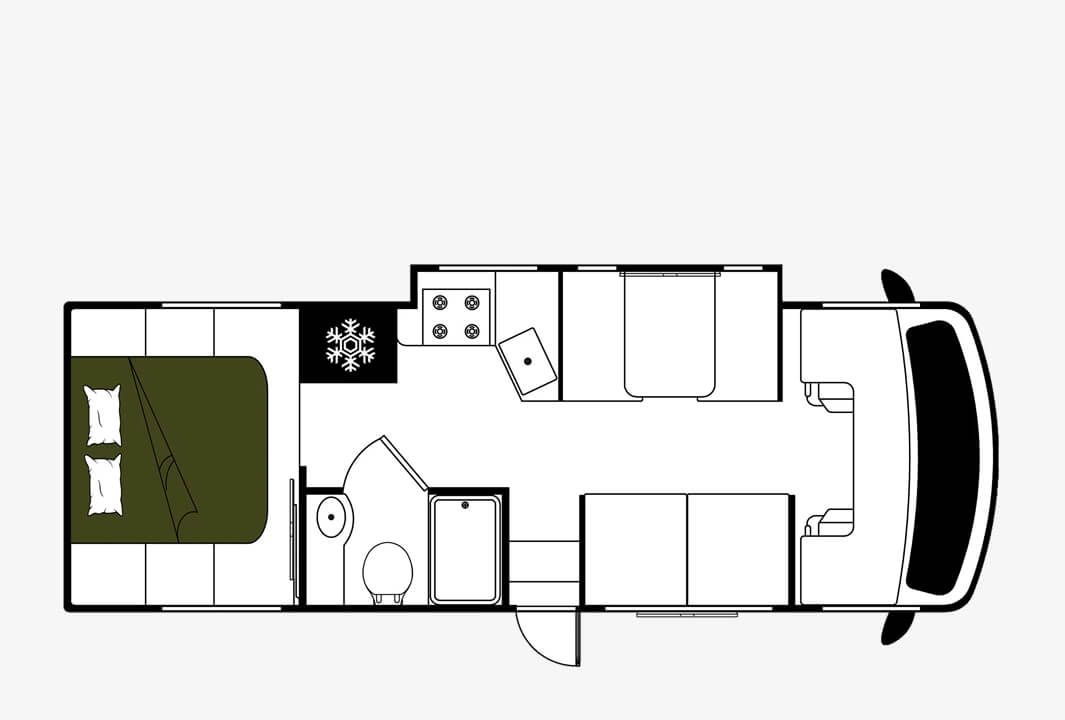
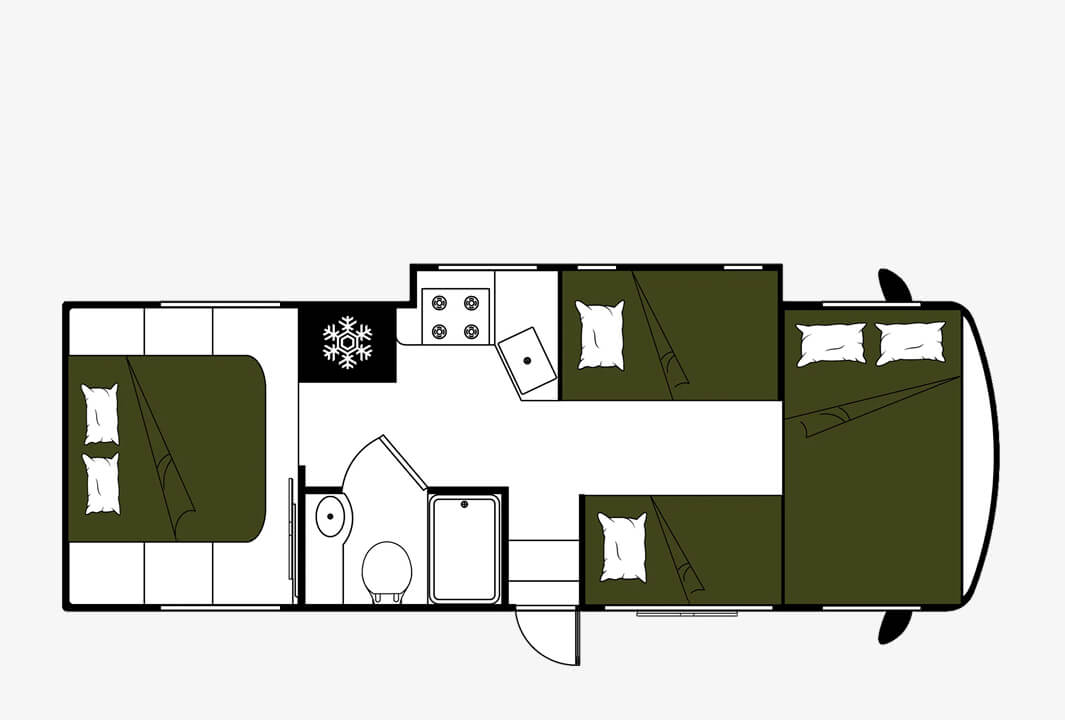
    Class A daytime floor plan

    Layout

    Front cab, lounge, kitchen, full bathroom and a rear sleeping area; slide-outs are common but not universal.

    Typical rental size

    Many mainstream rental examples are about 30 to 34 feet long, or roughly 9.1 to 10.4 meters. Larger private and specialty models can be considerably longer.

    Fuel

    Gasoline Class A motorhomes are common in mainstream rental fleets. Diesel pushers are usually more expensive and less widely available.

    Best fit

    Longer trips, families, groups and travelers who want more indoor space.

    Main limitation

    Access to city streets, scenic roads, bridges, tunnels and campsites depends on the exact vehicle dimensions.

    These are category-level guidelines, not a specification for every rental. Always plan around the exact model or vehicle class confirmed in your quote.

    What Americans mean by a Class A motorhome

    In the United States, Class A describes the motorhome’s construction and overall form. The cab and living body are designed as one integrated unit, rather than placing a separate coachbuilt body behind a van or truck cab. From the driver’s seat, the vehicle often feels closer to a small bus than to a large van.

    The front seats may swivel toward the living area when parked. Behind them, the floor plan can include a sofa, dinette, kitchen, bathroom and a private rear bedroom. Some family layouts add a drop-down bed above the cab, bunk beds or convertible sleeping areas.

    The useful question is not simply how many people the brochure says the motorhome sleeps. Ask how many adults can use the beds comfortably, how many approved seat belts the vehicle has and whether the floor plan still works when every bed is in use.

    The closest European equivalent

    European terminology changes by country and manufacturer, so a traveler may know a similar vehicle under several names:
    • A-class motorhome in the UK;
    • fully integrated or integrated motorhome in English-language European brochures;
    • Integrierter in German;
    • camping-car integral in French;
    • motorhome integrale in Italian;
    • liner for the largest premium European motorhomes.
    An American Class A and a European A-class share the integrated front, large windscreen and continuous living body. The similarity becomes weaker once you compare dimensions and systems.

    American Class A compared with a European integrated motorhome

    An American rental Class A is commonly wider and longer than the European integrated motorhomes many visitors have driven at home. It may use a heavy-duty gasoline chassis, a large fixed black-water tank and an onboard generator. Slide-outs are also much more central to the American layout: the interior may feel relatively narrow on the road and substantially larger once the walls are extended at the campsite.

    A European integrated motorhome is more likely to be designed around narrower roads, smaller pitches and strict weight limits. Some European models are deliberately designed around the 3,500 kg threshold used by standard car-licence frameworks, while luxury liners move into much heavier licence categories. By comparison, American Class A rentals can be large even when the rental company accepts a standard non-commercial licence.

    The closest visual comparison is therefore an A-class or integrated motorhome. The closest comparison in scale and living space may be a European liner. Neither is a perfect one-to-one match.

    Other European types and their US equivalents

    • A European alcove or overcab motorhome is generally closer to an American Class C.
    • A low-profile or semi-integrated motorhome is also closer to a compact Class C than to a Class A.
    • A panel van conversion or campervan is closest to an American Class B.
    • A large European liner may overlap with a Class A in comfort and weight, but it is still built for different roads, licences, campsites and service systems.

    If you tell us what you normally drive in Europe, the UK, Australia or New Zealand, we can translate that experience into a realistic US vehicle choice.

    What you get inside a Class A motorhome

    Cab and living area
    The panoramic front gives the driver a wide forward view. Side mirrors and cameras become the main tools for monitoring the rear because the living body blocks a conventional center mirror. When parked, swivel cab seats may become part of the lounge.

    Most rental layouts combine a sofa or dinette with storage above and below. A slide-out may move the seating area outward, but it can only be used when the vehicle is parked and there is enough clearance. Operating steps vary by model, so the pickup demonstration matters.
    Kitchen
    A Class A kitchen usually includes a refrigerator, cooktop, microwave and sink, with more worktop and storage than a smaller RV. The exact appliances depend on the model. Some equipment uses propane, some uses 120-volt electricity and some can work from more than one energy source.

    Kitchen equipment and tableware are not automatically included in every rental. They may be supplied as a paid kit, so check the quote before deciding what to pack or buy after pickup.
    Beds and privacy
    A private rear bed is common. Additional sleeping spaces may include a drop-down cab bed, sofa bed, convertible dinette or bunks. A stated capacity of six does not necessarily mean six equally comfortable adult beds. For a group of adults, bed dimensions and access are more useful than the headline berth count.
    Bathroom and holding tanks
    Most Class A rentals have an onboard toilet, shower and sink. The US system commonly uses a fixed black-water tank for toilet waste and a separate gray-water tank for sinks and the shower. This differs from the removable cassette toilet familiar to many European travelers.

    At a dump station or full-hookup campsite, waste leaves through a sewer hose. The handover should cover the valves, hose connection, tank indicators and return requirements. Never assume that campsite sewer service or final tank emptying is included in the rental price.
    Electricity, air conditioning and generator use
    American RVs use 120-volt systems. At a campsite, the motorhome connects to a compatible electrical pedestal. The onboard batteries normally power lights and low-demand 12-volt equipment, but conventional roof air conditioners and other heavy loads usually require shore power or the generator.

    Generator allowances and charges vary by supplier and booking. Some rentals include usage, while others charge by the hour or sell an unlimited-use option. Confirm the policy instead of treating the generator as free.

    Travelers bringing European appliances should check voltage and frequency compatibility. A plug adapter changes the shape of the plug; it does not convert 230 volts to 120 volts.

    Class A rental profiles you may see

    Rental companies often guarantee a vehicle category rather than an exact manufacturer, year or floor plan. These profiles make comparison easier.
    Mainstream family rental Class A
    This is usually a gasoline motorhome around 30 to 34 feet long. A current Mighty Class A listing from El Monte RV describes a vehicle for up to four adults and two children, with four beds and a V8 engine. The supplier also states that the actual vehicle collected may have a different configuration.

    This profile suits a family that wants a proper bedroom, full bathroom and more living space without moving into the largest Class A dimensions.
    Larger gasoline Class A
    Current Thor Hurricane models show how broad the category can be: the range extends from about 31 to 38 feet and lists sleeping capacities from five to seven, depending on floor plan. These are useful reference points, but a production model shown by a manufacturer is not proof that the same floor plan is available from a rental depot.

    This profile can work for a longer family trip or a group that needs more separation between sleeping areas. The extra length reduces the number of suitable campsites and roads, so the route must be checked before booking.
    Diesel pusher
    A diesel pusher places the engine at the rear and is usually positioned above mainstream gasoline rental models. It may provide a quieter cab, air suspension and more storage, but it is generally heavier, more expensive and harder to find in conventional fleets. Many diesel Class A rentals come from specialty companies or owner-managed platforms.

    Choose this type for a specific reason, such as a long premium trip or a required floor plan. Do not assume that diesel automatically makes the total trip cheaper.
    European liner as a reference point
    Travelers familiar with Morelo, Carthago, Concorde or similar European liners will recognize the heavy chassis, integrated cab and high level of living comfort. Current Morelo ranges demonstrate the scale: some models start around 5,600 kg, while larger liners move well beyond 10,000 kg.

    That experience is relevant, but it does not remove the need for a US handover. Electrical connections, fuel, propane, waste tanks, road signs, campsite terminology and insurance conditions all differ.

    Is a Class A the right motorhome for your trip?

    Choose a Class A when the interior space will improve the whole journey. It is particularly useful when travelers will spend several weeks on the road, need a separate bedroom, expect hot or wet weather, or want enough room for the group to sit inside comfortably.
    Class A motorhomes are also a popular choice for groups heading to Burning Man, with more room to live in during the event. You can book one through Great RV Trip; we will confirm that the rental company permits the trip and explain any event-specific terms before you reserve.

    A Class A may be a poor fit when most nights are in city centers, the route includes narrow mountain roads, the trip changes location every day, or the group is small enough to be comfortable in a Class C. A smaller vehicle can also open more national-park campsites and reduce the pressure of parking.

    Before choosing, compare the vehicle against the route rather than comparing photographs alone.

    Driving a Class A in the United States

    The driver’s main task is to manage space. A Class A needs wider turns, more stopping distance and more room behind the rear axle. The rear of the motorhome can swing outward in a tight turn, and branches or fuel-station canopies can be as important as lane width.

    For the first day:
    • record the exact height, width and length in both feet and meters;
    • adjust every mirror and test the rear and side cameras;
    • practice turns and reversing in an open area;
    • use a spotter outside the vehicle when reversing into a site;
    • agree on simple hand signals before parking;
    • keep the first drive short and avoid arriving at the campsite after dark.
    Navigation software can help, but it cannot replace posted restrictions. Entering the vehicle dimensions in an RV routing app is useful only when the data is correct and the driver still checks signs.
    National parks can have strict vehicle limits
    Wide US highways do not mean every scenic road accepts a Class A. Zion National Park, for example, currently applies length, width, height and weight limits to the Zion-Mt. Carmel Highway. A Class A that exceeds those limits can still use other entrances and camping areas, but it cannot transit the restricted road section.

    Glacier National Park prohibits vehicles longer than 21 feet or wider than 8 feet on the central section of Going-to-the-Sun Road. That rules out a Class A entirely on that section, so the motorhome must be parked elsewhere and the visit planned around park transport or alternative roads.

    Check each park road, tunnel, bridge and campground separately. Restrictions can change because of construction, weather or new safety rules.

    Driver's licences for international travelers

    There is no universal US rule that can be summarized as "European Category B is always enough." Driving rules are set by individual states, and rental companies also apply their own eligibility requirements.

    USAGov advises foreign visitors to check the requirements of every state they plan to drive through. Depending on the state and the language of the licence, a traveler may need an International Driving Permit together with the original national licence. The United States does not issue IDPs to foreign visitors, so obtain one in the country that issued your licence before departure.

    Before paying, confirm:
    • that the supplier accepts your national licence;
    • whether an IDP is required or recommended;
    • minimum driver age and any young-driver fee;
    • whether every additional driver must be registered;
    • whether the selected motorhome falls within the supplier’s licence rules;
    • whether your route crosses states with different requirements.
    An IDP is a translation document, not a replacement for the original licence. Carry both when one is required.

    Campsites and parking

    Book campsites using the motorhome’s full length, not the interior floor-plan name. Include accessories or anything mounted at the rear when the campground asks for total length.

    For an easier stay, look for:
    • a site that explicitly accepts the confirmed motorhome length;
    • a pull-through pitch when available;
    • enough width for slide-outs and the awning;
    • a compatible electrical connection;
    • water and sewer connections if you want full hookups;
    • clear arrival instructions for large vehicles.
    "Big rig friendly" is a useful starting label, but it does not replace the measurements. A campground may accept a 35-foot motorhome while its access road, trees or turning area remain uncomfortable for a first-time driver.
    Public campgrounds often have fewer large sites and limited hookups. Even when the campground accepts the motorhome, nearby scenic parking may not. For example, Bryce Canyon restricts vehicles over 23 feet from parking in the Bryce Amphitheater during shuttle hours.

    Routes that can work well with a Class A

    What determines the rental price

    Class A motorhome rental prices change with season, pickup city, trip length, route, event demand and vehicle availability. A daily rate alone does not show the real cost.

    Compare quotes using the same components:

    • Base rental rate and any minimum rental period
    • Included mileage and the cost of additional or unlimited mileage
    • Generator allowance
    • Damage protection, liability cover and deductible
    • Security deposit or card authorization
    • Preparation and cleaning fees
    • Kitchen, linen and personal kits
    • Additional drivers
    • Taxes and location-specific fees
    • One-way fee, delivery or relocation conditions
    • Toll processing
    • Pet, festival, northern-route or border surcharges
    • Fuel, propane and waste-tank return requirements
    Unlimited mileage is an optional product with some suppliers, not a standard Class A inclusion. The same applies to generator use, kitchen equipment, bedding and final cleaning.

    Great RV Trip can compare the full trip cost across available suppliers instead of presenting the lowest daily rate without the conditions attached to it.
    Fuel and daily operating cost
    Fuel is one of the largest variable costs on a Class A trip. A single miles-per-gallon figure is unreliable because consumption changes with the engine, vehicle weight, speed, elevation, wind, temperature, generator use and driving style.

    Build the fuel budget from the confirmed vehicle and route. Use the planned mileage, a conservative consumption assumption for that model and current fuel prices along the itinerary. Tank capacity helps plan fuel stops, but it does not show how much the complete trip will cost.

    Insurance and financial responsibility

    Insurance terminology and limits vary by rental company and state. A package may separate damage to the rented motorhome from liability for injury or damage to other people and property.

    Before booking, ask for a written explanation of:
    • the renter's maximum responsibility for covered vehicle damage;
    • third-party liability limits;
    • exclusions for the roof, underbody, tires, windscreen, awning and interior;
    • coverage on unpaved or restricted roads;
    • breakdown assistance and towing limits;
    • procedures after an accident or mechanical failure;
    • whether travel into Canada or Mexico is permitted;
    • the deposit amount, accepted card type and release process.
    Do not assume that a policy described as "full" covers every type of damage. The exclusions and deductible matter more than the marketing label.

    Winter travel and winterization

    In freezing conditions, a rental company may winterize the plumbing system to prevent damage. That can limit or prevent use of the sink, shower and toilet until the vehicle is properly de-winterized. The renter may also be responsible for re-winterizing the motorhome before returning it to a cold location.

    Policies depend on depot, dates, route and weather. Confirm the status of the water system before booking a winter trip, especially when collecting in a northern state and driving south.

    Class A pickup checklist

    Use the handover to learn the exact vehicle rather than relying on a generic online video.
    • Photograph every side, the roofline where visible and the interior before departure.
    • Record height, width, length and fuel type.
    • Count approved seat belts and confirm bed dimensions.
    • Test mirrors, cameras, lights, wipers and leveling controls.
    • Ask for a complete slide-out demonstration and the required sequence.
    • Connect shore power and start the generator during the handover.
    • Locate the electrical breakers, battery disconnect and emergency exits.
    • Learn how to fill fresh water and empty the gray and black tanks.
    • Confirm the propane shutoff and appliance ignition procedure.
    • Save roadside assistance and depot telephone numbers.
    • Review restricted roads, border rules and prohibited destinations.
    • Confirm mileage, generator, cleaning, refueling and tank-return conditions.
    • Plan the first fuel stop and first campsite before leaving the depot.

    Frequently Asked Questions

    Often yes, but the answer depends on the states in your route, the vehicle and the rental company. You may also need an IDP. Check the conditions before booking and carry the original national licence.

    Find the right Class A for your US trip

    Send us your dates, pickup and return cities, number of travelers and planned route. If you already drive a European motorhome, tell us its type, length and weight.

    We will use that experience as a reference, compare available US Class A options and explain the differences that matter for your journey.
    Contact us. We will answer the questions, help with the choice
    We will answer your questions and help you choose

    Contact us

    GREAT RV TRIP Inc.

    Address:
    2093 PHILADELPHIA PIKE #7170
    CLAYMONT, DELAWARE 19703, USA

    © GREAT RV TRIP, 2017–2026
    Motorhome travel agency
    Let's go on an adventure!
    Manage cookies

    We use cookies and similar technologies to improve your browsing experience, analyze site traffic and serve targeted advertisements.

    For more details, read our Privacy & Data Protection Policy and Cookies Policy.
    Accept All