




Motorhome travel
Motorhome travel
The discount is valid for bookings over 10 days
Motorhome rental
Leave your contacts so we can contact you
Route with Full Travel Support
We will create a personalized route tailored specifically to your wishes and interests. You’ll receive a detailed travel guide with descriptions of must-see attractions, up-to-date prices, and helpful tips. We’ll book your campsites in advance and mark convenient stopovers, so everything is planned for you.
Prefer spontaneous travel and making decisions on the go? We’ve got you covered with full support along the way. We’ll be in touch with you 24/7 to:
Find and book a great restaurant or tour along the route;
Help locate nearby service points, like water disposal or refueling stations;
Quickly adjust your route if you’re in the mood for new experiences.
With us, your journey will be easy, well-organized, and truly free.
Prefer spontaneous travel and making decisions on the go? We’ve got you covered with full support along the way. We’ll be in touch with you 24/7 to:
Find and book a great restaurant or tour along the route;
Help locate nearby service points, like water disposal or refueling stations;
Quickly adjust your route if you’re in the mood for new experiences.
With us, your journey will be easy, well-organized, and truly free.
In 2027
April 26 — May 2
April 26 — May 2
In 2026
April 27 — May 3
April 27 — May 3
Official tickets are available on the Quicket website
Tickets
~ $200 for a basic ticket
~ $40 for a campervan pass
~ $40 for a campervan pass
Prices
Quaggafontein Farm, Tankwa Karoo Desert, South Africa
Where
The event lasts one week and usually starts in the last week of April
When



What is AfrikaBurn
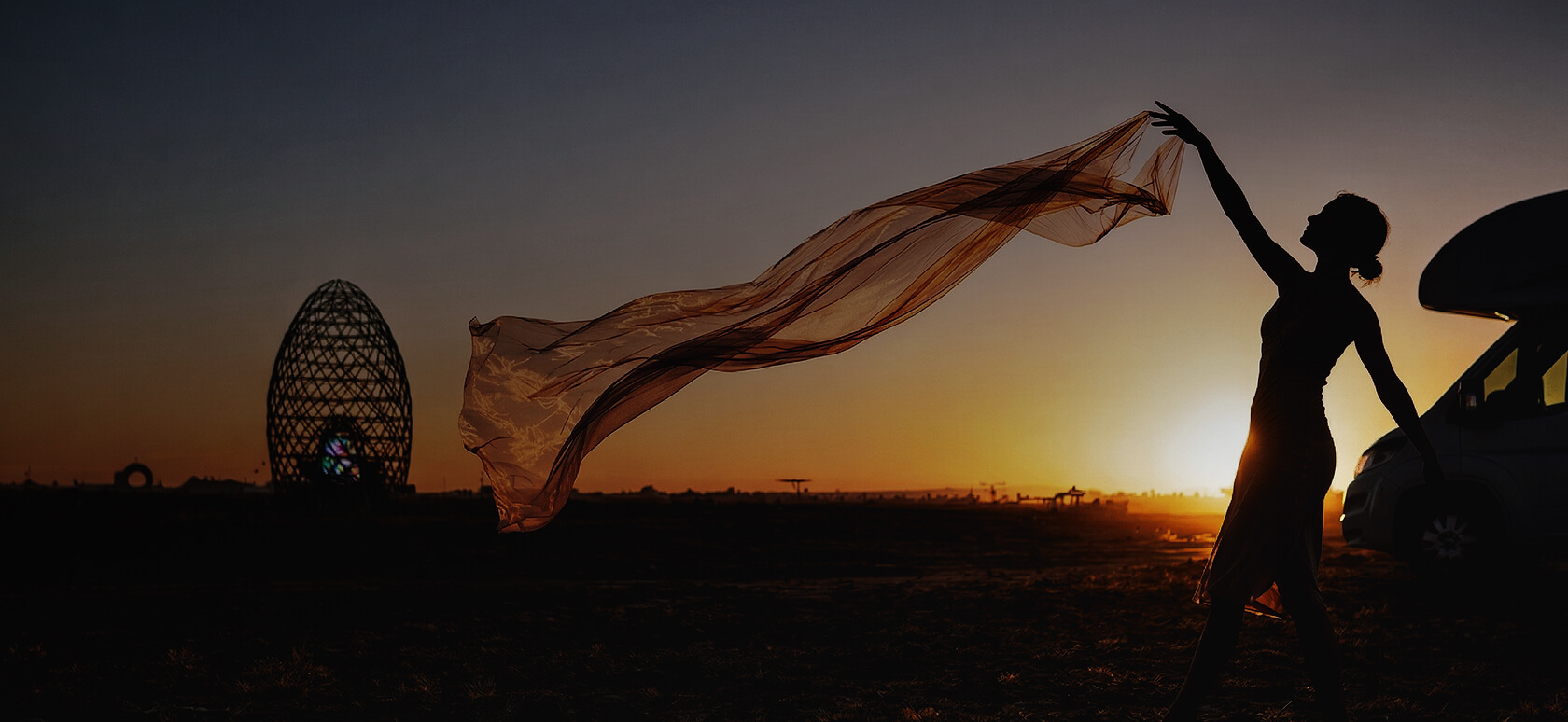
AfrikaBurn is a large-scale African art event inspired by the ideas of the Burning Man movement.
There are no commercial food vendors or sponsored advertising. The music program is created by the camps themselves — many bring well-known DJs and build their own dance floors. People gather in the semi-desert and build a temporary city from scratch — Tankwa Town. Participants create art installations, organize themed camps, and build unusual vehicles (mutant cars).
There are no commercial food vendors or sponsored advertising. The music program is created by the camps themselves — many bring well-known DJs and build their own dance floors. People gather in the semi-desert and build a temporary city from scratch — Tankwa Town. Participants create art installations, organize themed camps, and build unusual vehicles (mutant cars).
Dates, Location and Theme of the Year
The event takes place on a remote private area of Quaggafontein, on the border of the Northern Cape province, about 300 km north of Cape Town.
Each year, the organizers set a conceptual theme. For example, the theme for 2026 is "Prism". It defines the direction for costumes and the architecture of installations.
Each year, the organizers set a conceptual theme. For example, the theme for 2026 is "Prism". It defines the direction for costumes and the architecture of installations.
Event Philosophy
Life in Tankwa Town is built around 11 official principles. For your trip, it’s important to understand at least two of them:
- Radical self-reliance. You bring everything you need to survive.
- Environmental responsibility. After participants leave, the desert remains clean. You must take all your waste, ash, and used water with you.
Tickets, E-Toll and Entry Rules
Official tickets are sold on Quicket. It’s best to avoid third-party platforms like Viagogo — invalid tickets are common there. A basic ticket (Ground Up Ticket) costs around $200. The name on the ticket must exactly match your passport, otherwise you may be denied entry.
To enter the site with a campervan, you need to purchase an additional environmental pass (E-Toll) for $40. This fee helps maintain the dirt road.
AfrikaBurn gates operate on a strict schedule:
To enter the site with a campervan, you need to purchase an additional environmental pass (E-Toll) for $40. This fee helps maintain the dirt road.
AfrikaBurn gates operate on a strict schedule:
- On the first day, gates open at 09:00.
- On Friday, entry closes at 19:00. After that, vehicles are only allowed to exit.
Why You Should Go to AfrikaBurn in a Campervan
The climate in Tankwa Karoo is milder than at Burning Man in Nevada. During the day, temperatures are usually around +25…+30°C, making it easier to survive in a tent. However, there are no water refill services in Tankwa Karoo (no pump trucks), so you rely entirely on the water you bring with you.
Because of this, a campervan is less of a survival necessity than at Burning Man. Still, it solves many everyday challenges:
Because of this, a campervan is less of a survival necessity than at Burning Man. Still, it solves many everyday challenges:
-
 Comfort and Protection from HeatLiving in a campervan is far more comfortable than in a tent. Inside, you have everything you need: a bed, shower, toilet, stove, fridge, storage space, and often air conditioning. Daytime temperatures in Tankwa can reach up to +35°C.
 -
 Space for BicyclesA campervan allows you to bring bicycles — a must-have in Tankwa Karoo. The event area is large, and distances between art installations can be significant, making walking under the sun exhausting.
 -
 Space for CreativityYou can decorate your camper. Your vehicle can become part of the art environment and even an art piece itself. Just make sure the decor is easy to remove and doesn’t damage the rental vehicle.
 -
 Protection from the ElementsA campervan protects you and your belongings from the famous Tankwa dust, strong winds, and temperature swings. After hot days, nights in the African desert can be very cold, sometimes dropping to 0 °C.
Why Book a Campervan Through Us?

Consultations and on-trip support in English
We work with the best rental companies in South Africa, provide route plans, market overview, and select the best option for you
Our campervan rental prices are on average 5–20%
lower than booking directly with local providers
lower than booking directly with local providers
We know the harsh Tankwa Karoo road and AfrikaBurn specifics. We’ll help prepare your camper for desert conditions and avoid costly dust-related penalties
Consultations and on-trip support in English
We work with the best rental companies in South Africa, provide route plans,
market overview, and select the best option for you
market overview, and select the best option for you
Our campervan rental prices are on average 5–20% lower than booking directly with local providers
We know the harsh Tankwa Karoo road and AfrikaBurn specifics. We’ll help prepare your camper for desert conditions and avoid costly dust-related penalties
Which Campervan is Best for Tankwa Karoo
The road to the location includes 110 km of gravel on the R355. Because of this, rental vehicles are divided into two types.
Classic Motorhomes
The main limitation of classic motorhomes is low ground clearance and suspension designed for asphalt. Most companies do not allow driving them on gravel roads. If the vehicle breaks down off-road, insurance becomes invalid.
To drive a motorhome on the R355, you’ll need written permission from the rental company and an upgraded insurance plan.
To drive a motorhome on the R355, you’ll need written permission from the rental company and an upgraded insurance plan.
Typical models offer a spacious interior based on light vans. Inside, you can stand upright, sleep on large beds, and use a full kitchen and bathroom with a hot shower.
4x4 Off-Road Campers
A great option for dirt roads. Rental companies build these campers on 4x4 pickup bases (Toyota Hilux, Ford Ranger, Nissan Navara). They feature high ground clearance, reinforced suspension, and all-terrain tires.
➕ Pros: companies allow driving on gravel roads, including the R355. You’ll have a setup with a fridge, gas stove, and rooftop tent.
➖ Cons: less interior space. Cooking is done outside under an awning, and the shower and toilet are usually portable.
Overview of Main Camper Rental Companies in South Africa
For a trip to Tankwa Karoo, it’s best to choose companies with reliable vehicles and clear insurance policies.
-
 Maui & Britz
(THRSA Group)Companies from one of the largest rental holdings in South Africa, with the biggest fleet of campervans. Britz offers solid 4×4 equipped campers. Maui focuses on comfortable motorhomes (models M4B and M6B). The standard deposit can reach up to $ 3000, so it's important to choose the right insurance to cover it. -
 Bobo CampersSpecialize in vehicles from the Discoverer series. For paved roads, they offer classic motorhomes, while for off-road conditions they provide models like Discoverer FunX2. Their vehicles are well adapted to local road conditions.
 -
 Avis SafariOffers 4×4 vehicles designed for safari, with strong durability for gravel roads. During the event, they provide a special pricing plan (AfrikaBurn Special Rate) and often require a minimum rental period of five days.
- If you need a durable 4×4 for gravel roads — consider Britz 4×4 Equipped or Avis Safari
- If you’ve arranged permission to take a motorhome off-road and want more interior space — Maui or Bobo Campers are a good fit
Conclusion
Which City to Start Your Trip in South Africa: Logistics and Costs
Distances and road conditions help you plan your trip. Choose your starting city based on your travel plans.
-
 Cape Town (Best Overall Option)Cape Town is the main starting point for AfrikaBurn. The distance from the city’s industrial areas to the farm is about 300 km. The route follows the N1 highway toward Paarl, then continues on the R46 through Bainskloof Pass to Ceres, where the asphalt ends.
Route: Cape Town — Quaggafontein
Most rental companies are based in Cape Town. Before departure, you can buy everything you need. Groceries are convenient to get at Makro or Checkers. Water containers (20–25L with taps) can be found at Agrimark or Safari Centre. -
 Johannesburg (For Road Trips)Rental depots in Johannesburg are usually located near
O.R. Tambo International Airport
The distance from here to Tankwa Karoo exceeds 1300 km. This option is chosen by travelers who combine AfrikaBurn with a larger road trip across the country. Many rental companies in South Africa offer unlimited mileage for rentals of 5+ days.
The drive south takes at least 2−3 days, with additional costs for fuel and toll roads.
Benefits of Booking with Us
The campervan fleet in South Africa is much smaller than in the US. That’s why we recommend booking around 1.5 years in advance.
By 8−9 months before the event (by late summer), everything is usually sold out. Finding an available camper shortly before the start is almost impossible. We work directly with leading South African operators: Maui, Britz, Bobo Campers, Avis Safari, and Happy Campers.
We can secure vehicles even when company websites show "Sold out". You get partner discounts, early booking rates (Early Bird), and long-term rental discounts (5−15% for trips longer than 50 days).
By 8−9 months before the event (by late summer), everything is usually sold out. Finding an available camper shortly before the start is almost impossible. We work directly with leading South African operators: Maui, Britz, Bobo Campers, Avis Safari, and Happy Campers.
We can secure vehicles even when company websites show "Sold out". You get partner discounts, early booking rates (Early Bird), and long-term rental discounts (5−15% for trips longer than 50 days).
South African rental agreements often include hidden fees. We calculate the full cost in advance and clearly show all charges:
We also help you choose an insurance package that officially allows driving on the R355 route.
- Location Fee — around $ 13
- After Hours Surcharge (pickup outside business hours) — around $ 30
- Traffic fine processing fee — around $ 80
We also help you choose an insurance package that officially allows driving on the R355 route.
Transparent Contracts and Insurance
Plans change.
We track cancelled bookings and secure newly available vehicles, giving you access to hard-to-find campervans.
We track cancelled bookings and secure newly available vehicles, giving you access to hard-to-find campervans.
Cancelled Booking Pickup


Deposits, Deductibles and Extended Insurance
Insurance in South Africa has its nuances. Choosing the right plan is essential to avoid unnecessary costs in case of damage.
Why Basic Insurance Isn’t Always Enough
With the basic plan (Standard Liability), the rental company places a security deposit on your card. This is usually a large amount — around $ 3,000-$ 3,500. Within this amount, you are responsible for covering any damage.
Basic insurance often does not cover broken glass, tire damage, or scratches to the underbody. On gravel roads, the risk of damaging a tire with stones is quite high.
Basic insurance often does not cover broken glass, tire damage, or scratches to the underbody. On gravel roads, the risk of damaging a tire with stones is quite high.
Super Cover Package
Extended insurance (Super Cover or LLR2) reduces your financial liability to zero, while lowering the deposit to a more manageable $ 500-$ 1,000.
This package typically includes tire and windshield replacement and protects you from major expenses, even in serious situations like a rollover. On dirt roads, vehicles can lose traction, so this kind of coverage is highly recommended.
This package typically includes tire and windshield replacement and protects you from major expenses, even in serious situations like a rollover. On dirt roads, vehicles can lose traction, so this kind of coverage is highly recommended.
Special Event Surcharge
Due to the specific conditions of the route, rental companies significantly increase prices during the event period. Similar to Burning Man, rental costs can be 2–3 times higher than usual dates.
They may also set a minimum rental period of five days. If the driver is between 23 and 25 years old, an additional one-time fee of around $80 may apply.
They may also set a minimum rental period of five days. If the driver is between 23 and 25 years old, an additional one-time fee of around $80 may apply.
Booking, Documents and Payment
The earlier you choose your vehicle, the better the price will be.
Payment Terms
To secure the vehicle, you pay a deposit. The remaining balance is due 70 days before the trip.
When picking up the vehicle at the depot, you leave a refundable security deposit (the amount depends on the insurance plan). The deposit must be paid with a bank card in the name of the main driver.
When picking up the vehicle at the depot, you leave a refundable security deposit (the amount depends on the insurance plan). The deposit must be paid with a bank card in the name of the main driver.
Driver’s License and Left-Hand Traffic
In South Africa, traffic is left-hand, and the steering wheel is on the right. Rental companies and police will check your documents.
You will need an International Driving Permit (IDP) if your national license is not in English. Be especially careful when overtaking, taking into account the size of the campervan.
You will need an International Driving Permit (IDP) if your national license is not in English. Be especially careful when overtaking, taking into account the size of the campervan.
R355 Road: How to Protect Your Tires and Campervan
The R355 connects the towns of Ceres and Calvinia. Organizers advise not to rely on GPS navigation, as it often leads drivers onto dead-end farm roads. Follow road signs instead.
Fuel and Gas Stations
There are no fuel stations along the 110 km gravel section or in Tankwa Town itself. Driving a heavy campervan on dirt significantly increases fuel consumption. Extra petrol or diesel may also be needed to run a generator.
Make sure to fill up your tank completely in Ceres or at the Tankwa Padstal station before heading onto the gravel road.
Make sure to fill up your tank completely in Ceres or at the Tankwa Padstal station before heading onto the gravel road.
Slate and Gravel
Local stones (shale) are sharp. When hitting them, tires often get sidewall damage (sidewall blowouts). A simple repair kit won’t help — the tire usually needs full replacement.
The road also has "corrugations" — wave-like ridges caused by trucks. Vibrations from these can loosen interior fittings in classic motorhomes.
The road also has "corrugations" — wave-like ridges caused by trucks. Vibrations from these can loosen interior fittings in classic motorhomes.
Speed and Tire Pressure
The key rule on the R355 is: don’t rush. The official speed limit is 70 km/h, though rental companies sometimes allow up to 80 km/h. For campervans, a comfortable speed is 50−60 km/h.
Some people suggest lowering tire pressure for a smoother ride. In reality, low pressure makes the sidewalls more vulnerable to sharp stones. Reduce pressure only slightly, following the recommendations for a fully loaded vehicle.
It’s best to drive early in the morning, before the tires heat up.
Some people suggest lowering tire pressure for a smoother ride. In reality, low pressure makes the sidewalls more vulnerable to sharp stones. Reduce pressure only slightly, following the recommendations for a fully loaded vehicle.
It’s best to drive early in the morning, before the tires heat up.
Spare Tires
Make sure to take two full-size spare wheels. Check that you have:
Avoid overtaking in dust clouds. When passing oncoming vehicles, slow down to prevent stones from hitting your windshield.
- a heavy-duty jack
- a wheel wrench
- a tubeless tire repair kit
- a tire sealant spray
Avoid overtaking in dust clouds. When passing oncoming vehicles, slow down to prevent stones from hitting your windshield.
Preparing Your Campervan for Dust (Before Entry)
Dust in Tankwa Karoo is extremely fine and alkaline. It easily gets inside the vehicle.
Proper interior preparation will help you avoid extra cleaning charges.
Proper interior preparation will help you avoid extra cleaning charges.
Interior Protection
Prepare the vehicle while still on asphalt. Seal window edges, roof vents, and door gaps with masking tape. It’s best to use masking tape in the sun — duct tape can stick too aggressively and leave marks on the paint.
Cover the floor with cardboard or thick plastic. Use old sheets to cover seats and beds — they will collect the dust, and you can simply throw them away after the event.
Cover the floor with cardboard or thick plastic. Use old sheets to cover seats and beds — they will collect the dust, and you can simply throw them away after the event.
Positive Air Pressure
Keep all windows closed when driving on gravel. Turn on the air conditioning at maximum airflow in recirculation mode. This creates slight positive pressure inside the cabin, pushing air outward through small gaps and preventing dust from entering.
Off-Grid Living in Tankwa Town
Tankwa Town operates without commercial infrastructure. Your comfort depends entirely on how well you manage your resources.
Where to Park Your Campervan
The area is divided into registered Theme Camps and open camping zones. If you’re traveling independently, choose a spot in the open camping area.
Pay attention to the sound map: avoid parking close to the "Loud Zone", as music there plays around the clock and can disturb your rest.
Pay attention to the sound map: avoid parking close to the "Loud Zone", as music there plays around the clock and can disturb your rest.
Ventilation and Awning Rules
Park your camper facing outward so you can leave quickly if needed. Consider wind direction (usually northwest or southeast).
Never leave the awning open unattended. Strong winds can easily damage the aluminum frame. Basic insurance does not cover this, so retract the awning at the first sign of wind.
Never leave the awning open unattended. Strong winds can easily damage the aluminum frame. Basic insurance does not cover this, so retract the awning at the first sign of wind.
Climate Protection
Tankwa Karoo has hot days (up to +30…+35°C) and cold nights. After sunset, temperatures drop quickly. This is why a culture of campfires has formed — each camp typically has its own fire where people gather at night.
During the day, large shade structures are used to protect from the sun. Camps often set up big tents over their areas, and in some cases, you can even park your campervan underneath.
During the day, large shade structures are used to protect from the sun. Camps often set up big tents over their areas, and in some cases, you can even park your campervan underneath.
Waste Management
The "Leave No Trace" principle means you must take all your waste with you. Storing trash for a week in the heat can be challenging.
Sort your waste from the start: plastic, burnable materials, and organic waste. Store organic waste in double zip-lock bags to prevent odors inside the vehicle.
You can dispose of accumulated waste at campsite containers or at municipal landfills on the way back to Cape Town.
Sort your waste from the start: plastic, burnable materials, and organic waste. Store organic waste in double zip-lock bags to prevent odors inside the vehicle.
You can dispose of accumulated waste at campsite containers or at municipal landfills on the way back to Cape Town.
Water Management: Grey and Black Water
Event rules recommend using no more than 5 liters of water per person per day. There are no water trucks on site (unlike Burning Man). You can pre-order clean water delivery to your camp from official suppliers, but you’ll need to remove wastewater yourself — there are no septic pumping services.
- Grey water (from showers or washing with biodegradable soap) can be lightly dispersed onto the road to reduce dust — just avoid creating puddles. Water with food residue (after washing dishes) must not be poured out, as it attracts insects. Collect it in containers and take it with you.
- Black water is waste from the toilet with chemical additives. There are no septic services on-site. Dumping it on the ground or into public toilets is strictly prohibited, as it disrupts composting systems. Campervan toilet tanks (15–20 liters) fill up quickly, so it’s best to use them mainly at night. You can empty a full cassette at a municipal campsite on the way back to Cape Town.
Electricity and Generators
Unlike American RVs, South African campervans usually don’t come with built-in generators. Batteries and fridges are powered by rooftop solar panels. To keep them working efficiently, clean the panels from dust daily.
If you need a generator, you’ll have to bring a portable petrol model. Generators are only allowed to run during specific hours: "quiet hours" are from 07:00 to 11:00 in the morning (Monday to Thursday). Outside of these hours, noise levels in the camp must not exceed 95 dB (monitored by the Sound Wranglers team).
Store fuel containers in the shade at least 5 meters away from open flames. Fuel supplies over 90 kg must be handed over to the city’s fire safety team for storage.
If you need a generator, you’ll have to bring a portable petrol model. Generators are only allowed to run during specific hours: "quiet hours" are from 07:00 to 11:00 in the morning (Monday to Thursday). Outside of these hours, noise levels in the camp must not exceed 95 dB (monitored by the Sound Wranglers team).
Store fuel containers in the shade at least 5 meters away from open flames. Fuel supplies over 90 kg must be handed over to the city’s fire safety team for storage.
Connection and Internet
In Tankwa Karoo, you’ll be without internet and mobile coverage, as the location is far from cell towers.
No Mobile Network
There is no signal on the Quaggafontein site. Occasionally, around midday on higher dunes, MTN users may catch a weak EDGE signal — just enough to send SMS.
Messaging apps and calls won’t work. Download all tickets and offline maps to your phone while still in Cape Town.
Messaging apps and calls won’t work. Download all tickets and offline maps to your phone while still in Cape Town.
Starlink Situation in South Africa
Using Starlink dishes from neighboring countries won’t work — SpaceX blocks such devices in roaming. Local regulations also restrict the use of this equipment.
For emergency communication with medical or safety services, contact the rangers at the orange containers (JOC) — they have satellite phones.
For emergency communication with medical or safety services, contact the rangers at the orange containers (JOC) — they have satellite phones.
Cleaning and Returning Your Campervan: After the Event
The cleaning process directly affects whether you get your deposit back.
Rental Requirements and Penalties
Rental companies expect the vehicle to be returned in reasonable condition. If the camper is too dirty, staff won’t be able to inspect the body, and you may be charged a cleaning fee of around $ 80.
They may also charge about $ 185 if there is a smell of tobacco inside the vehicle.
They may also charge about $ 185 if there is a smell of tobacco inside the vehicle.
How to Clean a Campervan Properly
Tankwa dust is alkaline. When mixed with regular water and car shampoo, it can harden and stick to plastic surfaces.
To remove it, use a vinegar solution (1 part vinegar to 4 parts water). Wipe down plastic panels, the kitchen area, and floors inside the vehicle with this mixture.
For the exterior, you can wash off the dust at self-service car washes in Ceres on your way back.
To remove it, use a vinegar solution (1 part vinegar to 4 parts water). Wipe down plastic panels, the kitchen area, and floors inside the vehicle with this mixture.
For the exterior, you can wash off the dust at self-service car washes in Ceres on your way back.
Frequently Asked Questions
No. There is no commercial activity in Tankwa Town. The only thing you can buy on-site is ice.
Bulk shopping is best done in Cape Town (Makro, Checkers). Water containers (20−25L with taps) are available at Safari Centre or Agrimark. The last stop for fresh meat and fuel is in Ceres.
Getting around is much easier by bike. You can pre-book a cruiser with wide tires through the Pedals for Peace project on Quicket. After the event, you return the bike, and the funds go toward providing transport in rural areas of South Africa.
Personal motorized petrol vehicles for recreation are not allowed. The speed limit in the city is 10 km/h. Electric bikes (e-bikes) up to 400W are permitted. Custom vehicles must be registered with the Mutant Vehicles Department (DMV).
Yes. Children under 14 can enter for free with parental consent. Teenagers aged 14–17 must be accompanied by a guardian over 28 years old.
Yes. Many travelers rent a 4×4 camper and combine the event with a longer safari trip across Africa. Rental companies allow cross-border travel, but you must arrange written permission in advance and extend your insurance coverage.
Useful Information
For more details on survival and preparation, see the official AfrikaBurn survival guide.
Found a Better Price?
Send us your quote. We’ll review the contract for hidden fees (Location Fee, After Hours), arrange proper insurance for the R355 route, and give you an honest breakdown of the pros and cons of the selected vehicle.
Other Events for Campervan Trips
Campervans also add comfort at other large-scale events

E-mail: info@greatrvtrip.com




Contact us. We will answer the questions, help with the choice
We will answer your questions and help you choose
Contact us
GREAT RV TRIP Inc.
Address:
2093 PHILADELPHIA PIKE #7170
CLAYMONT, DELAWARE 19703, USA
© GREAT RV TRIP, 2017–2026
Motorhome travel agency
Let's go on an adventure!
Address:
2093 PHILADELPHIA PIKE #7170
CLAYMONT, DELAWARE 19703, USA
© GREAT RV TRIP, 2017–2026
Motorhome travel agency
Let's go on an adventure!
Manage cookies
We use cookies and similar technologies to improve your browsing experience, analyze site traffic and serve targeted advertisements.
For more details, read our Privacy & Data Protection Policy and Cookies Policy.
We use cookies and similar technologies to improve your browsing experience, analyze site traffic and serve targeted advertisements.
For more details, read our Privacy & Data Protection Policy and Cookies Policy.