




Motorhome travel
Motorhome travel
The discount is valid for bookings over 10 days
Motorhome rental
Leave your contacts so we can contact you
Route with Full Travel Support
We will create a personalized route tailored specifically to your wishes and interests. You’ll receive a detailed travel guide with descriptions of must-see attractions, up-to-date prices, and helpful tips. We’ll book your campsites in advance and mark convenient stopovers, so everything is planned for you.
Prefer spontaneous travel and making decisions on the go? We’ve got you covered with full support along the way. We’ll be in touch with you 24/7 to:
Find and book a great restaurant or tour along the route;
Help locate nearby service points, like water disposal or refueling stations;
Quickly adjust your route if you’re in the mood for new experiences.
With us, your journey will be easy, well-organized, and truly free.
Prefer spontaneous travel and making decisions on the go? We’ve got you covered with full support along the way. We’ll be in touch with you 24/7 to:
Find and book a great restaurant or tour along the route;
Help locate nearby service points, like water disposal or refueling stations;
Quickly adjust your route if you’re in the mood for new experiences.
With us, your journey will be easy, well-organized, and truly free.
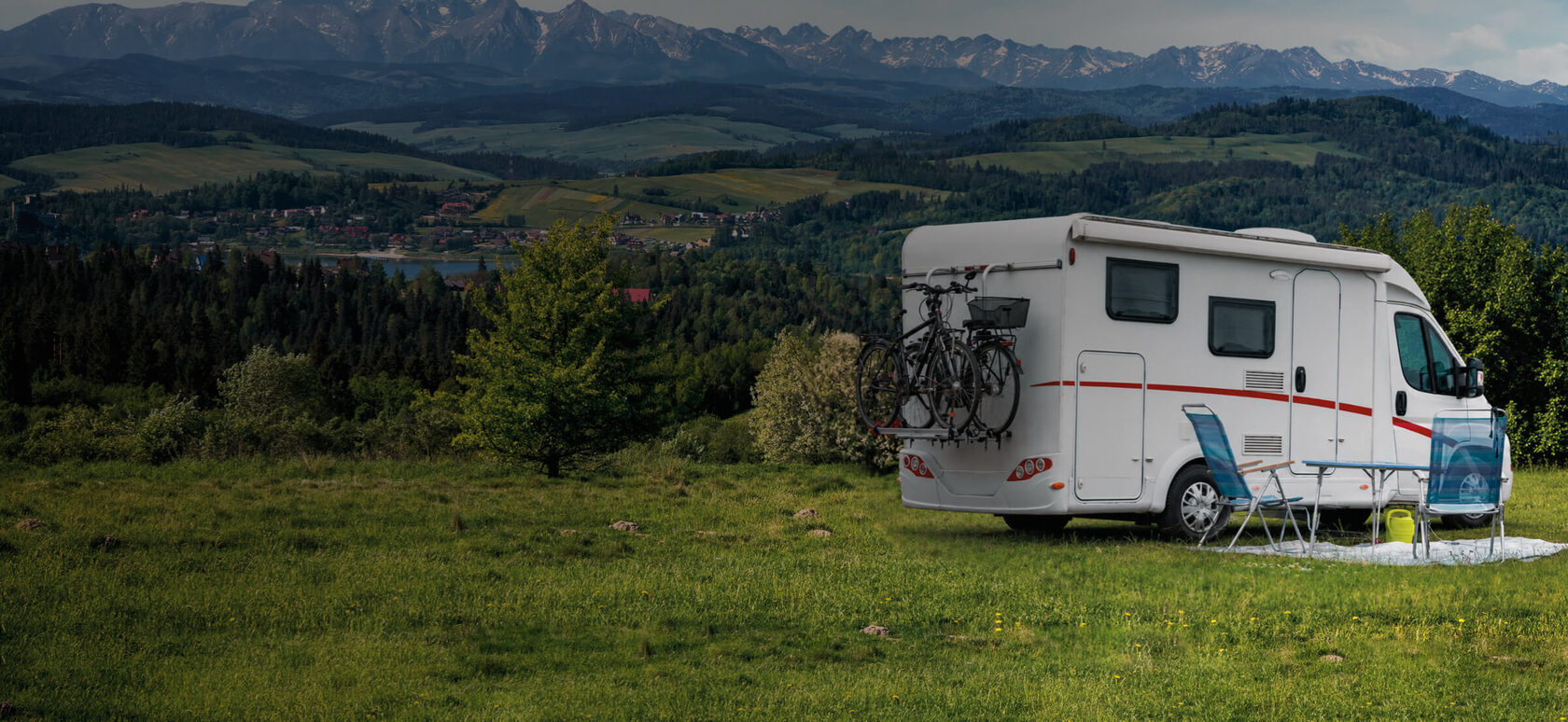
Independent trips eliminate the need for hotels and strict itineraries. The average cost for a rental in Poland ranges from 80−115 euros per day in the low season to 140−185 euros during summer. Local fleets predominantly feature modern vehicles with well-designed sleeping spaces, while their compact length ensures easy maneuvering on narrow roads.
You can pick up a vehicle right upon arrival. A station in Warsaw, Krakow, or in Gdansk serves as a convenient starting point. A standard category "B" driver’s license is sufficient to operate vehicles up to 3.5 tons. Local regulations allow setting up a full camp at equipped campsites (over 460 locations available). Simultaneously, a state program provides completely legal, free forest parking areas.
Every motorhome and campervan comes fully prepared for long journeys. Basic equipment includes a kitchen, shower, gas heating, and water tanks to guarantee autonomy. When looking to hire in Poland, travelers often prefer this destination for its high-quality expressways, free water disposal zones, and low overall travel costs.
You can select a suitable model for your dates and submit a request via the search form on the Great RV Trip homepage.
You can pick up a vehicle right upon arrival. A station in Warsaw, Krakow, or in Gdansk serves as a convenient starting point. A standard category "B" driver’s license is sufficient to operate vehicles up to 3.5 tons. Local regulations allow setting up a full camp at equipped campsites (over 460 locations available). Simultaneously, a state program provides completely legal, free forest parking areas.
Every motorhome and campervan comes fully prepared for long journeys. Basic equipment includes a kitchen, shower, gas heating, and water tanks to guarantee autonomy. When looking to hire in Poland, travelers often prefer this destination for its high-quality expressways, free water disposal zones, and low overall travel costs.
You can select a suitable model for your dates and submit a request via the search form on the Great RV Trip homepage.
Everything in One Place

RV rental
Motorhome selection and booking
On-the-road support
We’re with you every step of the way
Route planning
Trip preparation
02
04
03
01
Consultations and guides














Ready-made and custom itineraries, campground bookings
Why Poland is Suitable for an RV Trip
RV itineraries in Poland cover distinct landscapes within a single country. In one trip, you can drive from the white-sand Baltic beaches in the north to the Masurian lake districts in the center, and reach the mountain ranges (Tatras, Bieszczady) in the south. This geography eliminates the need to cross national borders frequently when planning long routes.
The country’s caravanning infrastructure relies on a network of modern highways and expressways funded by the EU. Rest areas (MOP) along these routes feature terminals for emptying chemical toilets, draining gray water, and refilling fresh water tanks. Hundreds of official campsites operate nationwide and are integrated into European booking systems.
Financially, Poland maintains high competitiveness. The costs of RV rentals, campsite pitches, farm-fresh groceries, and vehicle maintenance are noticeably lower than in Germany, France, or Scandinavian countries.
The local road network is well-adapted for auto tourism, allowing you to exit speedways and head deep into the regions. RV travelers can visit local farms, park near historical sites and medieval castles, and build a flexible schedule independent of public transport.
The country’s caravanning infrastructure relies on a network of modern highways and expressways funded by the EU. Rest areas (MOP) along these routes feature terminals for emptying chemical toilets, draining gray water, and refilling fresh water tanks. Hundreds of official campsites operate nationwide and are integrated into European booking systems.
Financially, Poland maintains high competitiveness. The costs of RV rentals, campsite pitches, farm-fresh groceries, and vehicle maintenance are noticeably lower than in Germany, France, or Scandinavian countries.
The local road network is well-adapted for auto tourism, allowing you to exit speedways and head deep into the regions. RV travelers can visit local farms, park near historical sites and medieval castles, and build a flexible schedule independent of public transport.


Popular RV Regions
-
 Baltic Coast (Pomerania and West Pomerania)The northern coast features wide beaches and the Słowiński National Park, known for its moving sand dunes. This region has the most developed infrastructure for classic camping. Well-rated sites like Camping Alexa or Camp Morski provide direct beach access, dog zones, and stable power supplies. The A1, S3, and S6 expressways ensure easy coastal access for heavy vehicles. Note the strict enforcement: parking RVs in the dune zone or on unpaved forest roads is prohibited, with ecological police patrolling the areas.
 -
 Trail of the Eagles' Nests (Szlak Orlich Gniazd)A 164-kilometer (102-mile) driving route through the Kraków-Częstochowa Upland landscape park. The road connects Krakow and Czestochowa, passing the ruins of 25 14th-century castles and watchtowers built on limestone cliffs. The route accommodates RV travelers well due to numerous viewpoints, legal parking options at local farms, and integration with gravel bike trail networks.
 -
 Bieszczady MountainsA mountain range in the southeast, bordering Slovakia and Ukraine. The primary transport artery is the "Great Bieszczady Loop" (Wielka Pętla Bieszczadzka) — a 144-kilometer (89-mile) paved road circling the mountain ridges. This region has a lower population density and less commercialization compared to Zakopane. The route frequently features undeveloped but legal parking spots, allowing for an off-grid, autonomous camping style.
 -
 Masurian Lake DistrictNortheastern Poland contains over two thousand lakes. During peak summer months, the central water bodies (Lakes Śniardwy and Mamry) experience heavy tourist and yacht traffic. Experienced caravanners suggest shifting the route to the eastern part of the lake district — around Wigry National Park and the deep-water Lake Hańcza. This area provides direct water access and allows you to park at campsites near the shoreline with less traffic.
The RV rental market in Poland is well-established, and local fleets are regularly updated, meaning you will likely receive a vehicle that is 1 to 3 years old.
Beginner advice: If you are new to RV travel and unfamiliar with the differences between campervans and alcove models, vehicle dimensions, or internal systems, review our Beginner’s Guide. It contains the basic theory to answer your questions and prepare you for your first trip.
Vehicle base
The vast majority of motorhomes are built on commercial chassis such as Fiat Ducato, Ford Transit, Citroen Jumper, and Peugeot Boxer. These vehicles feature diesel engines, and manual transmissions dominate the Polish rental market. Automatic RVs are available from larger companies, but they cost more and require booking up to six months in advance.
Types
The full range of European RV formats is available in Poland. Campervans (Class B) are highly maneuverable and easy to park in cities, accommodating solo travelers and couples. Semi-integrated models (Class C / Low-profile) with an aerodynamic body are suitable for families of 3−4 people. Larger groups of up to 6 people can use Alcove motorhomes, which feature a bed extension over the driver’s cabin.
Equipment
RVs are prepared for off-grid camping. Standard equipment includes a full kitchen (2−3 burner gas stove, sink, refrigerator), a bathroom with a shower and a chemical cassette toilet, and fresh and gray water tanks averaging 100−120 liters (26−31 gallons). Gas systems (usually Truma) provide cabin heating and water heating. Many rentals come equipped with factory-installed additions like retractable awnings, rear-mounted racks for 2−4 bicycles, and roof solar panels to charge the living area batteries. Note that the roof air conditioning unit in the living area only operates when the RV is connected to a 230V external power source at a campsite.
Beginner advice: If you are new to RV travel and unfamiliar with the differences between campervans and alcove models, vehicle dimensions, or internal systems, review our Beginner’s Guide. It contains the basic theory to answer your questions and prepare you for your first trip.
Vehicle base
The vast majority of motorhomes are built on commercial chassis such as Fiat Ducato, Ford Transit, Citroen Jumper, and Peugeot Boxer. These vehicles feature diesel engines, and manual transmissions dominate the Polish rental market. Automatic RVs are available from larger companies, but they cost more and require booking up to six months in advance.
Types
The full range of European RV formats is available in Poland. Campervans (Class B) are highly maneuverable and easy to park in cities, accommodating solo travelers and couples. Semi-integrated models (Class C / Low-profile) with an aerodynamic body are suitable for families of 3−4 people. Larger groups of up to 6 people can use Alcove motorhomes, which feature a bed extension over the driver’s cabin.
Equipment
RVs are prepared for off-grid camping. Standard equipment includes a full kitchen (2−3 burner gas stove, sink, refrigerator), a bathroom with a shower and a chemical cassette toilet, and fresh and gray water tanks averaging 100−120 liters (26−31 gallons). Gas systems (usually Truma) provide cabin heating and water heating. Many rentals come equipped with factory-installed additions like retractable awnings, rear-mounted racks for 2−4 bicycles, and roof solar panels to charge the living area batteries. Note that the roof air conditioning unit in the living area only operates when the RV is connected to a 230V external power source at a campsite.
Average Rental Costs in Poland
Prices are shown in euros per day for renting a standard motorhome. The exact cost depends on the vehicle class, equipment, and the rental company’s dynamic pricing.
One-way Rentals
Returning the RV in a different city is possible, but fixed "one-way" price lists are rare since most local companies operate only 1−2 bases. A one-way drop-off is processed as a vehicle relocation service performed by a company employee. The fee is calculated based on distance—approximately 2.5−3 PLN (€ 0.6−0.7) per kilometer between the cities, plus a base logistics rate.
Large international platforms (like IndieCampers) offer this option directly in their booking systems. Estimated market rates for dropping off an RV in another Polish city
Large international platforms (like IndieCampers) offer this option directly in their booking systems. Estimated market rates for dropping off an RV in another Polish city
Warsaw–Krakow
Krakow–Warsaw
Krakow–Warsaw
~€150
Warsaw–Gdansk
Gdansk–Warsaw
Gdansk–Warsaw
~€200
Krakow–Gdansk
Gdansk–Krakow
Gdansk–Krakow
~€250
Warsaw–Wroclaw
~€170
Poznan–Warsaw
~€140
Rental Conditions
- Age and driving experience: The minimum driver age for an RV up to 3.5 tons is 21 years old, with at least 1 year of driving experience. For premium models or heavier RVs (over 3.5 tons), the age requirement often rises to 25 or 26 years old, and the required driving experience increases to 3 years.
- Driver’s license: A standard national driver’s license (Category B equivalent) is sufficient for driving an RV weighing up to 3.5 tons. Drivers from outside the EU are legally required to carry an International Driving Permit (IDP) alongside their domestic license.
- Deposit: A refundable security deposit is blocked on the renter’s credit card upon pickup. Depending on the vehicle class, this ranges from 5,000 PLN (~€ 1,162) to 8,000 PLN (~€ 1,860).
- Mileage: Most standard contracts include a daily mileage limit, typically 150−300 km (93−186 miles) depending on the company. Exceeding this limit incurs an additional fee of approximately 2−2.5 PLN (~€ 0.50) per extra kilometer. Unlimited mileage is available either for a fixed surcharge or is included for long-term rentals (usually 14−15 days or more).
- Minimum rental period: During the low season, RVs can be rented for 3−5 days. In the peak summer season and during national holidays, rental companies require a minimum booking of 7 to 14 days.
Best Time for an RV Trip
The choice of season directly impacts RV rental costs and campsite availability.
Spring (March – May)
Temperatures range from 10 °C to 20 °C (50°F — 68°F), and campsites gradually open. The primary logistical risk in spring is the long May weekend ("Majówka"), when a surge in domestic tourism causes local traffic jams and a severe shortage of parking spaces. Nighttime frosts are possible, requiring a full gas cylinder for regular heating.
Summer (June – August)
Peak season with temperatures between 22 °C and 30 °C (72°F — 86°F), when infrastructure operates at full capacity. Restrictions include maximum traffic density, crowded parking lots, and the highest rental rates (up to € 185 / ~$ 200 per day). Booking places at popular campsites in Masuria or the Baltic Coast several months in advance is required.
Autumn (September – November)
Temperatures gradually drop from 18 °C to 5 °C (64°F — 41°F). September is one of the most practical months for road trips: rental rates decrease to ~€ 130−140, tourist numbers drop significantly, and the natural environment acquires beautiful autumn colors. Most campsites close by the end of October.
Winter (December – February)
Temperatures stay between 0 °C and -10°C (32°F — 14°F), with stable snow cover forming in mountainous regions. Travel is possible but requires a winter-equipped RV (double floor, heated tanks), winter tires, and snow chains. The main risk is the freezing of gray water drain pipes.
Renting an RV in Poland: What You Need to Know
Currency and Money
The national currency is the Polish Zloty (PLN). For reference, 1 EUR ≈ 4.3 PLN (and 1 USD ≈ 4 PLN). The consumer market is highly digitalized: international bank cards and contactless payments work at gas stations, toll booths, and stores. Keep a small amount of cash for local farm produce or municipal forest parking. Exchange currency at "Kantor" offices, as airport and train station rates are significantly lower.
Where to rent
The market features large local networks (Koko Kamper, Kamperomania, Mobicars) and international platforms (IndieCampers, McRent). Rental depots are mainly concentrated around logistical hubs: Warsaw, Krakow, Gdansk, Katowice, Wroclaw, and Poznan.
Insurance
Base rates always include mandatory third-party liability (OC), comprehensive coverage (AC), and an Assistance package. Note: the basic insurance leaves a deductible equal to your security deposit. Purchasing additional deductible-reduction packages (Deposit Insurance, Excess refund) is advised to prevent financial loss from body scratches or glass damage.
When to book
Poland has become a highly popular destination, so book vehicles for summer trips 4 to 6 months in advance. For travel in September or April, a 1.5 to 2-month lead time is sufficient.
Roads and Driving in Poland
The transit network consists of highways (A) and expressways (S), with tolling and speed limits strictly tied to the vehicle’s weight.
Toll roads (RVs up to 3.5 tons)
Transit on state-owned highways is free for light RVs. Tolls are collected only on private concession sections, payable at toll booths with cash or card. Driving the A2 section (Świecko — Konin) costs around 129 PLN (~€ 30), the A1 section (Gdańsk — Toruń) is 29.90 PLN (~€ 7), and the A4 section (Katowice — Kraków) is 34 PLN (~€ 8).
Toll roads (RVs over 3.5 tons)
Heavy vehicles must register in the state electronic system, e-TOLL, to pay for all toll sections. Monitoring is executed via an on-board unit (OBU) or a mobile app. The base rate is approximately 0.53 PLN (~€ 0.12) per kilometer, dropping to 0.43 PLN (~€ 0.10) for Euro-6 engines. Important exception: As of recent legislation in 2026, passenger cars towing a caravan are exempt from e-TOLL fees on state roads if the towing vehicle’s Gross Vehicle Weight does not exceed 3.5 tons.
Traffic rules and speed limits
- Residential zone: 20 km/h (12 mph).
- Built-up area: 50 km/h (31 mph) around the clock.
- Outside built-up areas: 90 km/h (56 mph) for RVs up to 3.5t / 70 km/h (43 mph) for RVs over 3.5t.
- Expressway (S): 120 km/h (75 mph) up to 3.5t / 80 km/h (50 mph) over 3.5t.
- Highway (A): 140 km/h (87 mph) up to 3.5t / 80 km/h (50 mph) over 3.5t.
Mandatory equipment
By law, the vehicle must be equipped with a warning triangle and a fire extinguisher (with a minimum mass of 1 kg). Missing the extinguisher is considered a severe violation. A first aid kit and reflective vests are not legally required but are recommended.
Lights and Alcohol
Dipped headlights (or daytime running lights) must be on 24/7 year-round. The legal blood alcohol limit is a strict 0.2 per mille (0.02%). Speed limits are heavily enforced by speed cameras and average speed check zones.
Fuel
Diesel fuel is designated as "ON". Refueling costs average 6.85 — 7.59 PLN (~€ 1.60 — € 1.75 / ~$ 1.70 — $ 1.90) per liter. It is more economical to refuel at stations near large hypermarkets (Auchan, Carrefour).
Parking and Overnight Stays
Overnight stays outside official campsites
Polish traffic rules strictly differentiate between "parking" and "camping". You are legally allowed to sleep inside a closed RV in public parking lots, near supermarkets, or at highway rest areas (MOP) if it is classified as a rest stop. However, deploying an exterior awning, setting up camping chairs, or simply leaving the entrance step extended shifts your status to "camping". Camping in public parking lots results in fines. Classic "wild camping" by driving onto beaches, dunes, fields, or unpaved forest roads is strictly prohibited (with fines up to € 120 per person).
State Forests Initiative
As a compromise, the "Zanocuj w lesie" (Spend a Night in the Forest) program allocates 425 forest areas for outdoor recreation. RV travelers may use them under a strict condition: the motorhome must remain exclusively in designated parking spots (marked with a "P" sign), and driving deeper into the forest is forbidden. Groups of up to 9 people can stay for up to 2 consecutive nights without notifying the forestry office.
Official campsites
This is the optimal solution for connecting to a 230V power grid and fresh water supply. To locate sites, use applications like Park4Night, Campercontact, and the local Polish aggregator Camprest.
RV Maintenance on the Road
Draining gray and black water
The most convenient locations for emptying waste tanks are state-owned rest areas (MOP) along highways. Look for "WC BUS" signs. These facilities feature drive-over grids for gray water and separate receivers for chemical cassette toilets. Off the expressways, look for municipal EuroDrop terminals near supermarkets, where dumping is usually free. Remember: discharging gray soapy water into the soil is strictly prohibited by environmental laws.
Refilling fresh water
Water taps are available for free at MOP rest areas. At municipal EuroDrop machines, water supply is coin-operated: the rate is 1 PLN (~€ 0.25) per 10 liters (approx. 2.6 gallons).
Gas cylinders (LPG)
The standard in Poland is heavy 11 kg (24 lbs) steel cylinders containing a propane-butane mix. The swap-and-go process (exchanging an empty cylinder for a full one) is handled at Orlen gas stations and construction hypermarkets like Castorama or Leroy Merlin for 45−50 PLN (~€ 10−12).
Critical technical nuance: Polish gas cylinders feature a left-hand thread (W 21.8×1/14 lh), which differs from standard German (KLF) or UK regulations. Buy a brass adapter in advance to connect it to your regulator. If the RV is equipped with a fixed LPG tank, it is refilled at gas stations using an Italian "DISH" standard adapter.
Critical technical nuance: Polish gas cylinders feature a left-hand thread (W 21.8×1/14 lh), which differs from standard German (KLF) or UK regulations. Buy a brass adapter in advance to connect it to your regulator. If the RV is equipped with a fixed LPG tank, it is refilled at gas stations using an Italian "DISH" standard adapter.
Cuisine, Groceries, and Shopping

Be sure to try Polish dumplings (pierogi), braised cabbage with various meats (bigos), and the traditional sour rye soup (żurek).

It is most economical to buy main groceries at discounters and hypermarkets like Biedronka, Lidl, Auchan, Carrefour, and Netto. When planning your meals, you must account for the Sunday retail ban (Niedziela handlowa). There are only 8 designated "shopping Sundays" per year, usually tied to major sales or pre-holiday seasons. On all other Sundays and 13 public holidays, major supermarkets are completely closed.

On non-trading days, bakeries, gas station shops (which carry a wider selection than usual), and convenience stores like Żabka or Carrefour Express remain open, provided the business owner is working the register.

Alcohol is sold in regular supermarkets and 24/7 convenience stores without the strict time restrictions found in Scandinavian countries.
Estimated Trip Budget
- RV Rental: Base rates range from € 80−115/day (off-season) to € 160−185/day during peak summer months. Traveling in the "shoulder season" (September) reduces costs by 30−40%.
- Fuel: With an average consumption of 10−12 L/100 km (approx. 20−23 mpg), fuel takes up a significant portion of the budget (diesel is ~$ 1.70-$ 1.90 / € 1.60−1.75 per liter).
- Toll Roads: By avoiding private concession highways (A1, A2, A4) in favor of free parallel routes, you can save € 10 to € 30 per transit, though it increases travel time.
- Parking (Campsites): An equipped pitch at a paid campsite costs 40−150 PLN (~€ 9−35) per night. Alternating between paid campsites and free legal forest parking helps minimize costs.
- Food: Buying groceries at discount stores (like Biedronka) and cooking in the RV keeps daily food expenses around € 18−30 for two people.
Connectivity and Internet
Mobile Operators
Poland has high-quality 4G/LTE and 5G networks. Travelers report that Orange and T-Mobile provide the best coverage in forests and national parks. The Plus network has a lower base station density, leading to signal drops in rural areas.
Buying a SIM Card
Prepaid starter packages cost 5−15 PLN (~€ 1.15−3.50). A monthly plan with 40 GB to unlimited data (e.g., T-Mobile GO! or Orange Flex) costs 35−50 PLN (~€ 8−11.50).
Registration
By law, all local SIM cards must be registered. This can be done in 5 minutes at a telecom store, post office, or newsstand (Relay, Inmedio) by presenting your passport.
Roaming
Local plans include EU roaming, providing a data pool (around 15−20 GB) for use in other European Union countries without extra charges.
Safety, Culture, Legislation, and Useful Tips
Clean Transport Zones (SCT)
Entry into major city centers is strictly controlled. Always verify current SCT regulations before your trip, as implementation dates and rules frequently update.
- Warsaw: Gasoline RVs must meet the Euro 3 standard (no older than 26 years), and diesel vehicles must meet Euro 5 (no older than 17 years). The automatic camera fine for non-compliance is 500 PLN (~€ 116).
- Krakow: The SCT zone covers 60% of the city. Light diesel RVs require a Euro 6 standard, and heavy RVs need Euro VI. All foreign-registered vehicles must pre-register via an online portal before entering. Non-compliant vehicles are subject to paid transit fees (hourly: ~€ 0.60; daily: ~€ 1.15; monthly: ~€ 23).
Electricity
The mains voltage is 230V, 50Hz. Polish campsites use standard blue industrial CEE 16A (3-pin) connectors. Always carry an extension cord (at least 25 meters / 82 feet) and an adapter for a standard Schuko socket. Appliances from the US (110V) require a step-down transformer, not just a plug adapter.
Safety and Culture
The violent crime rate is low. For basic security, park in well-lit areas to prevent theft. In restaurants, leaving a 10−15% tip is customary. When entering a campsite reception, it is polite to greet the staff. There is no siesta practice in Poland.
Frequently Asked Questions
Contact your rental company immediately; their managers work 24/7. In a traffic accident, you must call the highway police (dial 112) to file an official report, which is critical for activating the comprehensive insurance policy. For mechanical failures, the Assistance service will direct you to the nearest contracted repair shop.
Yes, subject to prior approval from the rental company (a specialized cleaning fee usually applies). Importation is governed by EU laws: an ISO 11 784/11785 microchip, a rabies vaccination (administered at least 21 days before entry), and a health certificate (valid for 4 months) are mandatory. IMPORTANT: Polish customs strictly prohibit the entry of 11 aggressive dog breeds (including Pit Bull Terriers, Rottweilers, Caucasian Shepherds, etc.). Violating this ban can result in the animal being confiscated at the border.
The official language is Polish. English proficiency is high among people under 40 and tourism industry staff. Older campsite employees often understand German or Russian.
A standard Category B license held for over a year is sufficient for RVs up to 3.5 tons. Non-EU citizens must carry an International Driving Permit (IDP).
Full camping setups are restricted to official campsites. Nature parking is permitted only in 425 designated State Forest zones. Classic wild camping is fined. Sleeping inside a closed RV for rest is allowed on municipal parking lots.
The deposit (deductible) ranges from € 1,162 to € 1,860, depending on the vehicle. It is blocked on your card upon signing the contract and released a few days after returning the RV undamaged.
Standard inclusions: basic insurance (with a deductible equal to the deposit), daily mileage limit, a full gas cylinder, toilet chemicals, a basic set of cables/adapters, and roadside assistance. Bedding and kitchenware are often rented as separate packages.
Useful Resources
- etoll.gov.pl — official e-TOLL portal, providing tariff info for vehicles over 3.5 tons.
- sct.zdmk.krakow.pl — mandatory vehicle registration portal for entering Krakow's Clean Transport Zone.
- bdl.lasy.gov.pl — State Forests interactive map for locating legal parking under the "Zanocuj w lesie" program.
- park4night.com / campercontact.com — international apps for finding campsites, off-grid spots, and service terminals.
- camprest.com — local caravanning portal listing Polish campsites.
Conclusion
An RV trip through Poland allows you to combine a deep dive into history with the exploration of national parks, lake districts, and coastal resorts in a single journey. The high quality of the highway network, a rapidly growing campsite infrastructure, and competitive pricing make this destination an excellent choice for caravanners of all experience levels. Understanding local regulations—from SCT zones to Sunday trading bans—will help you mitigate risks and focus on a comfortable, independent road trip.

E-mail: info@greatrvtrip.com




Contact us. We will answer the questions, help with the choice
We will answer your questions and help you choose
Contact us
GREAT RV TRIP Inc.
Address:
2093 PHILADELPHIA PIKE #7170
CLAYMONT, DELAWARE 19703, USA
© GREAT RV TRIP, 2017–2026
Motorhome travel agency
Let's go on an adventure!
Address:
2093 PHILADELPHIA PIKE #7170
CLAYMONT, DELAWARE 19703, USA
© GREAT RV TRIP, 2017–2026
Motorhome travel agency
Let's go on an adventure!
Manage cookies
We use cookies and similar technologies to improve your browsing experience, analyze site traffic and serve targeted advertisements.
For more details, read our Privacy & Data Protection Policy and Cookies Policy.
We use cookies and similar technologies to improve your browsing experience, analyze site traffic and serve targeted advertisements.
For more details, read our Privacy & Data Protection Policy and Cookies Policy.