










Motorhome and RV Rental in San Francisco

    Leave a number with WhatsApp / Telegram
    San Francisco is a practical starting point for the Pacific Coast, Yosemite, Lake Tahoe, Northern California’s redwoods and wine country. We compare vehicles from several rental partners, then check mileage, insurance, the security deposit, one-way availability and route restrictions for your dates.

    What you can compare:

    • Class B campervans, Class C motorhomes and Class A RVs
    • Pickup locations around the Bay Area
    • One-way returns in Los Angeles, Las Vegas, San Diego and other cities, when available
    • Support before and during the trip
    • Mileage packages, insurance options and extras

    Everything in one place

    RV rental

    Motorhome selection and booking

    On-the-road support

    We’re with you every step of the way

    Route planning

    Trip preparation

    02
    04
    03
    01
    Consultations and guides
    Ready-made and custom itineraries, campground bookings

    Why start your RV trip in San Francisco?

    The Bay Area gives you several very different routes without forcing you into one season. In a few days, you can follow the coast to Monterey and Big Sur. With a week, add Yosemite or Lake Tahoe. Two weeks are enough for a broader loop through the desert, Las Vegas and Southern California.

    Explore San Francisco before collecting the RV, or leave the vehicle at a campground outside the centre. Steep hills, narrow streets, weight restrictions and limited parking make a large motorhome more useful as a base than as a city sightseeing vehicle. Collecting it after your city stay can also save a rental day.

    The climate is mild, but "California" does not always mean warm. Summer can be cool and foggy on the ocean side of San Francisco while inland valleys are hot on the same day. September and October often bring clearer city weather; spring works well for green hills and Yosemite waterfalls.

    San Francisco rental details first-time visitors should know

    Most “San Francisco” depots are not at SFO or in the city. They are in Newark, San Leandro, Dublin, Hayward, Milpitas and other parts of the Bay Area. Allow time and money for a taxi or a pre-arranged shuttle, and avoid planning a long drive immediately after an intercontinental flight.

    On a hill, set the parking brake. Point the front wheels towards the kerb when facing downhill. When facing uphill, point them away from the kerb and let the vehicle roll back gently until the tyre touches it. This California rule matters on San Francisco’s steeper streets.

    Do not rely on street parking for an overnight stay. Where signs are posted, vehicles over 22 feet long or 7 feet high cannot park from midnight to 6:00 a.m. Other street-cleaning, permit, habitation and local restrictions can also apply. Use a legal campground for sleeping.

    Golden Gate Bridge tolls are collected only southbound when entering San Francisco. There are no cash booths. Ask the rental company how its toll programme works before paying independently; otherwise, the owner may still receive an invoice and pass on an administration fee. From Jul 1, 2026, a two-axle vehicle costs $10.25 with FasTrak, $10.50 through a License Plate Account or One-Time Payment, or $11.25 by invoice. A three-axle RV costs more.

    Local tip: the coastal fog is often called Karl the Fog. It can reduce visibility on Highway 1 even when downtown is clear. Check conditions before driving the coast, use dipped headlights and leave extra time.

    Which RV works best in California?

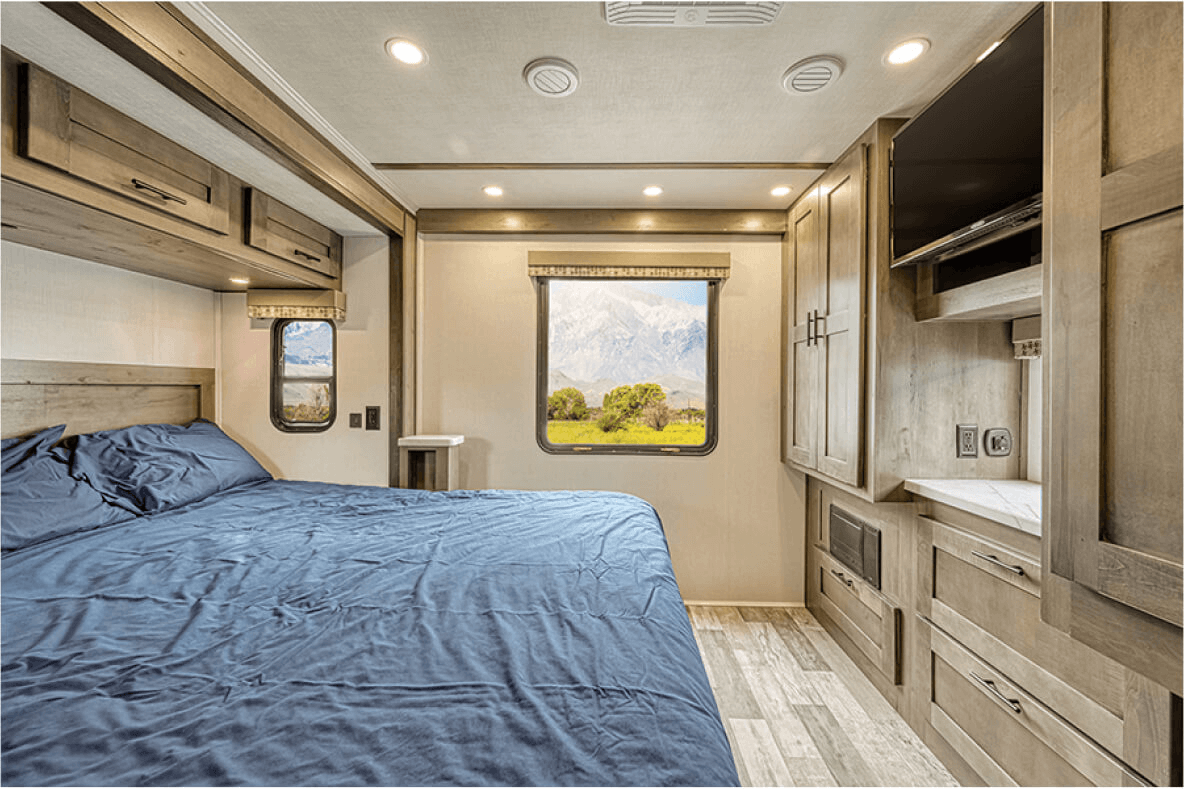
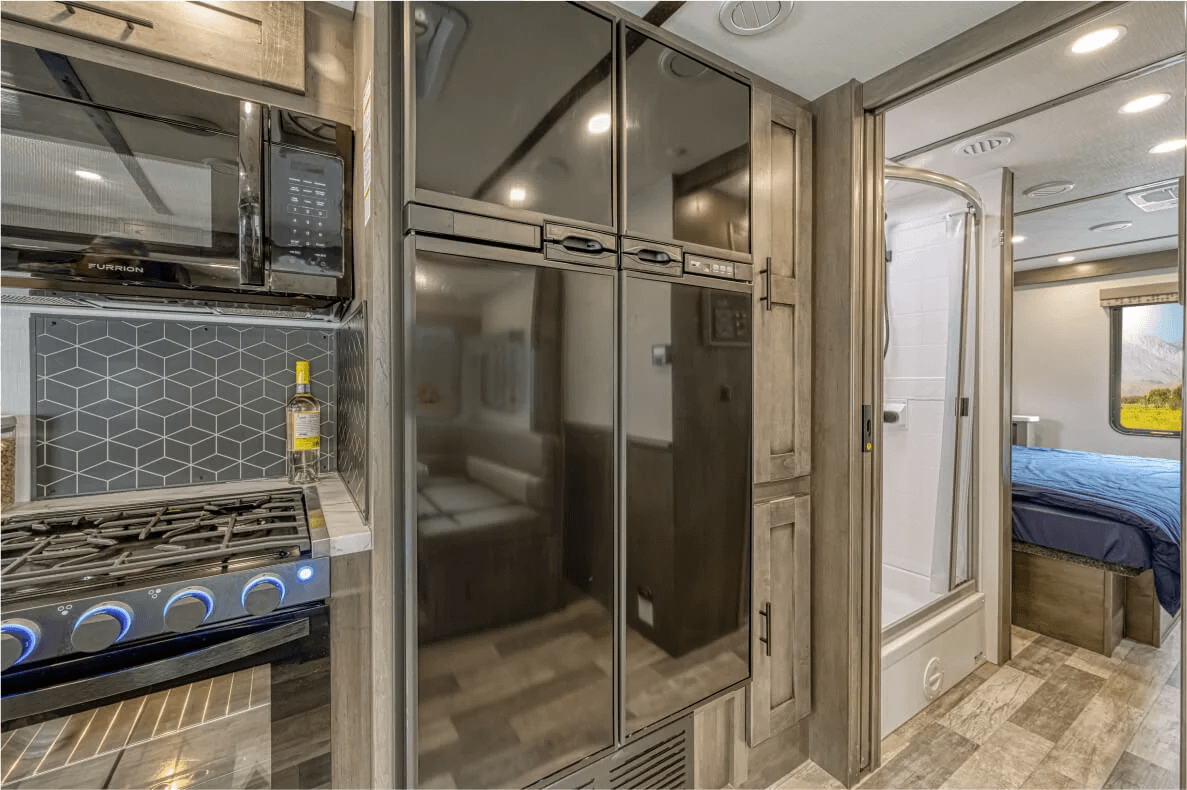
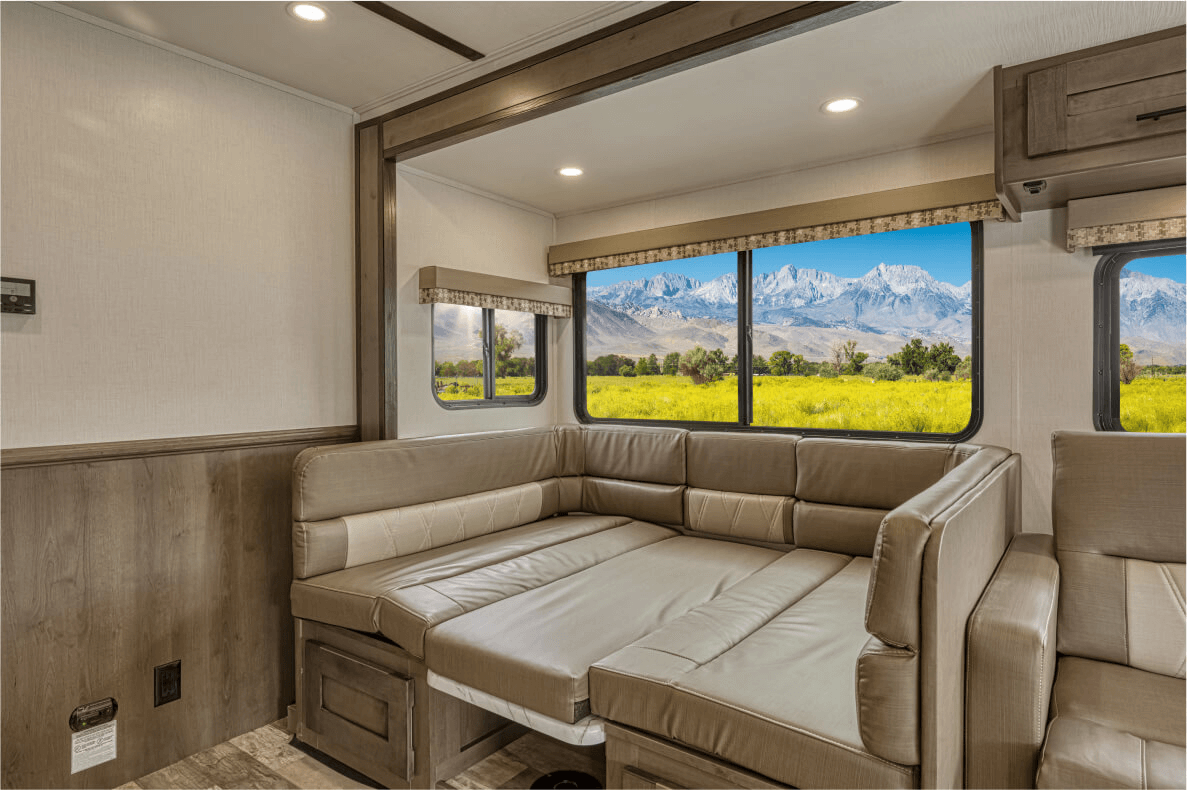
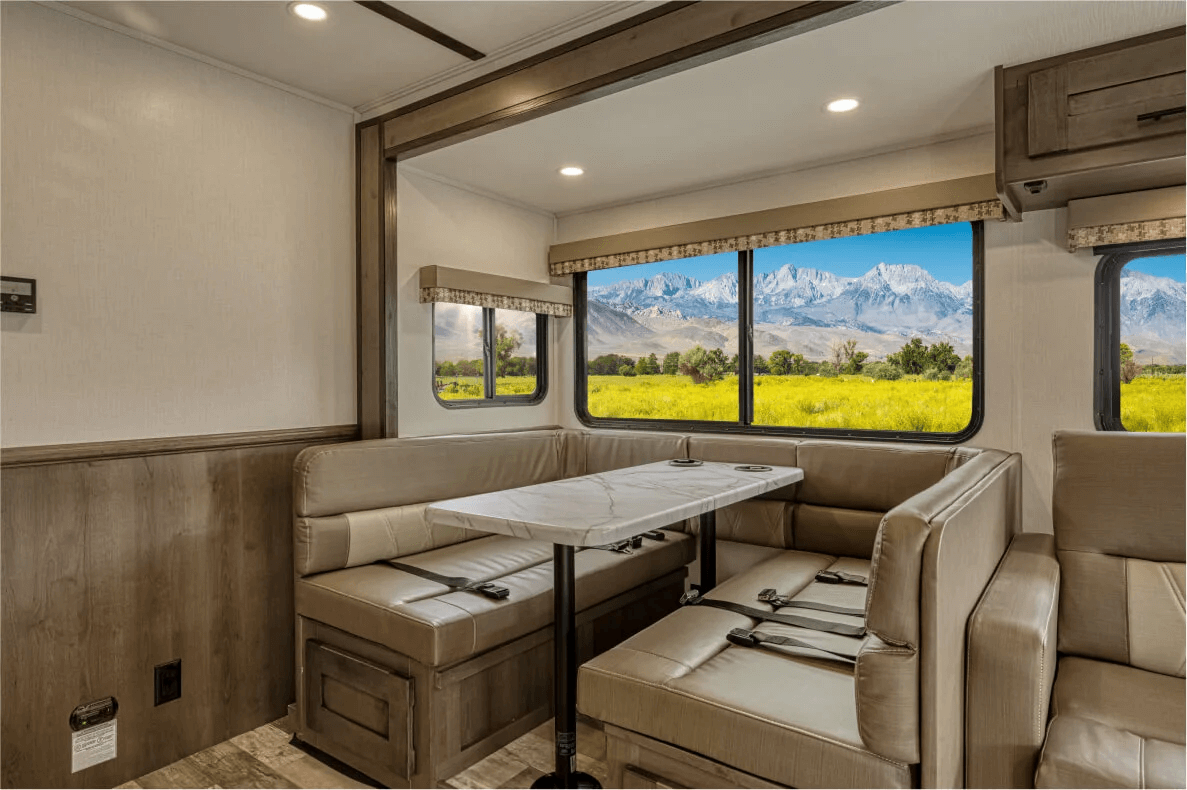
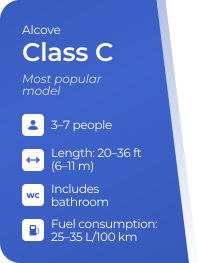
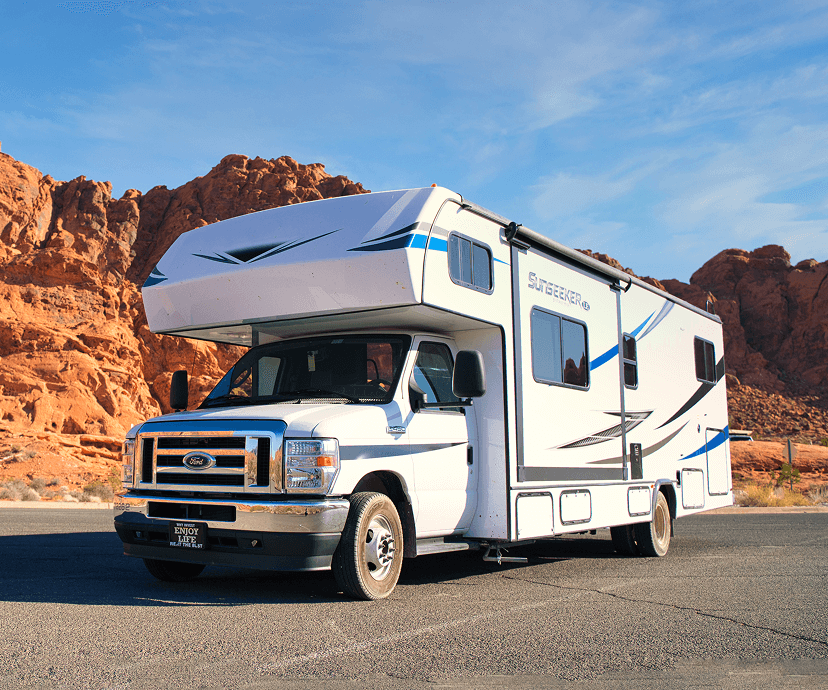
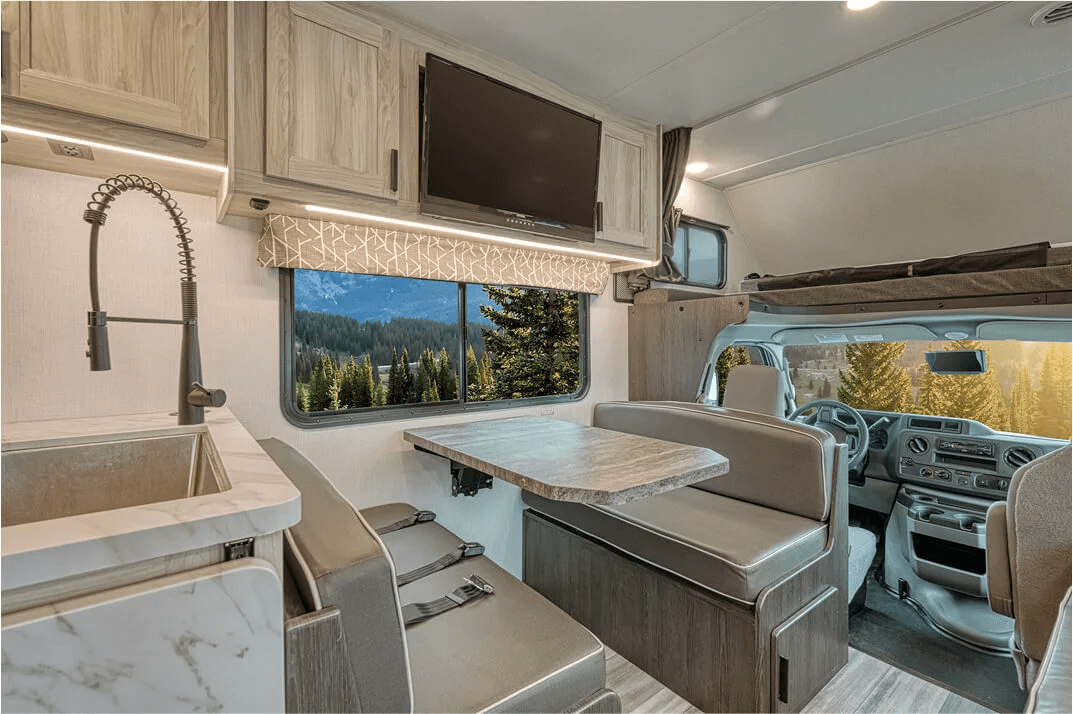
    Class C motorhome

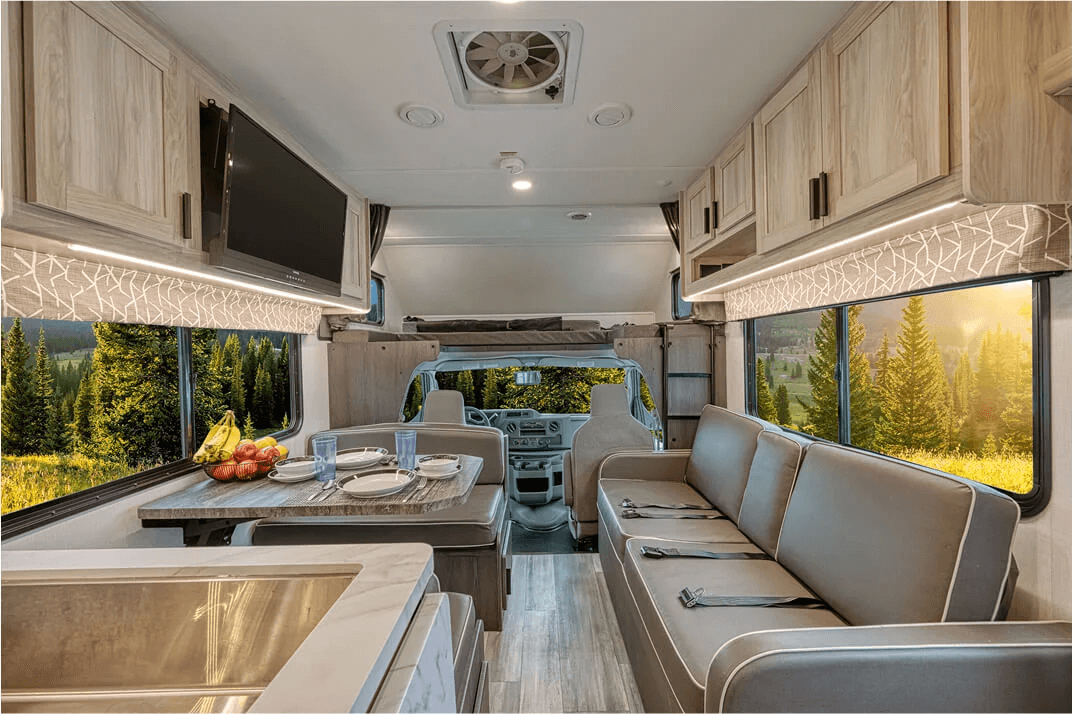
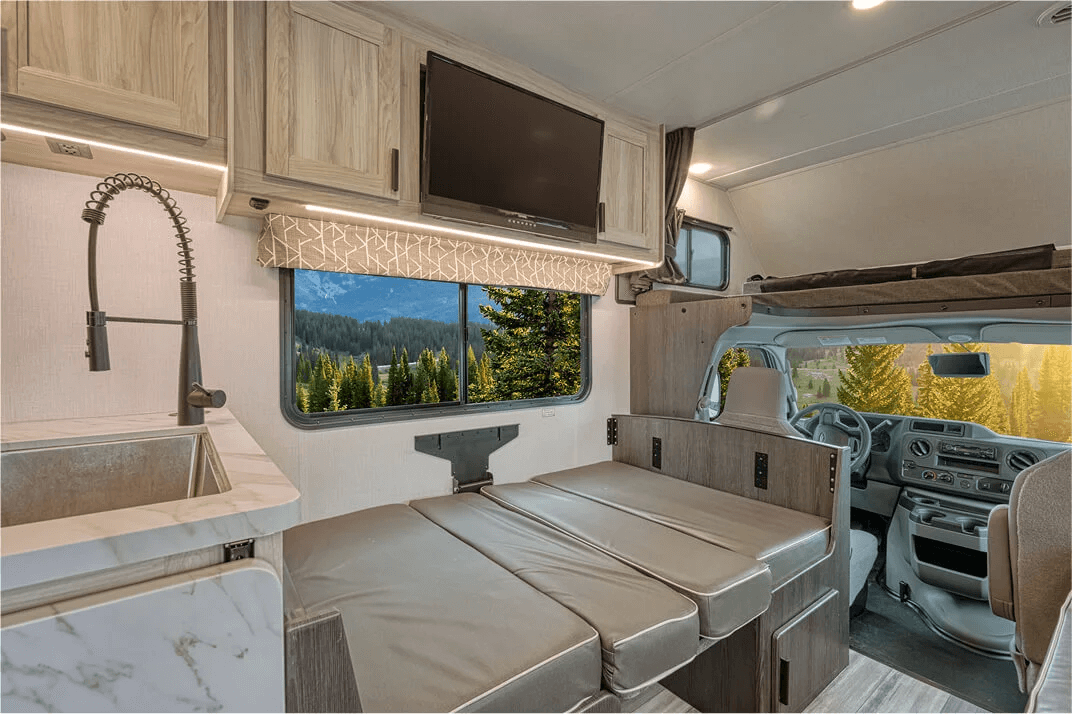
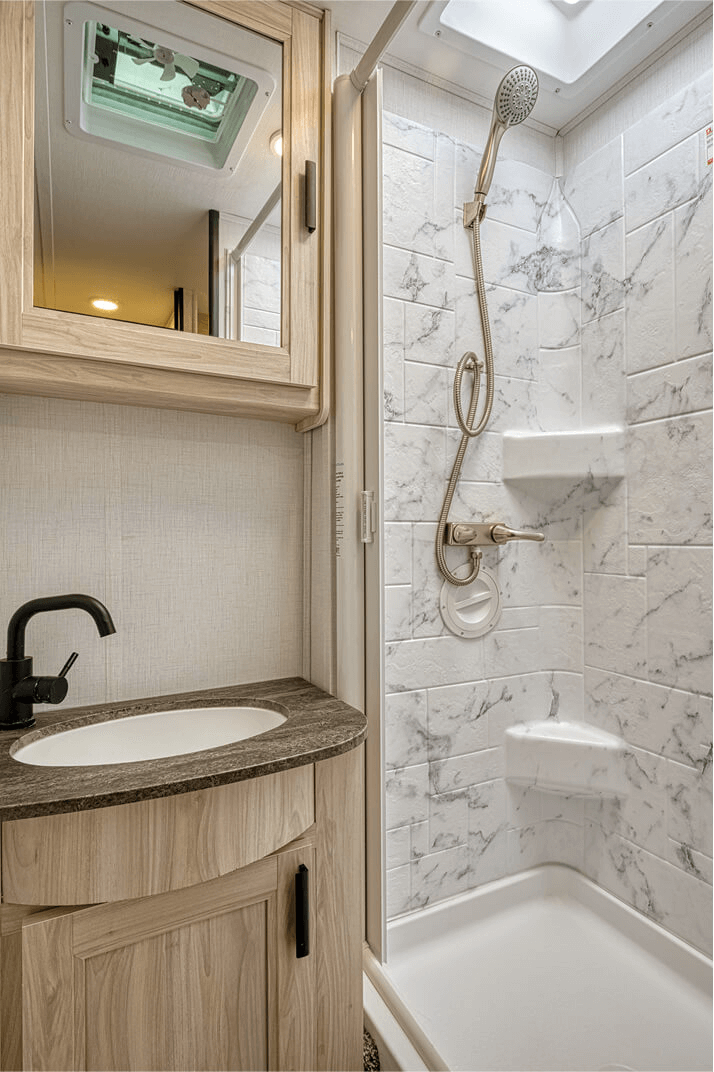
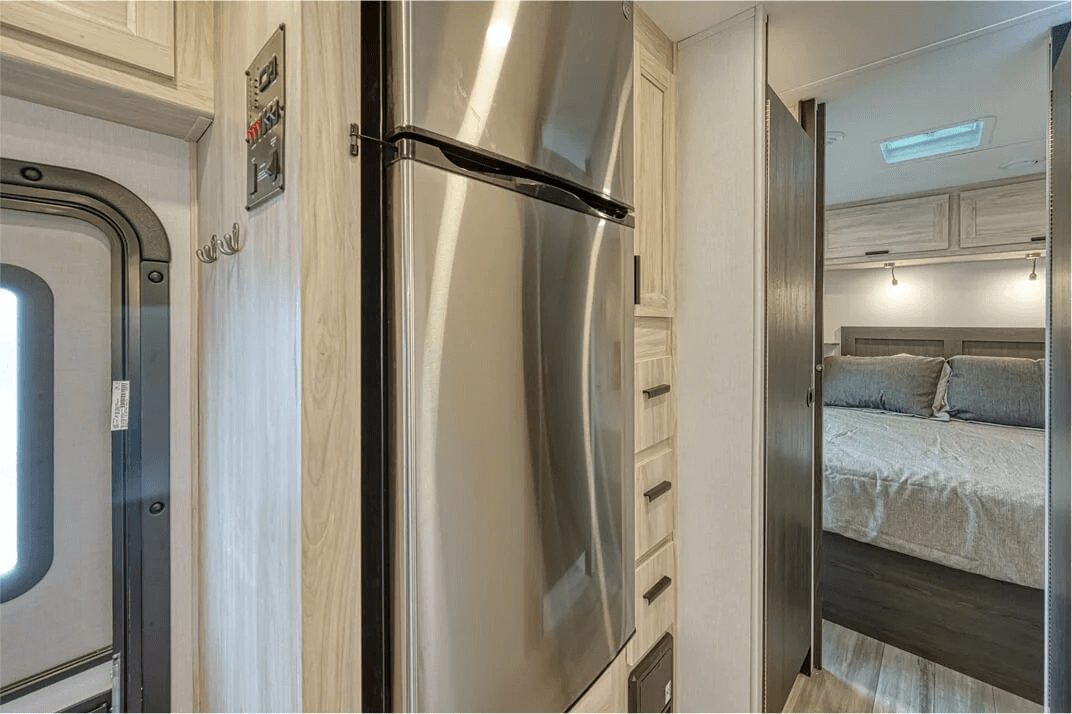
    The most versatile choice for many families and first-time renters. It usually has a kitchen, toilet, shower and an extra bed over the cab. Check bed dimensions, not only the advertised berth count: a “sleeps six” floor plan may not suit six adults.

    Usually 4–6 berths; moderate manoeuvrability; normally has a full bathroom; good for families and first trips.
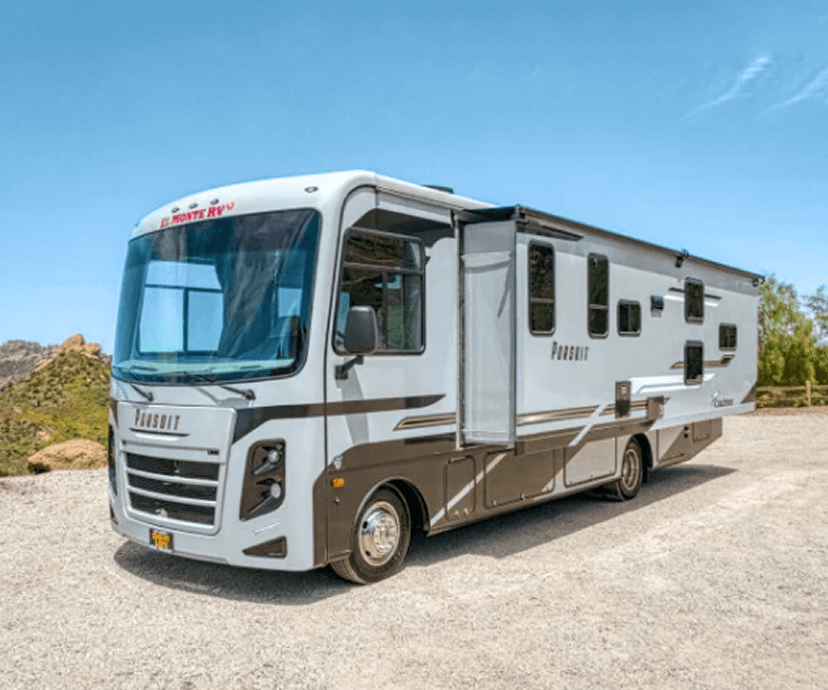
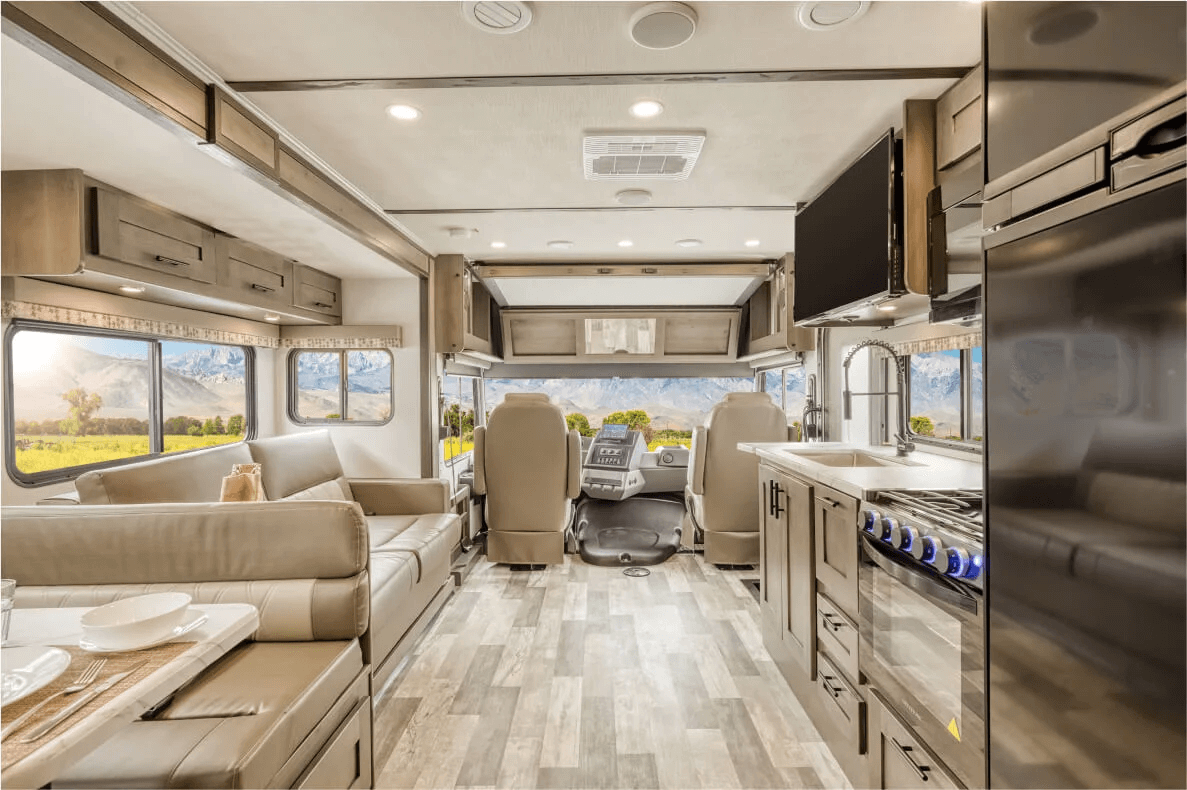
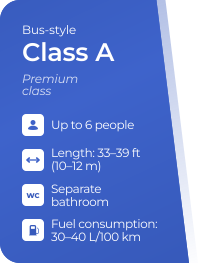
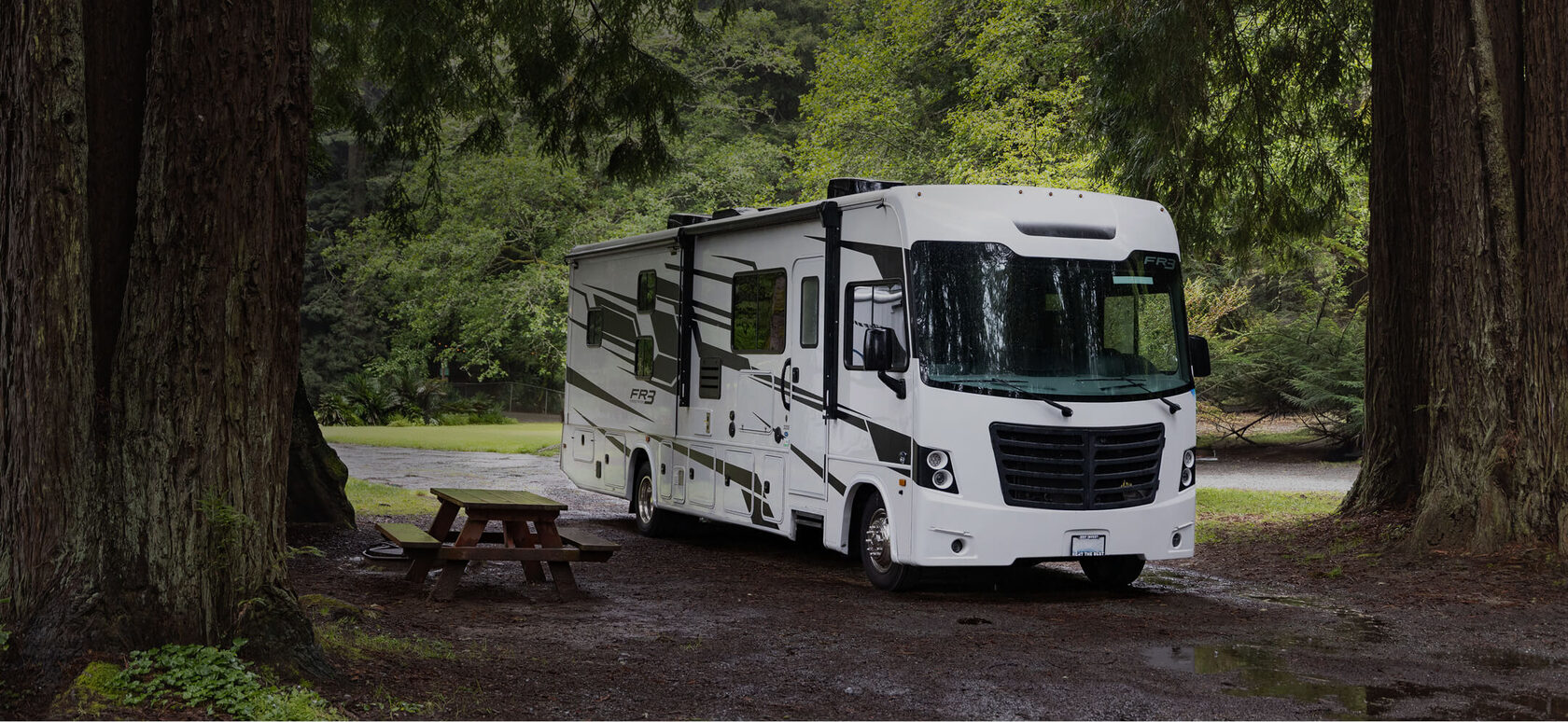
    Class A RV

    Offers more living and storage space but needs more care on city streets and older campground roads. Some coastal and redwood campsites accept only vehicles between 24 and 32 feet, so a larger model can narrow the itinerary.

    Usually 4–8 berths; hardest to park; full bathroom; good for longer stays when the route fits the vehicle.

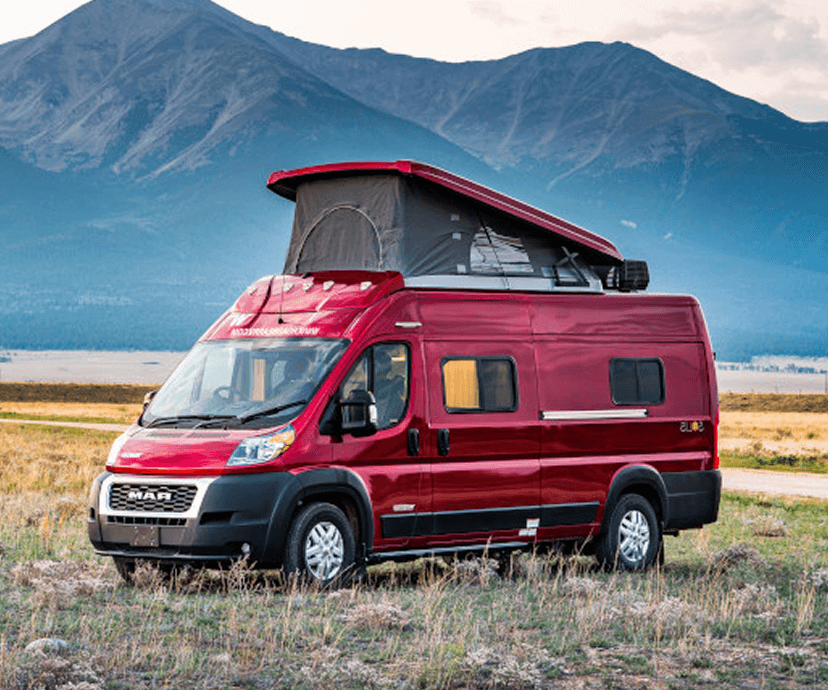
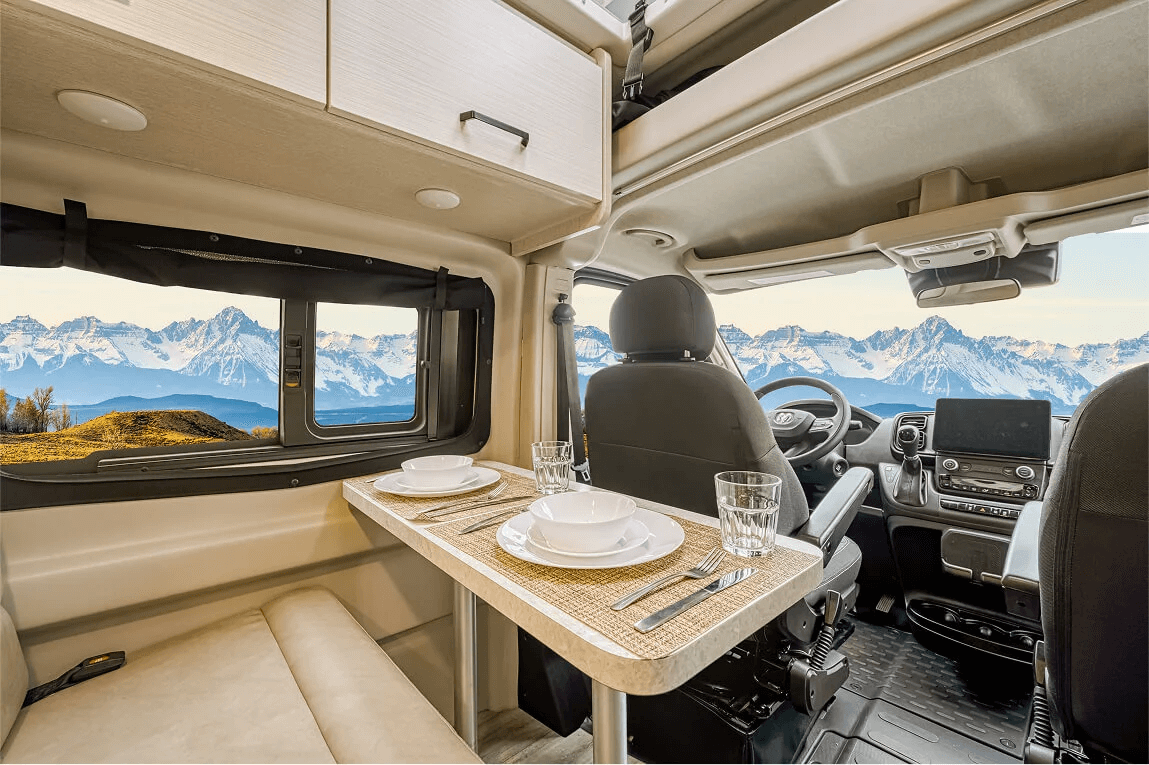
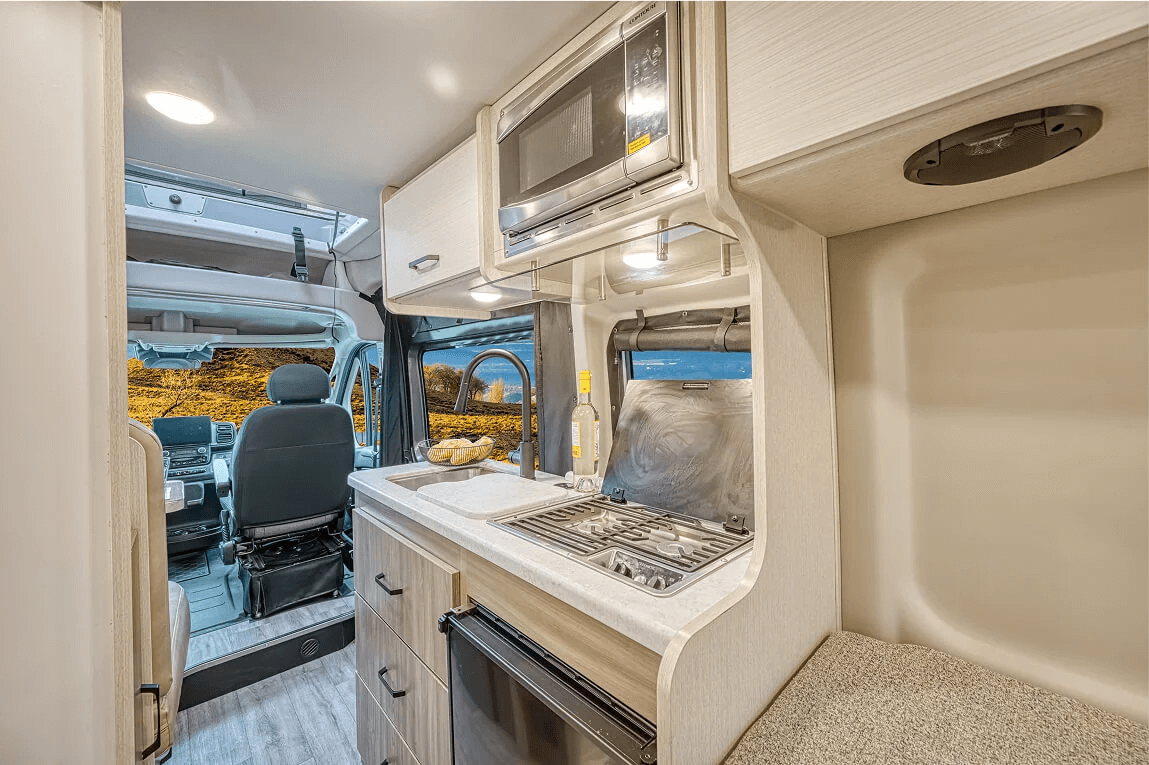
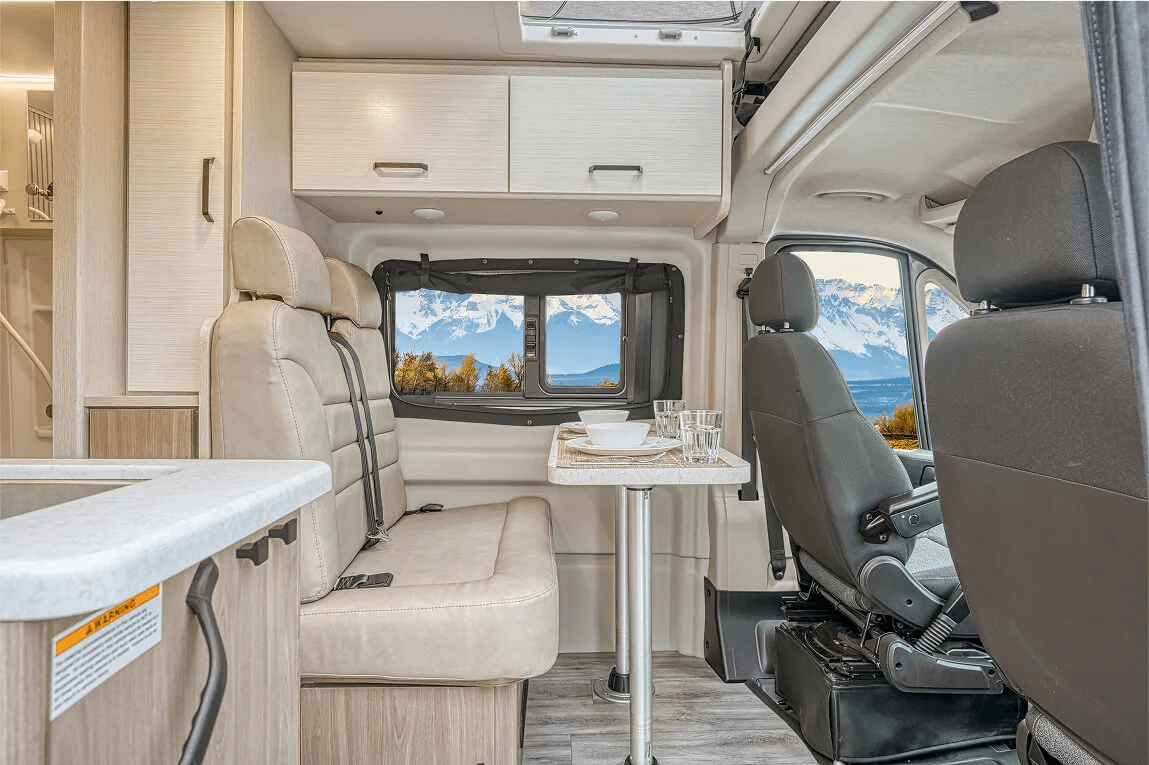
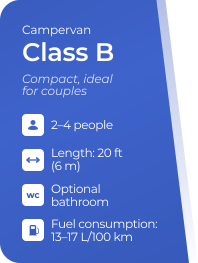
    Campervan / Class B

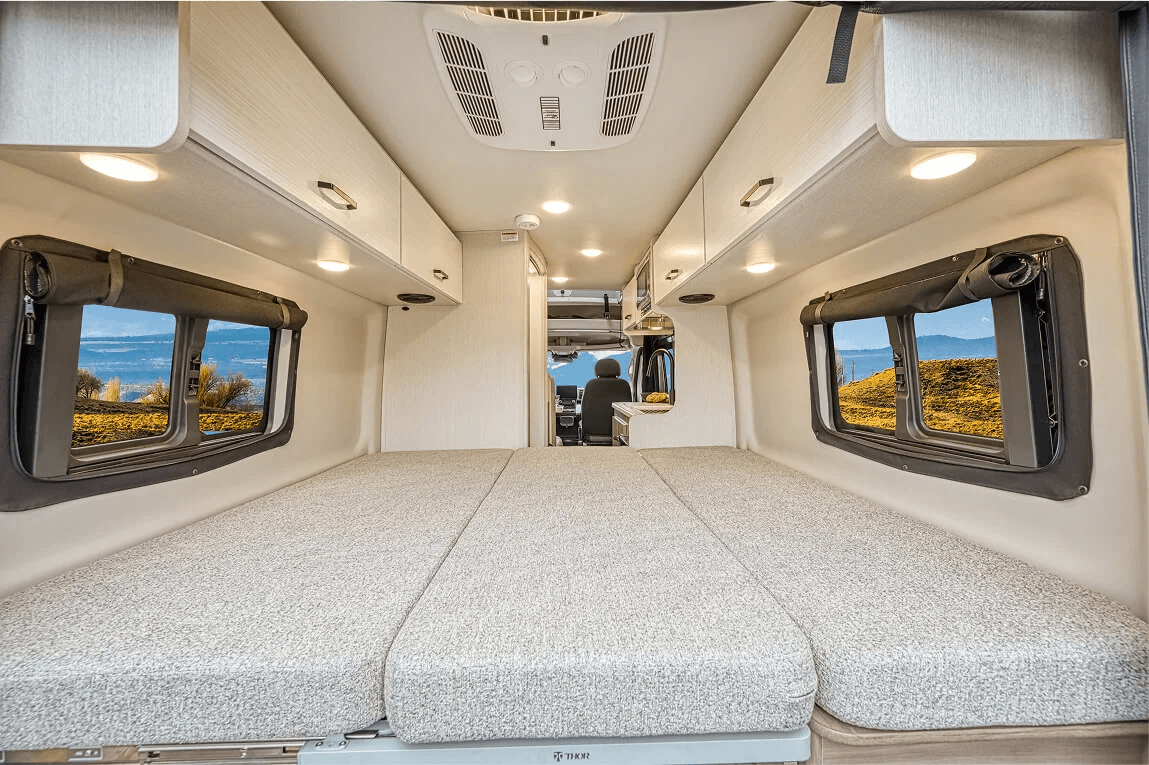
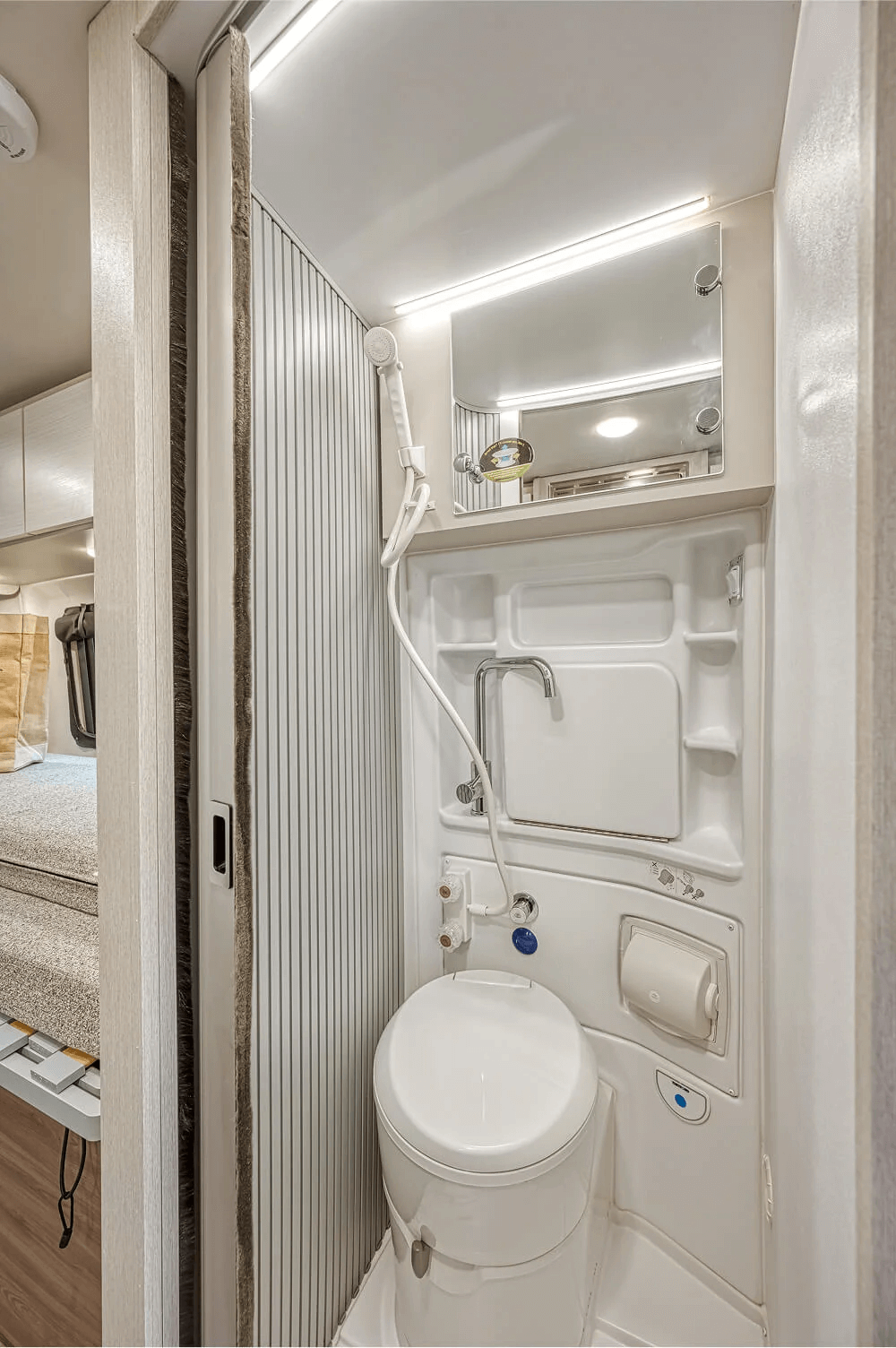
    Best for one or two travellers who value easier parking. For an international audience, campervan usually means a compact converted van based on a Ford Transit, Ram ProMaster or Mercedes-Benz Sprinter. It is different from a large motorhome or a towable travel trailer. A toilet and indoor shower are not standard in every campervan.

    Usually 2–4 berths; easiest to drive; bathroom depends on the model; good for couples and shorter trips.

    Useful detail: a vehicle under about 25 feet is easier for Highway 1 and older forest campgrounds. This is not a single legal limit for the highway. It is a planning benchmark: some Redwood National and State Parks campgrounds cap motorhomes at 24–28 feet, while Pfeiffer Big Sur allows motorhomes up to 32 feet.

    Choose your RV

    Compare the vehicle type, berths, kitchen, toilet and shower, generator, air conditioning, mileage and one-way availability. Prices depend on dates, duration, pickup location and extras, so the card rate is a starting point rather than a final total.

    Before choosing, check four details: overall length, actual bed dimensions, how the living-area air conditioning is powered and the generator rules. The cab air conditioner works while driving; the living-area unit often needs a generator or a campground hookup.

    Where to collect an RV near San Francisco

    A “San Francisco location” generally means the wider Bay Area. Current depots include:
    *Escape Campervans — Milpitas; confirm the current address in the booking documents. Indie Campers and other suppliers may also operate from locations outside the city.
    Opening hours and transfers vary. Travellers Autobarn has different windows. Do not assume an airport shuttle is included. It may run only from selected hotels, at set times and after advance registration.

    International traveller tip: stay near SFO or the depot after landing. Some suppliers restrict same-day pickup after an overseas flight. Even when it is permitted, the vehicle orientation, groceries and first departure take longer than expected.

    How much does an RV rental cost?

    The total is more than the nightly rate. It can include the season, vehicle class, rental duration, mileage, insurance and deductible, preparation, taxes, bedding and kitchen kits, generator use, additional drivers and a one-way fee.

    For an early planning estimate, compact campervans may start around $ 75−150 per night, Class C motorhomes around $ 120−250 and Class A RVs around $ 200−450. Popular summer weeks and the period before the Burn can cost more, and the best-fitting class may sell out first. These ranges are not a quote and do not include every mandatory fee.

    Budget separately for mileage and fuel. "100 miles per day" may be a daily allowance, an average across the entire rental or part of a prepaid package. Unlimited mileage is not standard and may apply only to selected vehicles or longer rentals.

    The refundable security deposit is commonly held on the main driver’s credit card. The amount and release time depend on the supplier, liability package and your bank. Keep enough available credit for the trip after the hold is placed.

    Ways to reduce the total without cutting essential cover

    • Compare the complete price, not only the daily rate
    • Choose a smaller class when the beds and luggage still fit
    • Take one longer rental instead of several short ones
    • Request one-way availability early
    • Buy the right mileage package in advance
    • Travel in spring or autumn when the route allows it

    One-way RV rental along the Pacific Coast

    With a one-way rental, you collect near San Francisco and return in Los Angeles, Las Vegas, San Diego, Portland or another participating location. It saves the time and fuel required to retrace a long route.

    The fee does not depend on distance alone. It also reflects where the rental company needs vehicles, so a longer relocation can occasionally cost less than a shorter one. Some models are round-trip only, and minimum rental periods change by season. Ask us to check both directions: LA to SF can price differently from SF to LA for the same dates.

    Best time for a San Francisco road trip

    September–October
    Often give the city clearer, warmer weather than midsummer. They work well for the coast and wine country, although late summer and autumn require wildfire and air-quality checks.
    April–May
    Bring green hills and strong Yosemite waterfalls. High mountain roads can still be closed, so do not build a loop around Tioga Pass without checking its status.
    June–August
    Is peak season. San Francisco may be cool and foggy, while Yosemite and Tahoe are busy and campgrounds sell quickly.
    Winter
    Can reduce rental rates, but chain controls are possible in the Sierra Nevada. Chains must fit the RV, and the rental company must permit their use.

    Routes from San Francisco

    Route:
    Duration: 5–7 days
    Learn more
    Route:
    Duration: 7–10 days
    Learn more
    Route:
    Duration: 3–5 days
    Learn more
    Route:
    Duration: 7–10 days
    Learn more
    Route:
    Duration: 14+ days
    Learn more

    Visiting San Francisco with an RV

    Use the motorhome as a base outside the centre, not as a sightseeing bus. Leave it in a legal RV park and take BART, a ferry or a bus into the city. This makes it easier to visit the waterfront, Alcatraz, Golden Gate Park, Chinatown and neighbourhoods without hunting for a long parking bay.

    If you drive in for the day, verify both bay length and entrance height. Most urban garages are built for cars. A few surface lots and designated large-vehicle spaces exist, but availability is never guaranteed. Avoid the famous crooked section of Lombard Street and remove passports, electronics and luggage from view.

    The Burn and other events

    International tip: resolve toll payments before leaving and buy supplies before the final weekend. Bay Area rental depots and large shops become crowded during Burn week, while one-way stock and larger motorhomes disappear earlier than on ordinary holiday dates.

    RV parks and campgrounds around San Francisco

    • Candlestick RV Park is a private RV park within San Francisco. Its main advantage is access to the city; think of it as an urban base rather than a nature campground.
    • San Francisco RV Resort in Pacifica operates year-round with hookup sites above the Pacific. Wind and salt air are part of the location, so retract the awning before leaving and secure everything outside.
    • Marin RV Park in Greenbrae sits north of the Golden Gate Bridge. Its unusual advantage is the walk to the Larkspur ferry, which reaches the Ferry Building without taking the RV into the city.
    • Anthony Chabot Campground in Castro Valley has a limited number of full-hookup RV sites. Parking pads average about 30 feet, so confirm larger vehicles before booking.
    • Half Moon Bay State Beach offers electric and dry sites, a water fill and a dump station, but not water and sewer at every site. Most sites accept RVs up to 40 feet.
    • Samuel P. Taylor State Park provides a redwood setting without hookups and caps motorhomes at 31 feet. Big Basin Redwoods State Park currently has limited day access, while its campgrounds remain closed. Kirby Cove Campground is scenic, but its campground does not allow RVs or sleeping in vehicles.

    Useful detail: reserve a site for the exact vehicle length, including a rear bike rack. If you need air conditioning, confirm 30- or 50-amp power. The word “hookup” does not always mean electricity, water and sewer together.

    Driving and parking tips

    Before departure, photograph the roof, awning, mirrors, tyres and lower panels — areas that are easy to miss during handover. Ask the depot to demonstrate the grey- and black-water valves, propane switch, generator and manual retraction procedure for any slide-out.

    Use a lower gear and engine braking on descents. Leave more stopping distance than you would in a car. On a narrow road, do not move onto a soft shoulder blindly; it may not carry the RV’s weight.

    In town, read the entire parking sign, including street-cleaning days and arrows. A parking app does not override the sign in front of you. Reach the campground before dark whenever possible; levelling and connecting an unfamiliar RV is easier in daylight.

    What to pack

    Pack layers: a T-shirt, warm mid-layer and windproof shell are more useful than one heavy item. Add sunscreen, a hat, winter rainwear, a first-aid kit, motion-sickness medication, head torch, folding chairs, dump-station gloves, power bank and offline maps.

    Carry extra drinking water for mountain and desert sections. If you do not know how the fresh-water tank was maintained, use it for washing and carry separate drinking water. For winter routes, agree on chains in advance and ask whether the RV is winterised; a winterised vehicle may have its water system disabled.

    Small but useful item: bring a short spirit level or use a levelling app. A slight slope affects sleep, and some absorption fridges work best when the vehicle is close to level.

    Where to buy groceries and gear

    Safeway, Target and Walmart work for general supplies. Costco can suit a large group but requires membership and sells quantities that may overwhelm a short trip. Whole Foods and Trader Joe’s are useful for prepared food. REI and Sports Basement stock camping equipment.

    Collect the RV before buying bulky groceries so you can see the actual fridge and storage space. RV fridges cool more slowly than domestic ones; avoid loading them with a full shop of warm drinks at once. Buy ice separately and store heavy items low so they do not move under braking.

    Useful apps and official resources

    Caltrans QuickMap — closures, roadworks and chain controls.
    Recreation.gov and ReserveCalifornia — federal and California state campsites.
    NPS app — national park information and offline maps.
    Campendium, AllStays, iOverlander and The Dyrt — campgrounds, dump stations and traveller reviews; verify user reports with the official operator.
    GasBuddy — fuel prices.
    ParkMobile — payment at participating city parking locations.

    Frequently asked questions

    Most rental motorhomes do not require a commercial licence. A visitor over 18 may drive in California with a valid licence from their home country while it remains valid. The rental company may have stricter conditions or request an International Driving Permit as a translation. An IDP does not replace the original licence.

    Get RV options for your route

    Share the pickup city, start date, trip length and phone number. We will check availability, total pricing, mileage, deposit and one-way return options.
    Contact us. We will answer the questions, help with the choice
    We will answer your questions and help you choose

    Contact us

    GREAT RV TRIP Inc.

    Address:
    2093 PHILADELPHIA PIKE #7170
    CLAYMONT, DELAWARE 19703, USA

    © GREAT RV TRIP, 2017–2026
    Motorhome travel agency
    Let's go on an adventure!
    Manage cookies

    We use cookies and similar technologies to improve your browsing experience, analyze site traffic and serve targeted advertisements.

    For more details, read our Privacy & Data Protection Policy and Cookies Policy.
    Accept All