Miami RV Rental for a Florida Road Trip

    Leave a number with WhatsApp / Telegram
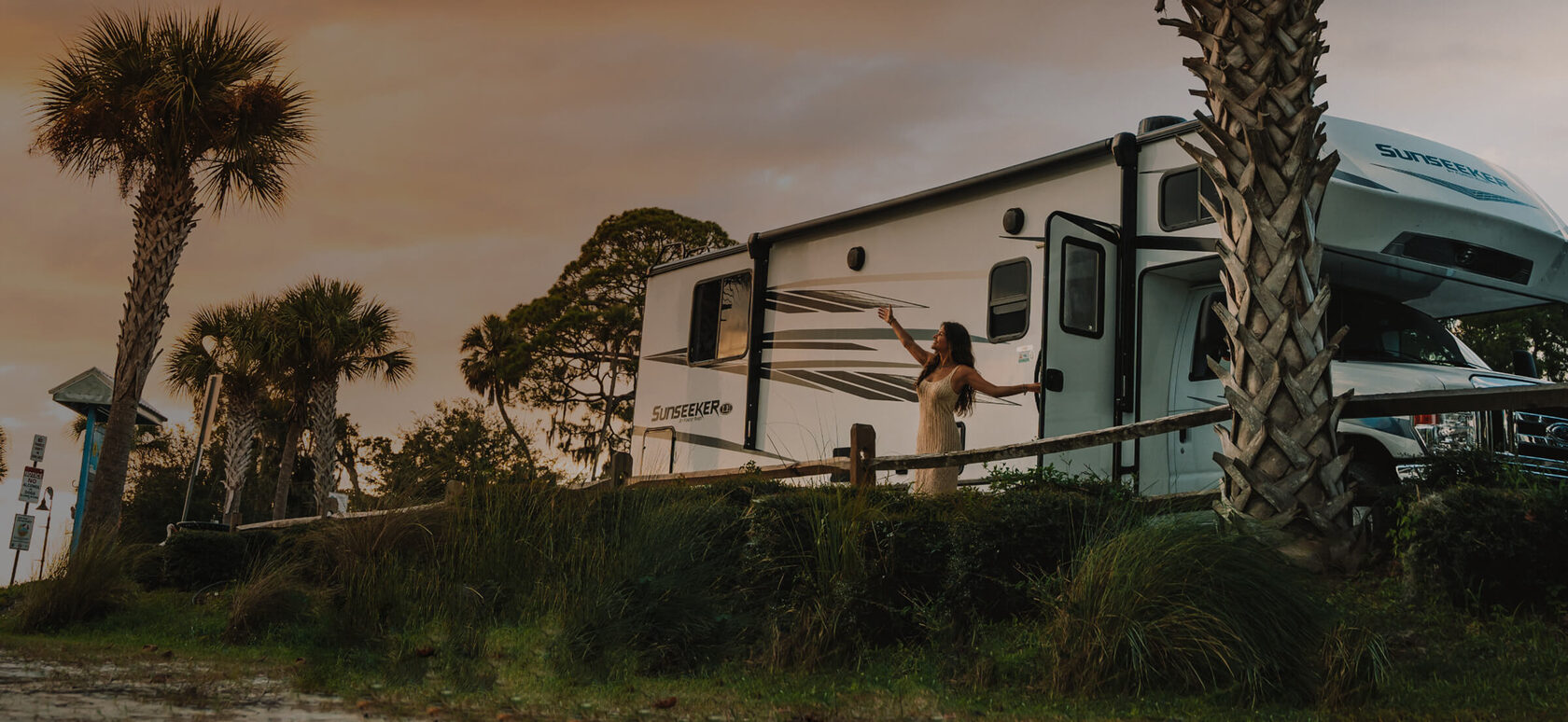
    Miami is a practical starting point for an RV trip through Florida. You can drive south through the Florida Keys to Key West, explore the Everglades, head north toward Orlando, or build a longer route around the entire state.

    For travelers arriving from Europe, Australia, New Zealand, South America, or elsewhere, renting an RV in the United States may feel different from hiring a campervan at home. American motorhomes are often larger, distances are measured in miles, fuel is sold by the gallon, toll roads are common, and overnight stops usually need to be planned around campgrounds and RV parks.

    A Miami RV rental works best when the vehicle becomes your base for exploring Florida—not your main way of getting around downtown Miami. Large motorhomes can be awkward in South Beach, Wynwood, Downtown, and other busy neighborhoods. Outside the city, however, an RV gives you space for luggage, food, beach equipment, and everything else you need for a longer road trip.

    Great RV Trip helps international travelers compare and book RV rentals in Miami through trusted rental partners. We look beyond the nightly rate and consider the full trip: your route, travel dates, group size, vehicle class, insurance, mileage, security deposit, one-way fees, and campground plans.

    Everything in one place

    RV rental

    Motorhome selection and booking

    On-the-road support

    We’re with you every step of the way

    Route planning

    Trip preparation

    02
    04
    03
    01
    Consultations and guides
    Ready-made and custom itineraries, campground bookings

    What to Know Before Renting an RV in Miami

    If this is your first RV rental in the USA, there are a few things worth understanding before you choose a vehicle.

    First, American RVs are often larger than European campervans. Even a medium-sized Class C motorhome can feel substantial if you are used to compact vans and narrow European roads. It is manageable, but you need to allow more space for turning, parking, fueling, and entering campsites.

    Second, Miami is not the easiest city to explore in a large RV. The United States has extensive road infrastructure, but that does not mean every street, car park, or attraction is motorhome-friendly. A more practical plan is to leave your RV at a campground and use public transport, a rideshare, shuttle, or rental car for city sightseeing.

    Third, the advertised daily rate is rarely the complete rental cost. The final quote may also include insurance, taxes, mileage, generator use, preparation fees, cleaning, bedding and kitchen kits, toll administration, and a one-way charge if you return the RV in another city.

    Florida is also highly seasonal. Winter and early spring usually bring more comfortable weather but higher demand. Summer can be less expensive, but it is hot, humid, and stormy. Atlantic hurricane season runs from June through November, so trips during this period need more flexibility.

    How Great RV Trip Helps

    • We help you choose an RV for the route — not simply the largest vehicle available.
      A compact Class B campervan or small Class C may work better for the Florida Keys and Key West. A family of five or six may need the space and sleeping layout of a Class C. A large Class A can be comfortable for a long-term RV rental, but it is harder to park and may not fit every campground.
    • We also help you review the rental terms before payment. Driver age requirements, deposits, insurance, mileage, generator use, pet policies, cleaning fees, and one-way availability differ between rental companies.
    • Your route matters just as much as the vehicle. Miami, the Florida Keys, the Everglades, Naples, Tampa, Orlando, and St. Augustine can all be connected in one trip, but the schedule needs to be realistic. We help you estimate driving days, decide where to stay, and identify places where a large motorhome may create unnecessary problems.
    • For travelers unfamiliar with RV travel in the United States, we also explain practical terms such as hookups, dump stations, toll passes, generator hours, mileage packages, and campground reservations.

    Why Start an RV Trip in Miami?

    Miami’s main advantage is not that it is easy to drive around in a large motorhome. Its advantage is where you can go from here.

    To the south, the Overseas Highway leads through the Florida Keys: Key Largo, Islamorada, Marathon, Bahia Honda, and Key West. The islands are connected by a road and a series of bridges, creating one of the most recognizable road-trip routes in Florida.

    To the west, you reach the Everglades and Big Cypress. This is a very different side of Florida: wetlands, mangroves, wildlife, long roads, intense sun, and remote areas where fuel and overnight stops should be considered in advance.

    To the north, you can follow the Atlantic coast through Fort Lauderdale and Palm Beach, visit the Kennedy Space Center area, and continue to Orlando. This route works well for families who want to combine beaches, attractions, and manageable driving days.

    With more time, you can build a full Florida loop: Miami → Key West → Everglades → Naples → Tampa → Orlando → St. Augustine → Miami. Depending on availability, you may also arrange a one-way RV rental and return the motorhome in another city.

    Choosing the Right RV in Miami

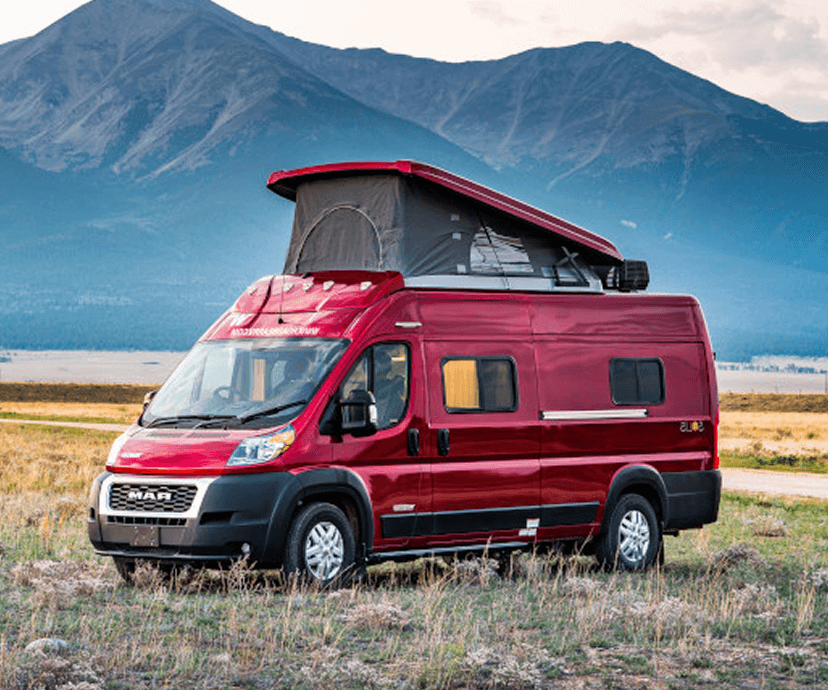
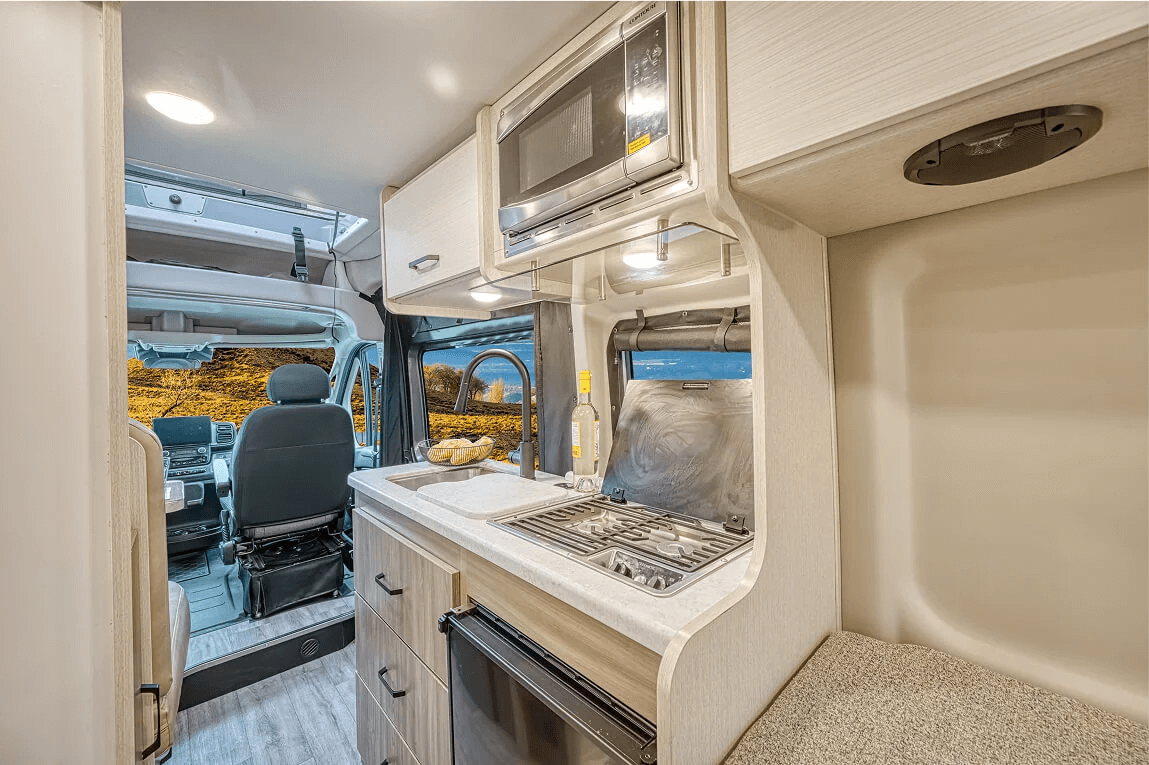
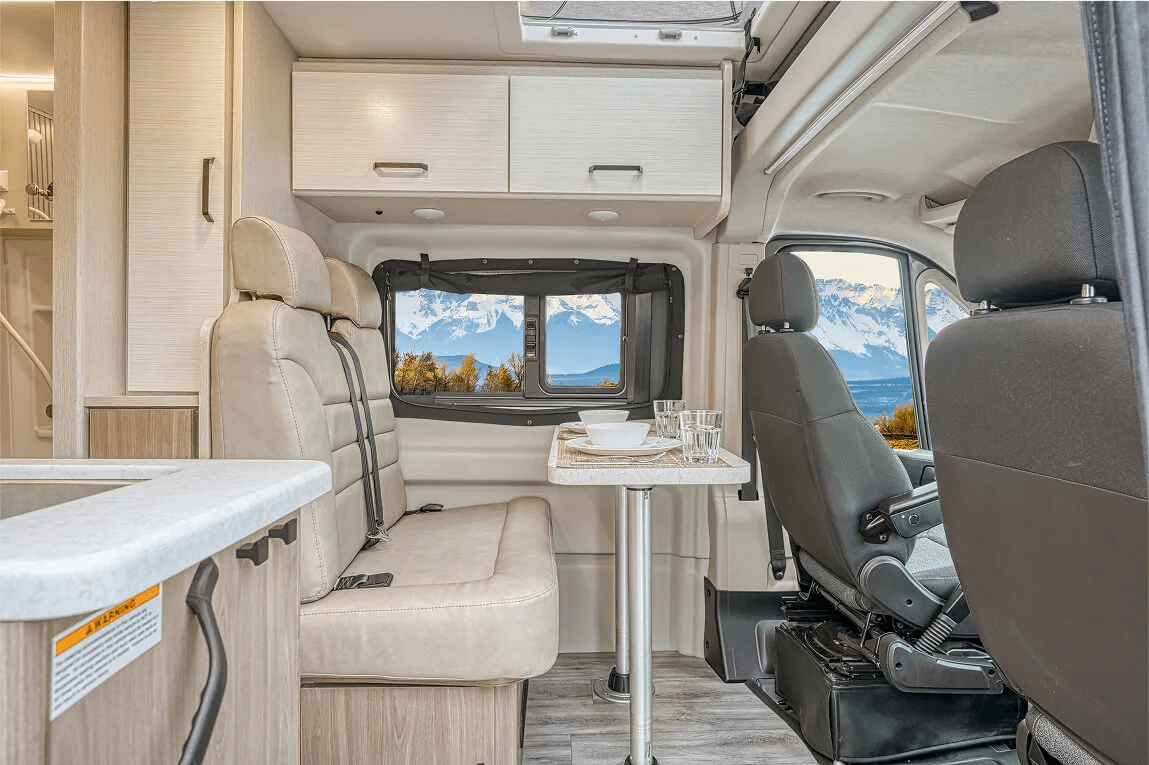
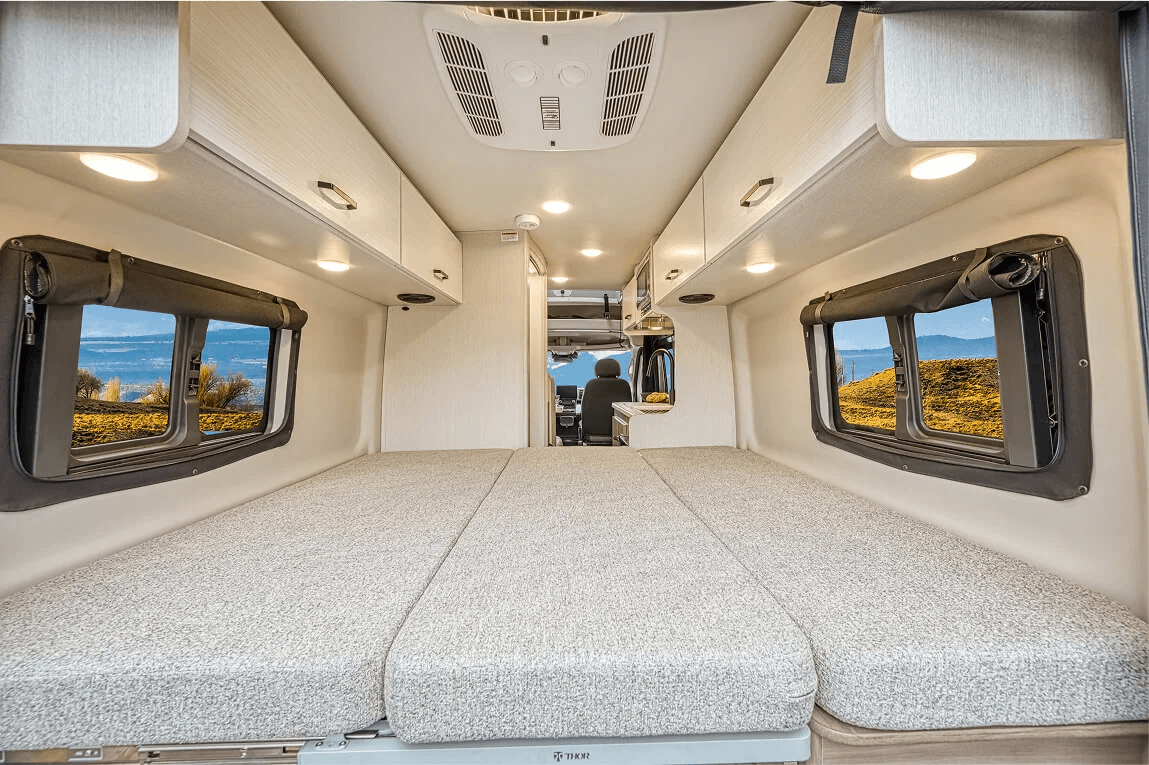
    Class B Campervan

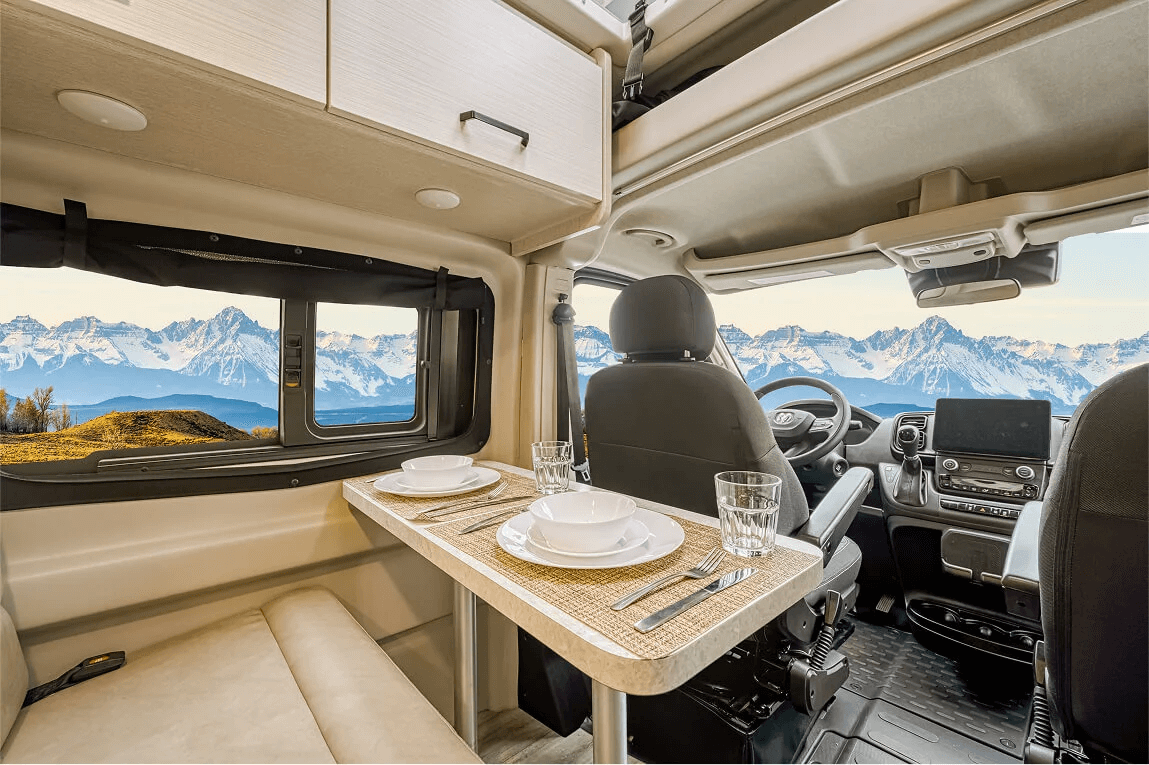
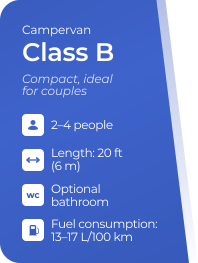
    A Class B is a compact camper built inside a converted van. In the United States, the term campervan usually refers to a vehicle based on a Mercedes Sprinter, Ford Transit, Ram ProMaster, or a similar van.

    A camper van rental in Miami can work well for a couple, solo traveler, or two friends who value easier driving and parking. It is more practical for city streets, smaller campsites, and the route to Key West.

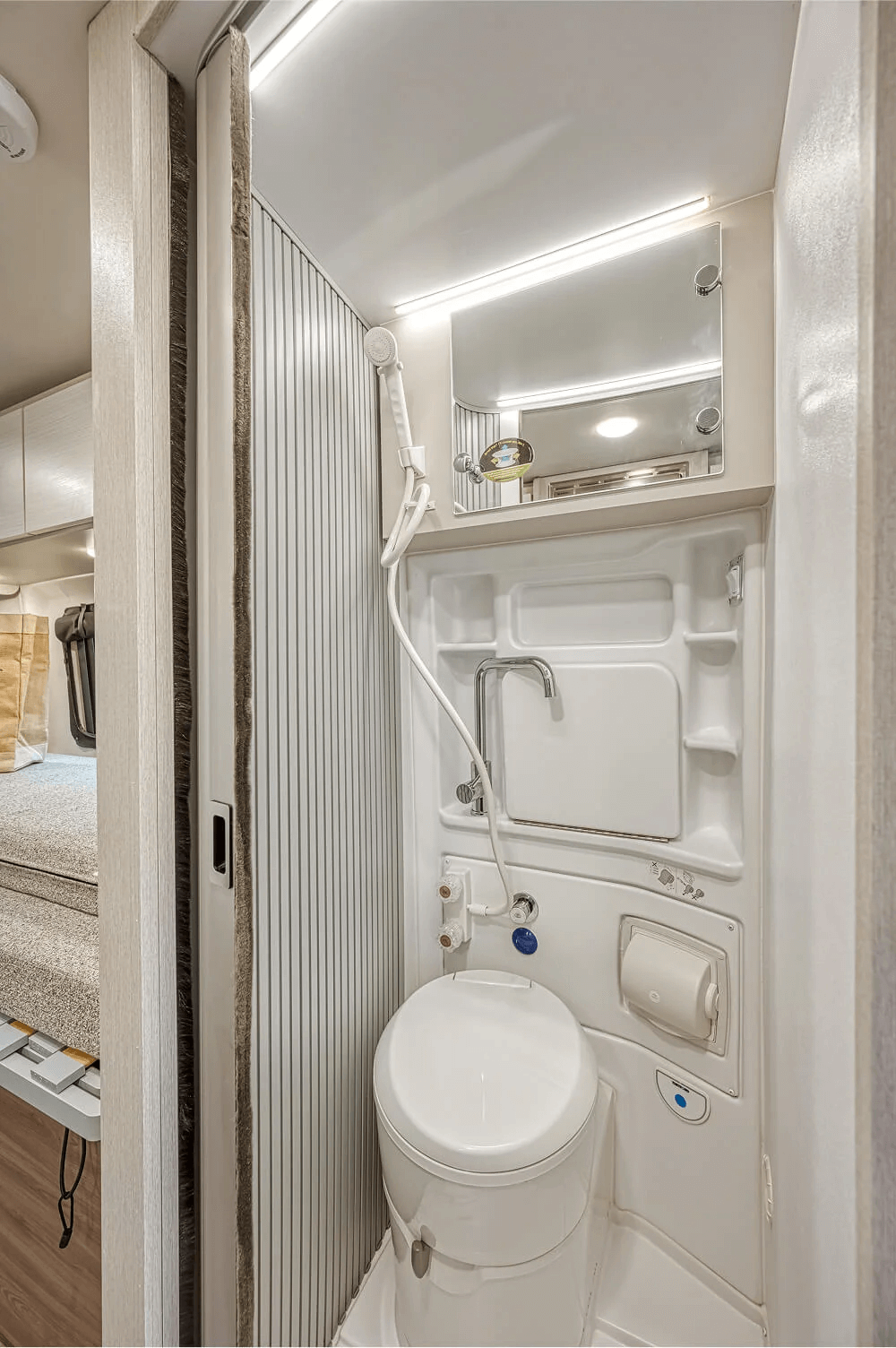
    The trade-off is limited interior space. The kitchen, shower, toilet, refrigerator, and bed layout depend on the model. Not every campervan includes the same facilities as a larger motorhome.

    Class C Motorhome

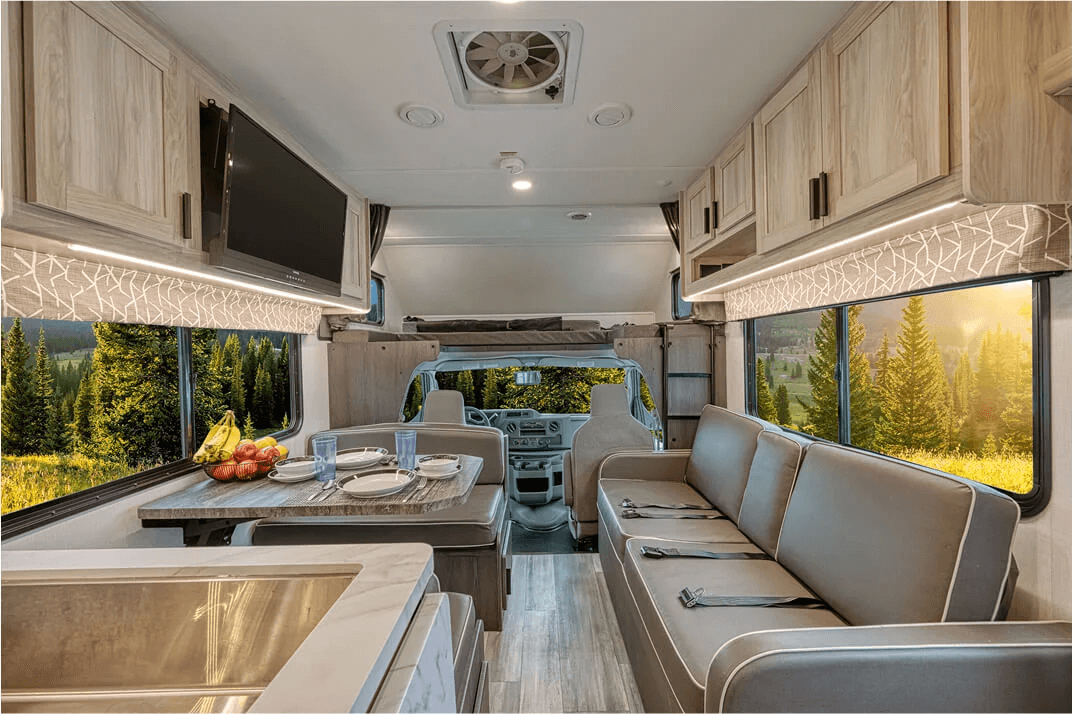
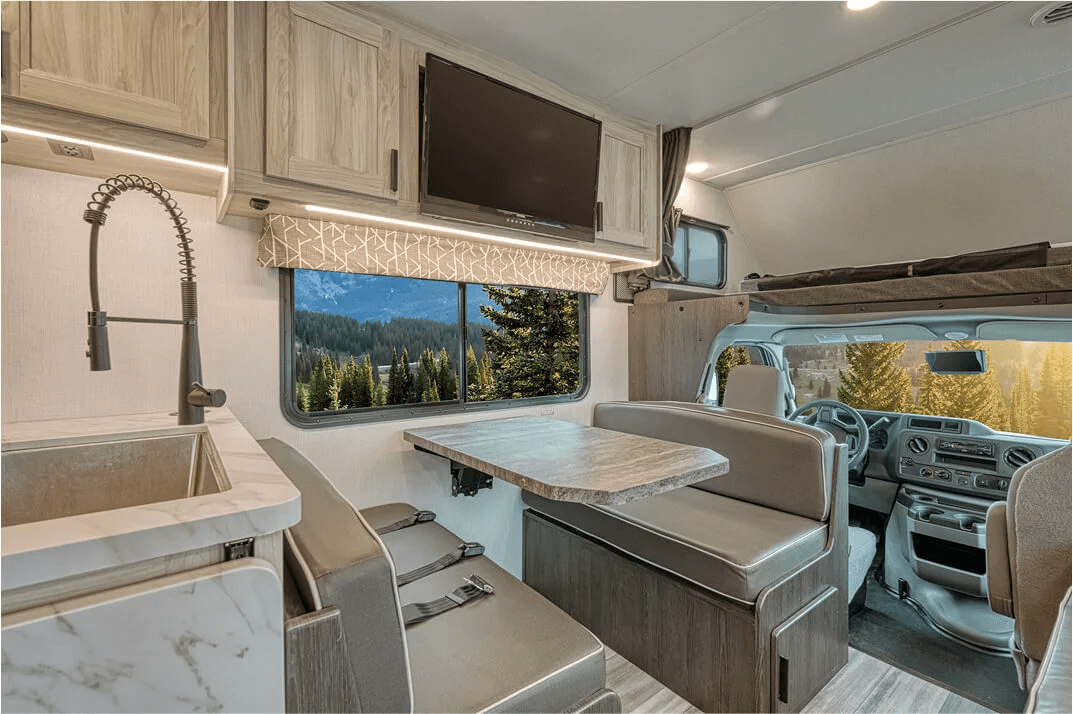
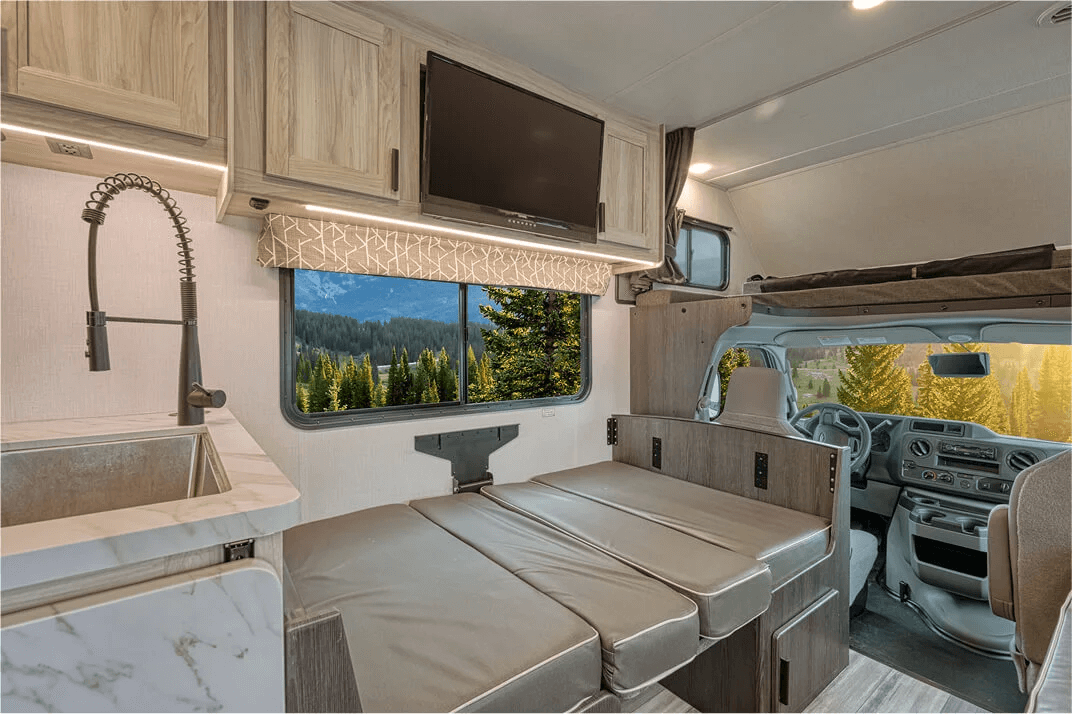
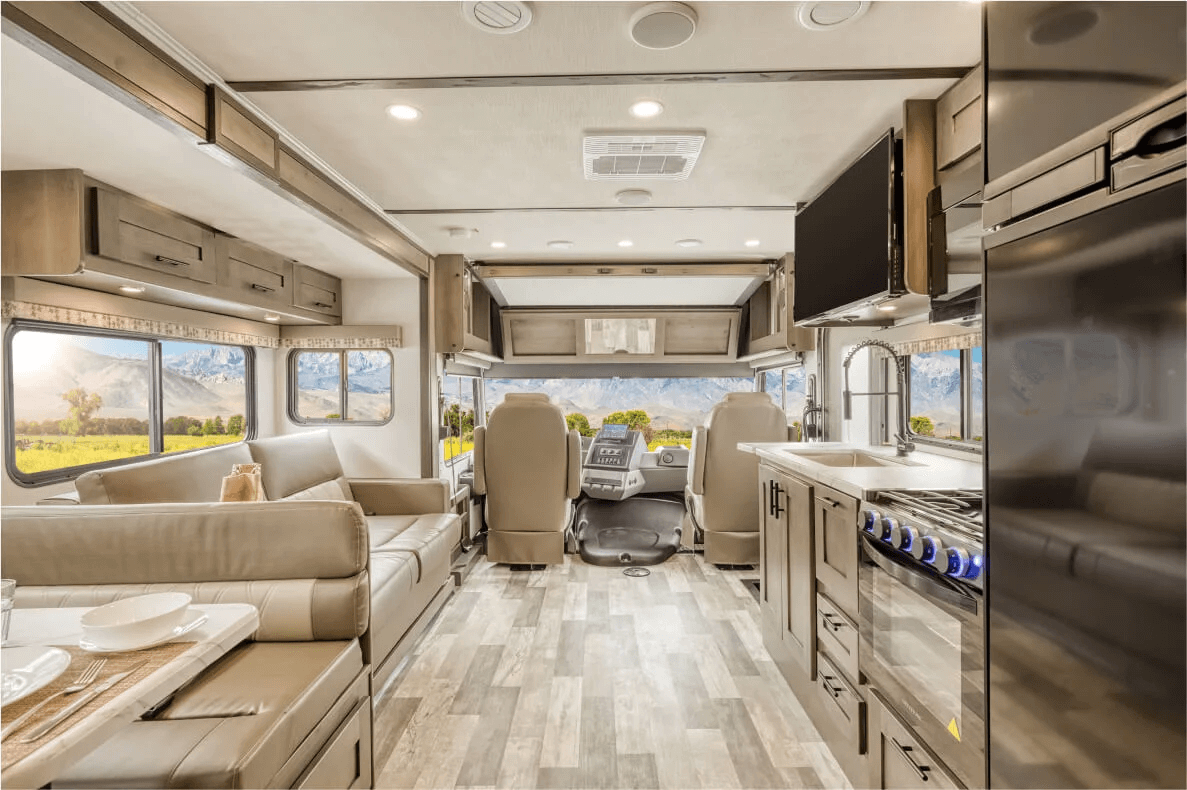
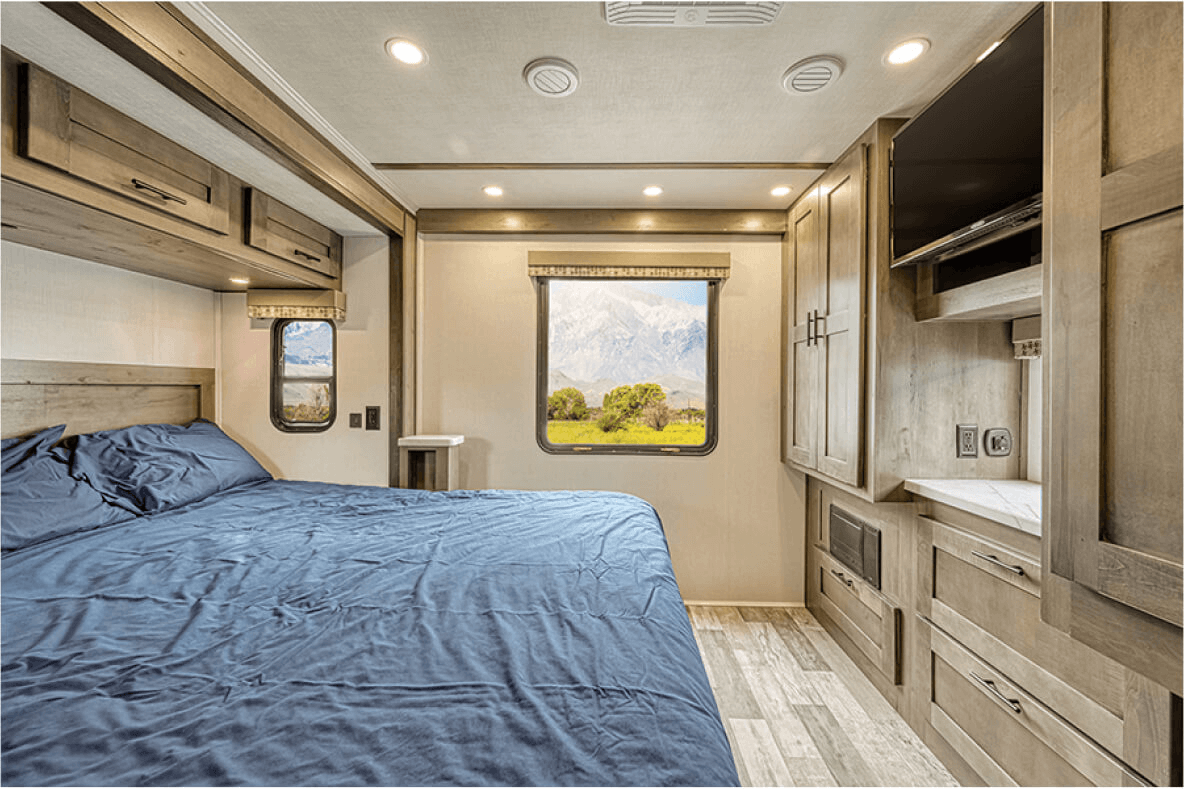
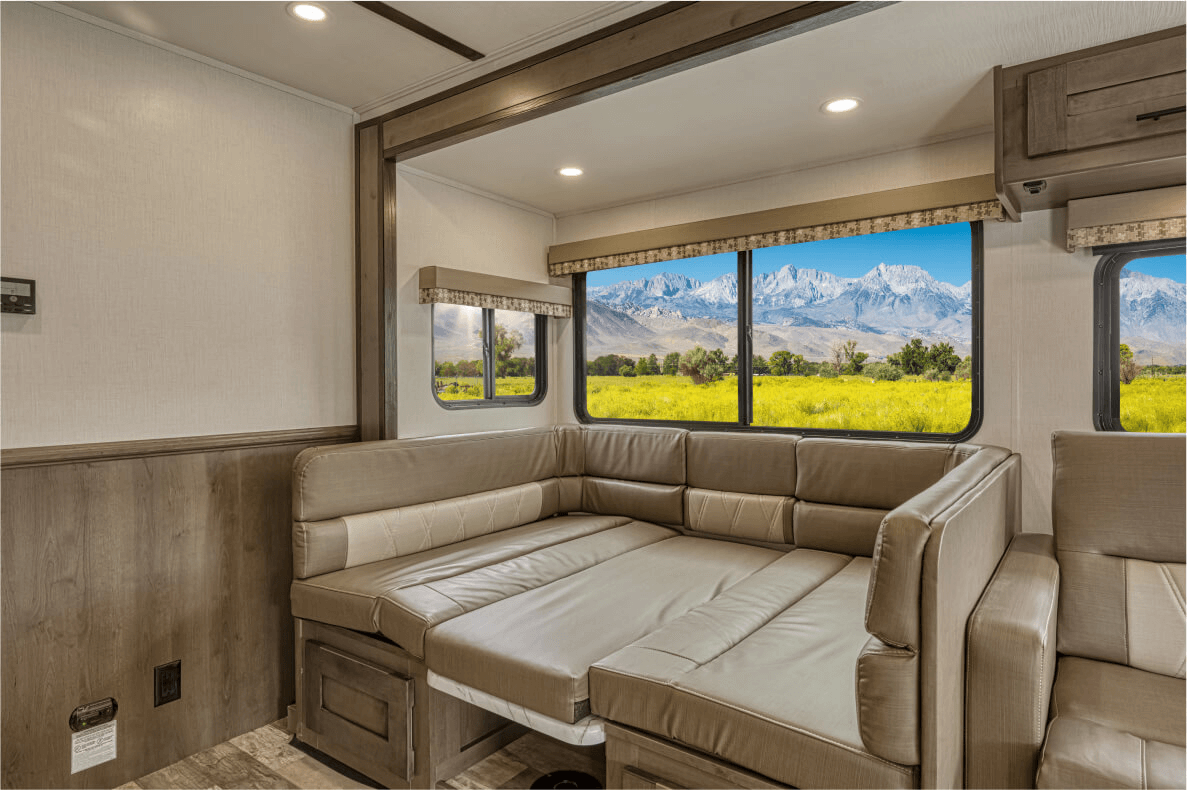
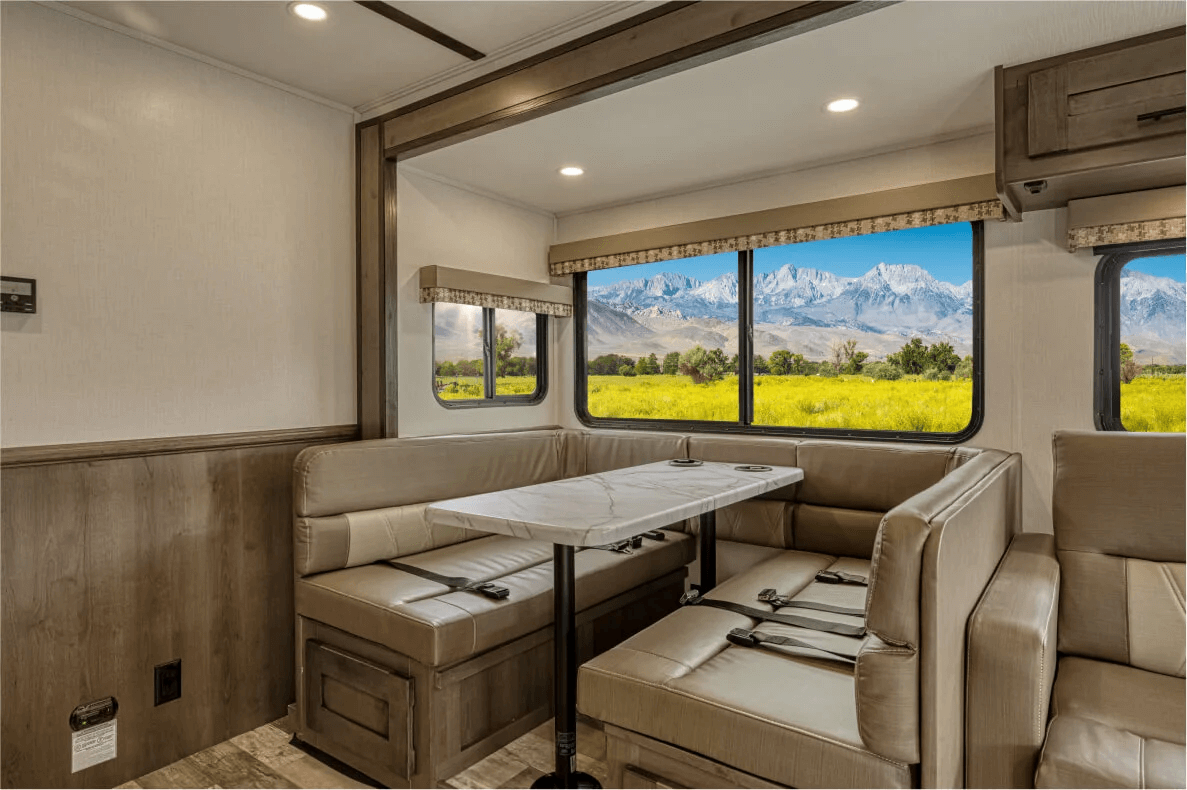
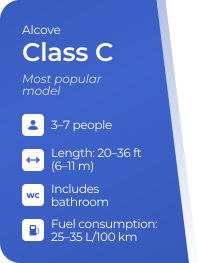
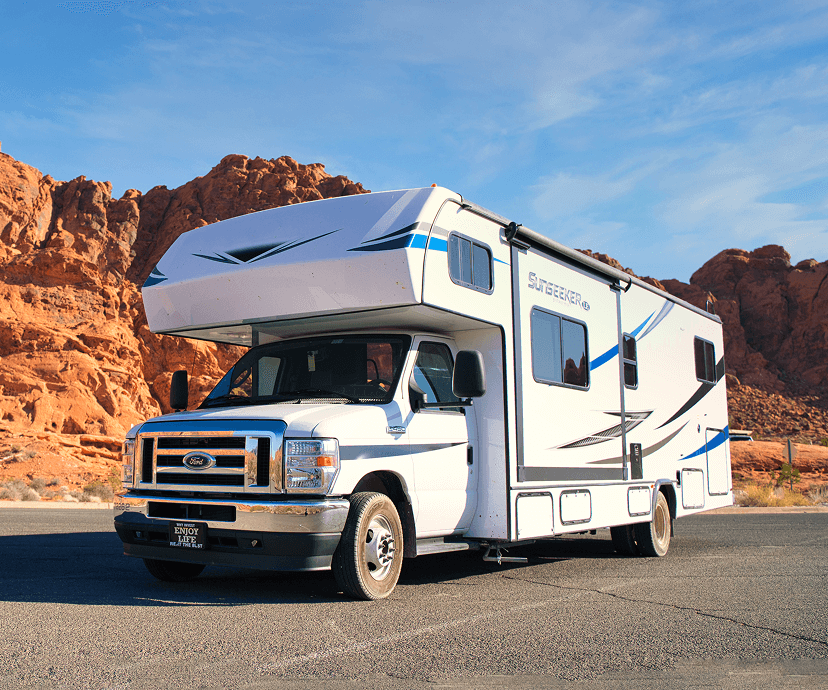
    A Class C is one of the most popular choices for families and small groups. It usually has a living area built behind the cab and often includes an additional bed above the driver’s cabin.

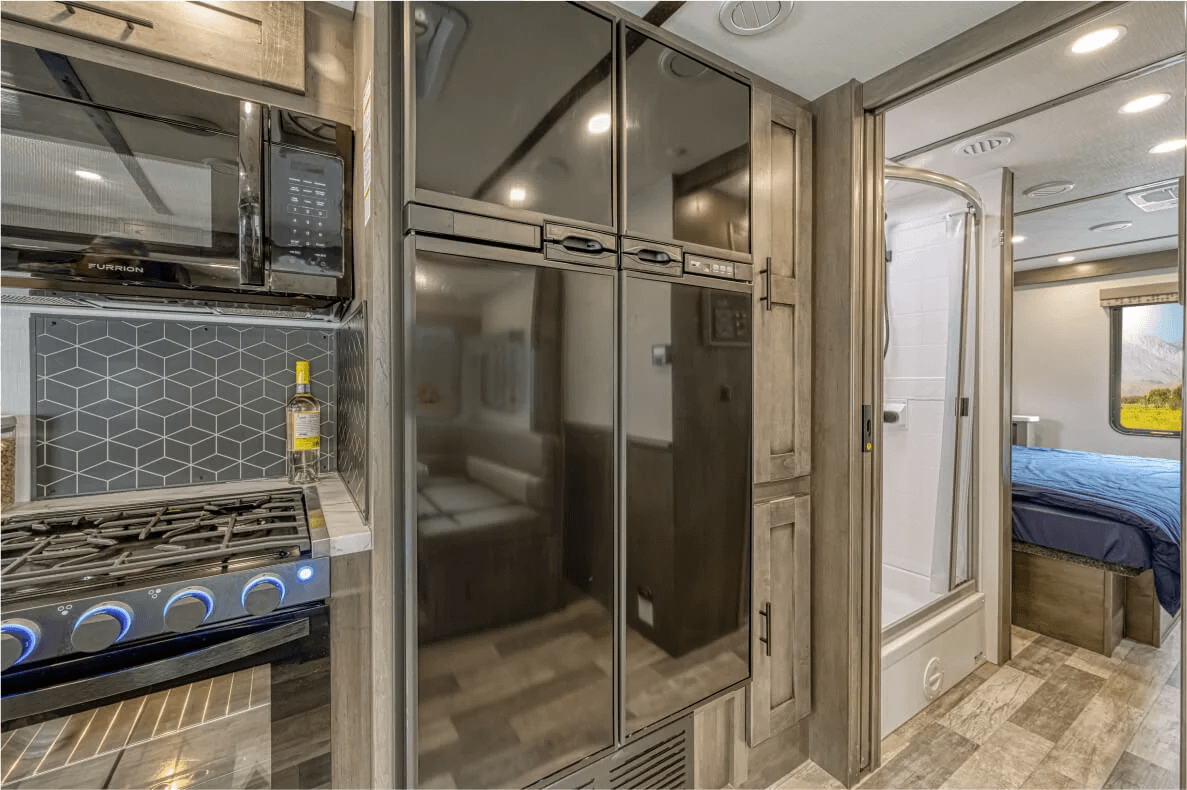
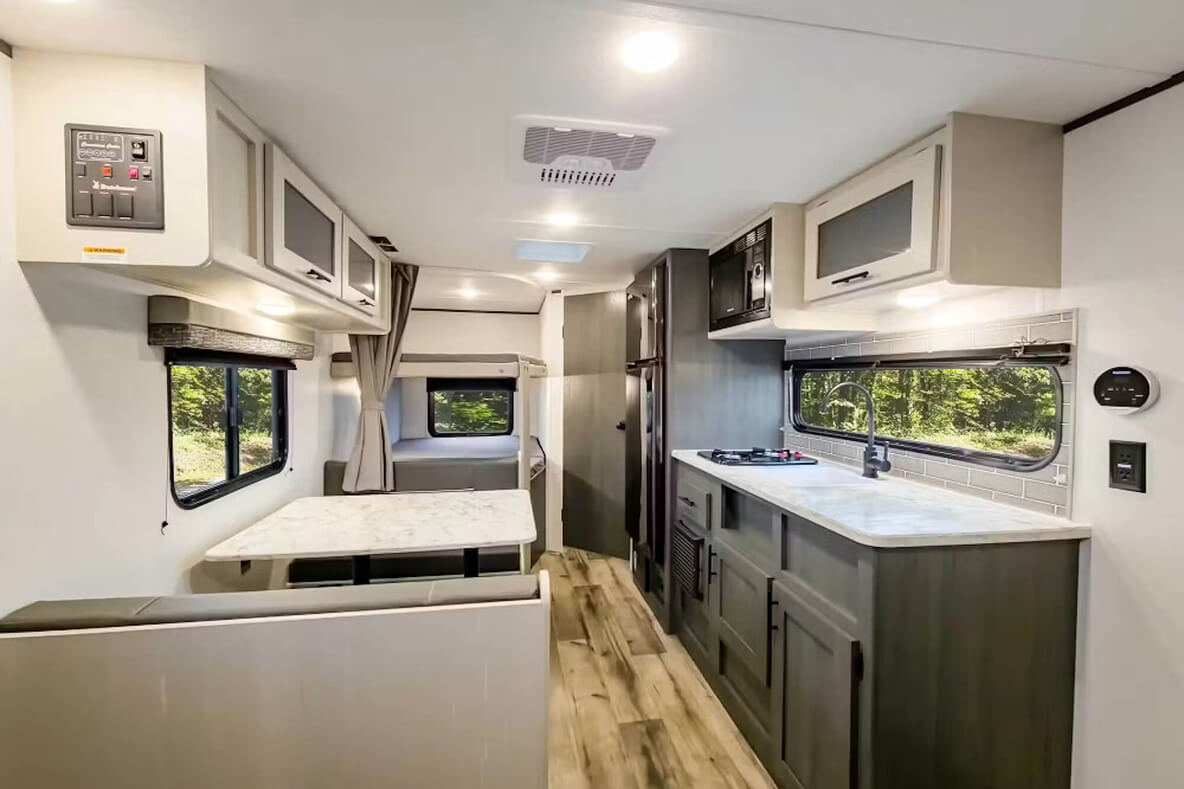
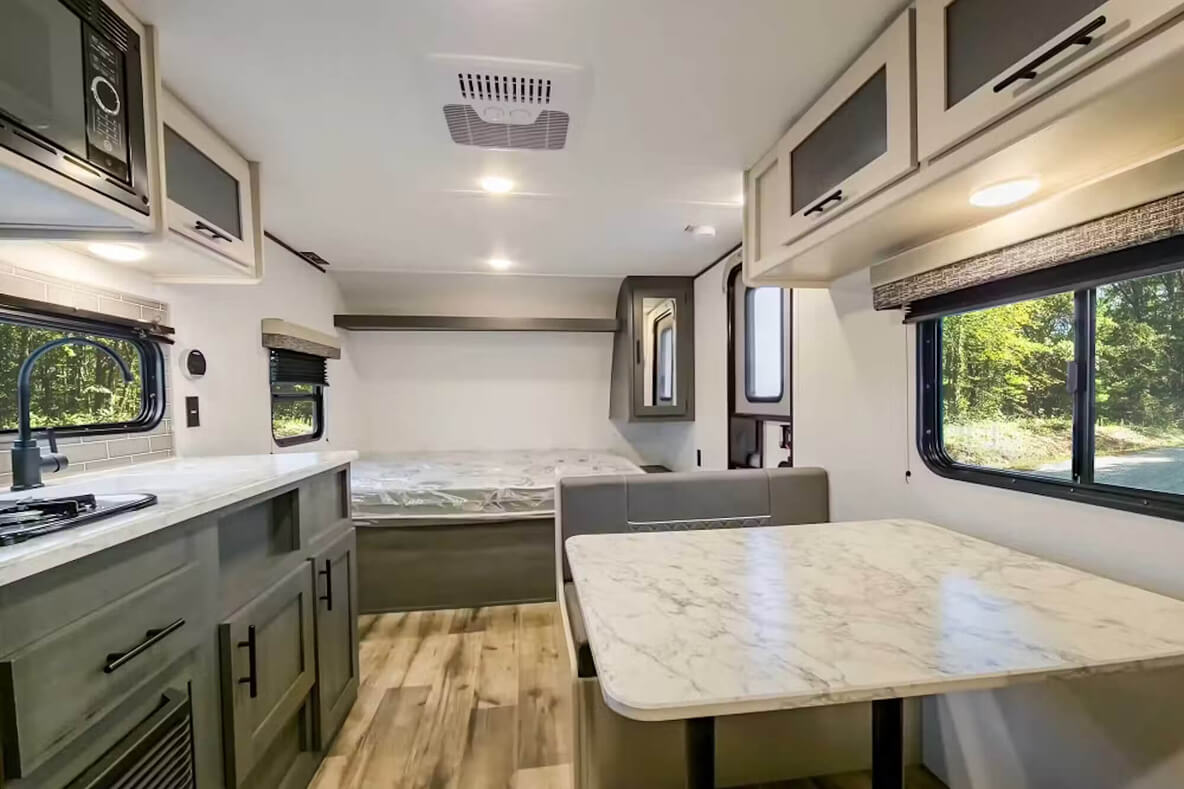
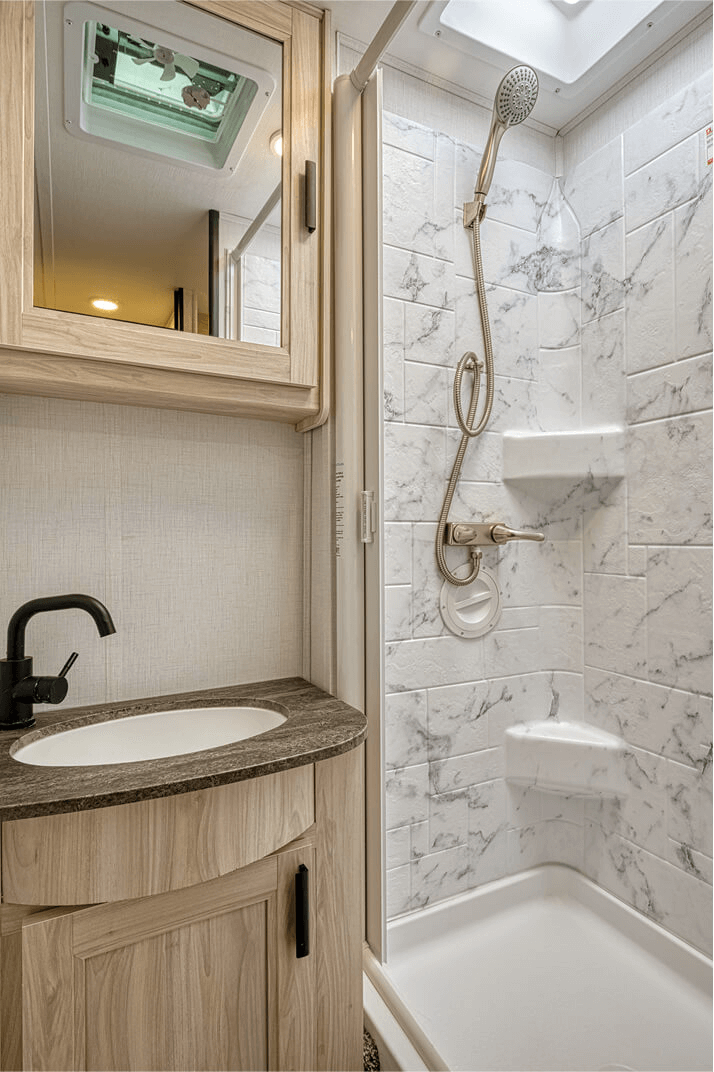
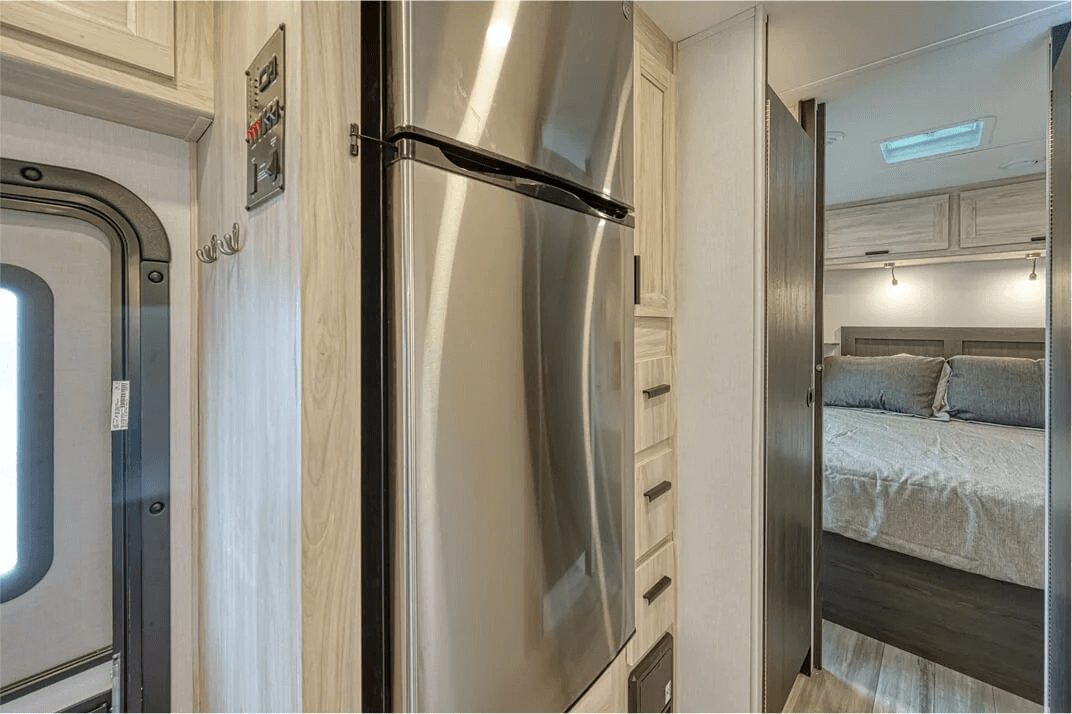
    Compared with a campervan, a Class C normally provides more living space, several sleeping areas, a kitchen, refrigerator, and bathroom. Some models also include a generator and air conditioning.

    For a first Florida RV trip, a Class C often offers a good balance between comfort and drivability. It provides enough space for a longer trip without feeling as large as a bus-style Class A.

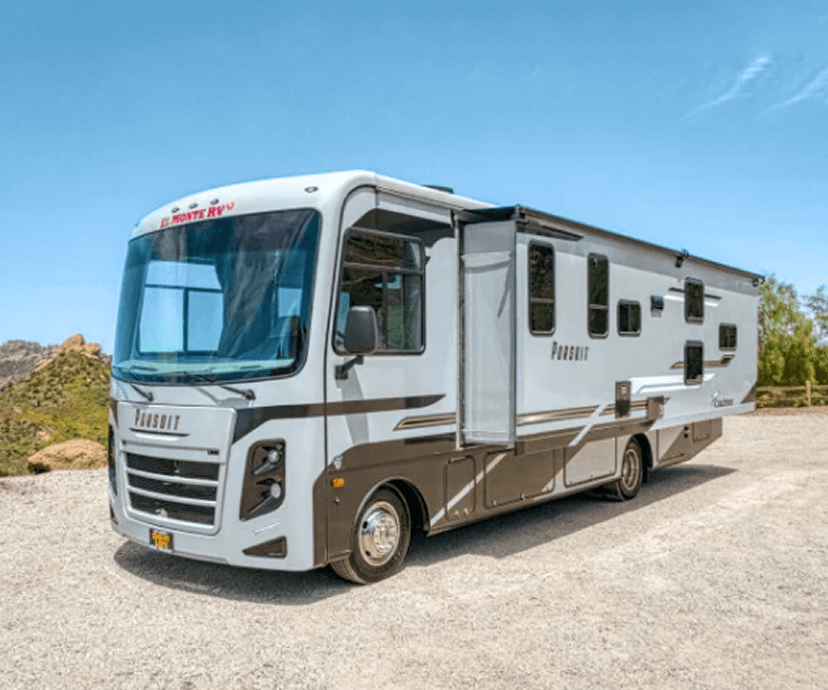
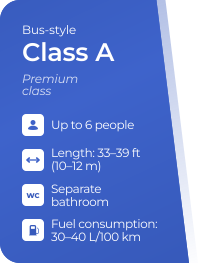
    Class A Motorhome

    A Class A is a large bus-style motorhome. It can offer more interior space, storage, seating, and comfort for longer rentals or larger groups.

    The main issue is size. Parking, urban driving, fuel use, campground length limits, and access to smaller locations all need more attention.

    A luxury RV rental in Miami may involve a Class A or another high-spec motorhome, but the label “luxury” should not be the only reason to choose it. The vehicle still needs to fit your route, driving experience, and campground plans.

    Travel Trailer

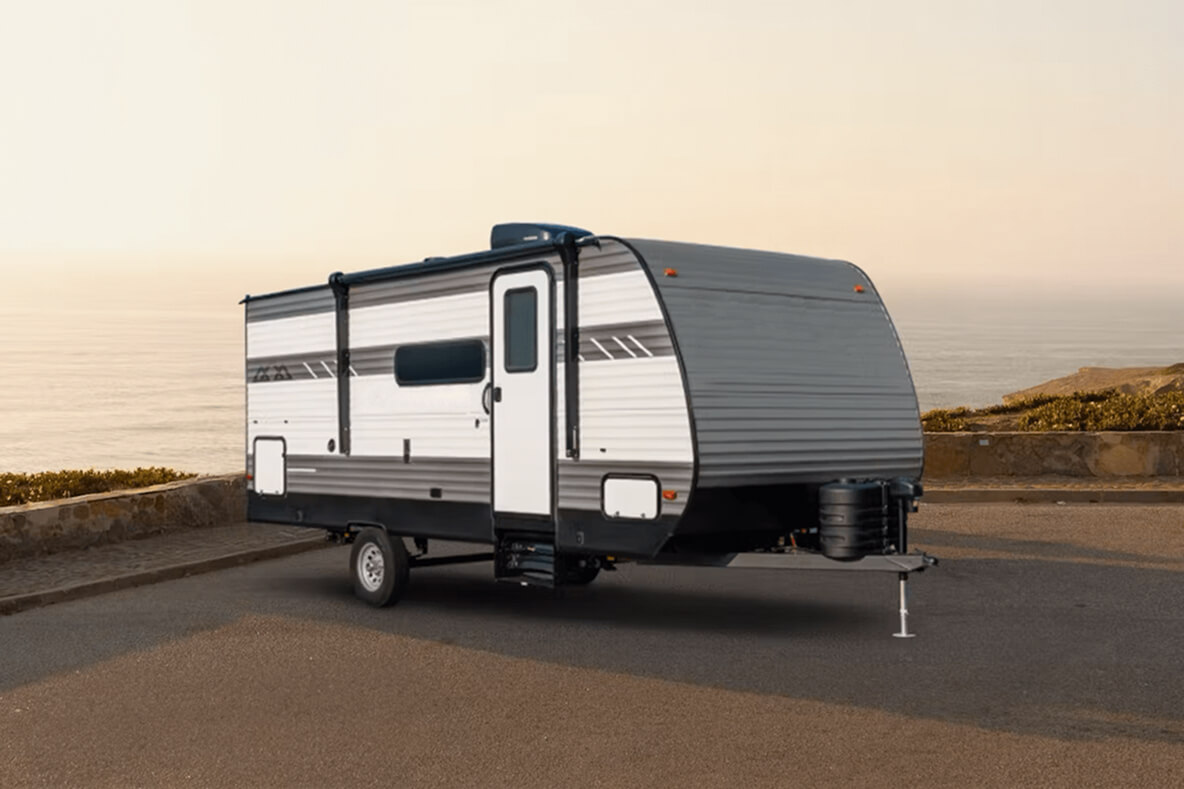
    A travel trailer is towed behind a suitable vehicle. It can be useful for travelers who already have an appropriate tow vehicle and experience with trailers.

    For international visitors flying into Miami, a camper trailer rental is usually less straightforward than a self-contained campervan or motorhome. You need to account for the tow vehicle, hitch, insurance, maneuvering, and the rental company’s requirements.

    Choose Your RV

    Popular RV Routes from Miami

    Route: ~540 km (~340 miles)
    Duration: 3–5 days
    Learn more
    Route: ~465 km (~290 miles)
    Duration: 2–3 days
    Learn more
    Route: ~460 km (~285 miles)
    Duration: 5–7 days
    Learn more
    Route: ~890 km (~550 miles)
    Duration: 7–8 days
    Learn more
    Route: ~1230 km (~760 miles)
    Duration: 10–14 days
    Learn more

    Visiting Miami in an RV

    The most practical rule is simple: use the motorhome as your accommodation and road-trip vehicle, not as your sightseeing vehicle in central Miami.

    South Beach and the Art Deco District are easier to visit without a large RV. Streets and parking facilities are busy, and some garages have height restrictions. Leaving the RV at a campground and using a rideshare, public transport, or rental car is usually more convenient.

    The same applies to Little Havana and Calle Ocho. The neighborhood is worth visiting, but finding a suitable parking space for a long motorhome can be difficult.

    Wynwood Walls is best treated as a city visit rather than an RV stop. Driving in circles looking for street parking is not a good use of your travel time.

    Vizcaya Museum and Gardens, Downtown Miami, and Bayside Marketplace are also generally easier to reach without a large RV.

    Zoo Miami has a larger parking area and may be more accessible for bigger vehicles, but current parking rules should still be checked before your visit.

    Miami Events and RV Travel

    Major Miami events include Art Basel Miami Beach, Ultra Music Festival, the Calle Ocho Music Festival, the Miami International Boat Show, and the South Beach Wine & Food Festival.

    An RV does not eliminate the need to plan transportation. In most cases, you will still want to leave the motorhome at a campground and travel to the event without it.

    The benefit is that you have your own living space outside the busiest districts and are less dependent on central hotel availability. This can also make it easier to add a Florida road trip before or after the event.

    For popular dates, book both the RV and the campground early. Availability near Miami and the coast can become limited.

    Miami RV Rental Prices

    It is not possible to give an accurate rental price without knowing your dates and route.

    The total cost depends on the season, rental duration, RV type, pickup and drop-off cities, mileage, insurance, taxes, preparation fees, generator use, bedding and kitchen kits, and vehicle availability.

    As a broad reference for the United States and Canada, some Class B rentals may be listed around $ 110−190 per day, Class C motorhomes around $ 120−200 per day, and Class A motorhomes around $ 150−250 per day. These are general indicators, not guaranteed Miami rates.
    If you are used to European campervan travel, remember that American RVs can use considerably more fuel. Distances are measured in miles, fuel is sold by the gallon, and larger motorhomes often have a much higher fuel consumption than compact European vans.

    Your road-trip budget should also include campgrounds, toll roads, insurance, fuel, propane, cleaning, and any mileage that is not included in the base package.

    Winter and early spring are usually the busiest periods in South Florida. Summer and early autumn may offer lower rates, but the weather is hotter, wetter, and less predictable.

    Rental Conditions for International Travelers

    Driver Age
    Minimum driver age varies between rental companies. Some accept drivers from 21 years old, while others require the main renter to be 25 or older. Younger drivers may face an extra fee or a more limited vehicle selection.
    Driving Licence
    Many international visitors can rent an RV using their national driving licence, but the requirements depend on the rental company, licence language, country of issue, and vehicle class.

    When the licence is not in English, the rental company may request an International Driving Permit or an official translation. This should be checked before booking.
    Security Deposit
    A refundable security deposit is normally required. It is often pre-authorized on the main renter’s credit card.

    The amount depends on the vehicle, insurance package, and rental company. Make sure the card has enough available credit at pickup.
    Mileage
    Mileage may be included, limited, or charged separately. Unlimited mileage should never be assumed, even for a rental used entirely within Florida.

    For a long-term RV rental in Miami, the mileage package can have a significant effect on the final cost.
    Minimum Rental Period
    Minimum rental length depends on the dates and supplier. During high season, holidays, and major events, longer minimum rentals may apply.

    One-Way RV Rental from Miami

    A one-way RV rental allows you to pick up the motorhome in Miami and return it in another city.

    Possible routes may include Miami to Orlando, Atlanta, New York, Chicago, or a destination on the West Coast. Availability depends on the supplier and vehicle.

    For international travelers, one-way rental can be particularly useful. You can fly into Miami, follow a route in one direction, and fly home from another airport instead of spending several days driving back.

    Not every RV is available for one-way rental, and relocation fees can vary considerably. Confirm the vehicle and return location before booking flights around the route.

    Miami Airport RV Rental

    Travelers often search for campervan rental at Miami Airport, but RV pickup usually works differently from standard car rental.

    Many motorhome rental depots are located away from the airport, sometimes in another part of Miami-Dade County or closer to Fort Lauderdale. Direct pickup immediately after landing may not be possible.

    You may need to take a taxi or rideshare to the rental location. Some suppliers also restrict same-day RV pickup after a long international flight or require arrival before a specific time.

    Check the depot address, pickup hours, transfer options, and required orientation time before booking. It can be sensible to spend your first night in a hotel and collect the RV the following morning.

    The Best Time for an RV Trip in Florida

    November through April
    This is usually the most comfortable period for an RV road trip in South Florida. Temperatures are milder, humidity is lower, and conditions are generally better for the Everglades and outdoor activities.

    This is also the busy season. Rental prices and campground demand can rise around Christmas, New Year, spring break, festivals, and school holidays.
    March and April
    This period can offer a good balance of warm weather and slightly lower demand after the winter peak, although this varies by date.
    May through September
    This period is hotter and more humid, with frequent afternoon storms. Rental and campground availability may be better, but air conditioning, water, sun protection, and weather flexibility become more important.
    Atlantic hurricane season
    It officially runs from June through November. This does not mean every trip during this period will be affected, but you should monitor forecasts, understand evacuation procedures, and review how weather events are covered by the rental and insurance terms.

    Need help choosing a motorhome?

    We'll answer your questions and help you choose.

    What to Pack for Florida

    • Bring high-factor sunscreen, sunglasses, and a hat. Florida sun can be intense, especially near the water.
    • Pack an effective mosquito and insect repellent, particularly if your route includes the Everglades or Big Cypress.
    • Choose lightweight, breathable clothing, but also bring a rain jacket and shoes that can handle sudden rain.
    • Carry sufficient drinking water and electrolytes during hot weather. Do not rely only on the RV’s fresh-water tank for personal drinking water.
    • A portable charger, offline maps, and spare cables are useful in areas with limited mobile coverage.
    • For the Florida Keys and Biscayne area, pack swimwear, towels, sandals, and snorkeling equipment if you plan to use it.

    Where to Buy Food and Equipment

    • Publix is one of the main supermarket chains in Florida and is convenient for regular grocery shopping.
    • Walmart Supercenter can be useful when you need food, water, household supplies, and basic camping equipment in one stop.
    • Costco works well for bulk purchases for families and groups, although a membership is normally required.
    • REI, Bass Pro Shops, and other outdoor retailers carry camping chairs, lights, coolers, outdoor equipment, and other road-trip supplies.
    • Amazon Locker can be useful for items ordered before arrival, provided you know where and when you will collect them.

    RV Parks and Campgrounds near Miami

    An American RV campground is often more than a place to park overnight. Depending on the site, it may provide electricity, fresh water, sewer hookups, showers, laundry, a swimming pool, and other facilities.

    Encore Miami Everglades RV Resort — a practical option south of central Miami, with access toward the Everglades and Florida Keys. Popular dates should be checked and booked in advance.

    Larry & Penny Thompson Park — a public Miami-Dade County campground near Zoo Miami. It can be a useful base for visitors who want to stay relatively close to the city while having access to RV facilities.

    Hollywood KOA — located north of Miami, closer to Hollywood and Fort Lauderdale. It may work well for routes continuing north along the Atlantic coast.

    Goldcoaster RV Resort — located in the Homestead area, south of Miami. Its position can be convenient for trips toward the Everglades, Biscayne, and the Florida Keys.

    Bahia Honda State Park — a highly sought-after campground in the Florida Keys. Campsites can be booked far in advance, especially during the winter season.

    Long Pine Key and Flamingo — these campgrounds provide options for staying within or close to Everglades National Park. Availability, seasonal operations, hookups, and vehicle-length rules should be checked for your dates.

    Free overnight RV parking at Walmart or similar locations should not be treated as guaranteed. Permission depends on the individual store, property owner, and local regulations.

    Useful Apps for a Florida RV Trip

    Driving an RV in Florida

    • Traffic drives on the right-hand side of the road. This will be familiar to most European drivers, but travelers arriving from the United Kingdom, Ireland, Australia, New Zealand, South Africa, and other left-driving countries should allow time to adjust.
    • After a long flight and major time-zone change, avoid planning a long drive immediately after pickup.
    • Road distances and speed limits are shown in miles. Fuel is sold in US gallons. Navigation apps may show a journey as short, but driving a large RV usually takes longer once fuel stops, parking, and campground access are included.
    • Florida has many toll roads. SunPass is often the simplest payment method, but rented RVs may use a toll program provided by the rental company. Check how tolls are recorded and charged before you start driving.
    • The Overseas Highway to Key West crosses islands and bridges. Traffic can be slow, and a large RV needs more space for turning, overtaking, and parking.
    • In the Everglades, keep your distance from wildlife and do not approach alligators or the water’s edge.
    • During hurricane season, follow official warnings and evacuation orders. An RV is not a safe place to remain during a major hurricane or storm surge.
    • In Miami Beach and central Miami, check parking height, vehicle-length limits, and overnight restrictions. In many cases, leaving the RV at a campground is the simplest option.
    How Great RV Trip Helps with RV Rental in Miami

    Send us your travel dates, proposed route, group size, country of licence issue, and comfort requirements.
    We compare suitable Miami RV rental options and explain any important restrictions before you book.
    Choosing the correct vehicle size is particularly important in South Florida. A larger RV may look more comfortable in photographs, but it can make the Florida Keys, Miami parking, and certain campgrounds more difficult. Sometimes a smaller vehicle creates a better trip.

    We help you review insurance, mileage, deposits, generator use, one-way conditions, driver requirements, equipment, additional fees, and supplier policies.

    The less interesting details often decide whether an RV trip runs smoothly.

    Frequently Asked Questions

    Usually, yes. Requirements depend on the rental company, driver age, licence country, licence language, and RV class. These details should be confirmed before payment.

    Get a Miami RV Rental Quote

    Tell us when you are arriving, how long you want to travel, how many people are in your group, and which route you are considering: the Florida Keys, Everglades, Orlando, a full Florida loop, or a one-way trip to another city.

    We will check suitable motorhome and campervan rental options, explain the terms, and help you choose an RV that works for the actual route—not only for the vehicle photos.
    Tell us when you are arriving, how long you want to travel, how many people are in your group, and which route you are considering: the Florida Keys, Everglades, Orlando, a full Florida loop, or a one-way trip to another city.

    We will check suitable motorhome and campervan rental options, explain the terms, and help you choose an RV that works for the actual route—not only for the vehicle photos.
    Contact us. We will answer the questions, help with the choice
    We will answer your questions and help you choose

    Contact us

    GREAT RV TRIP Inc.

    Address:
    2093 PHILADELPHIA PIKE #7170
    CLAYMONT, DELAWARE 19703, USA

    © GREAT RV TRIP, 2017–2026
    Motorhome travel agency
    Let's go on an adventure!
    Manage cookies

    We use cookies and similar technologies to improve your browsing experience, analyze site traffic and serve targeted advertisements.

    For more details, read our Privacy & Data Protection Policy and Cookies Policy.
    Accept All