




Motorhome travel
Motorhome travel
The discount is valid for bookings over 10 days
Motorhome rental
Leave your contacts so we can contact you
Route with Full Travel Support
We will create a personalized route tailored specifically to your wishes and interests. You’ll receive a detailed travel guide with descriptions of must-see attractions, up-to-date prices, and helpful tips. We’ll book your campsites in advance and mark convenient stopovers, so everything is planned for you.
Prefer spontaneous travel and making decisions on the go? We’ve got you covered with full support along the way. We’ll be in touch with you 24/7 to:
Find and book a great restaurant or tour along the route;
Help locate nearby service points, like water disposal or refueling stations;
Quickly adjust your route if you’re in the mood for new experiences.
With us, your journey will be easy, well-organized, and truly free.
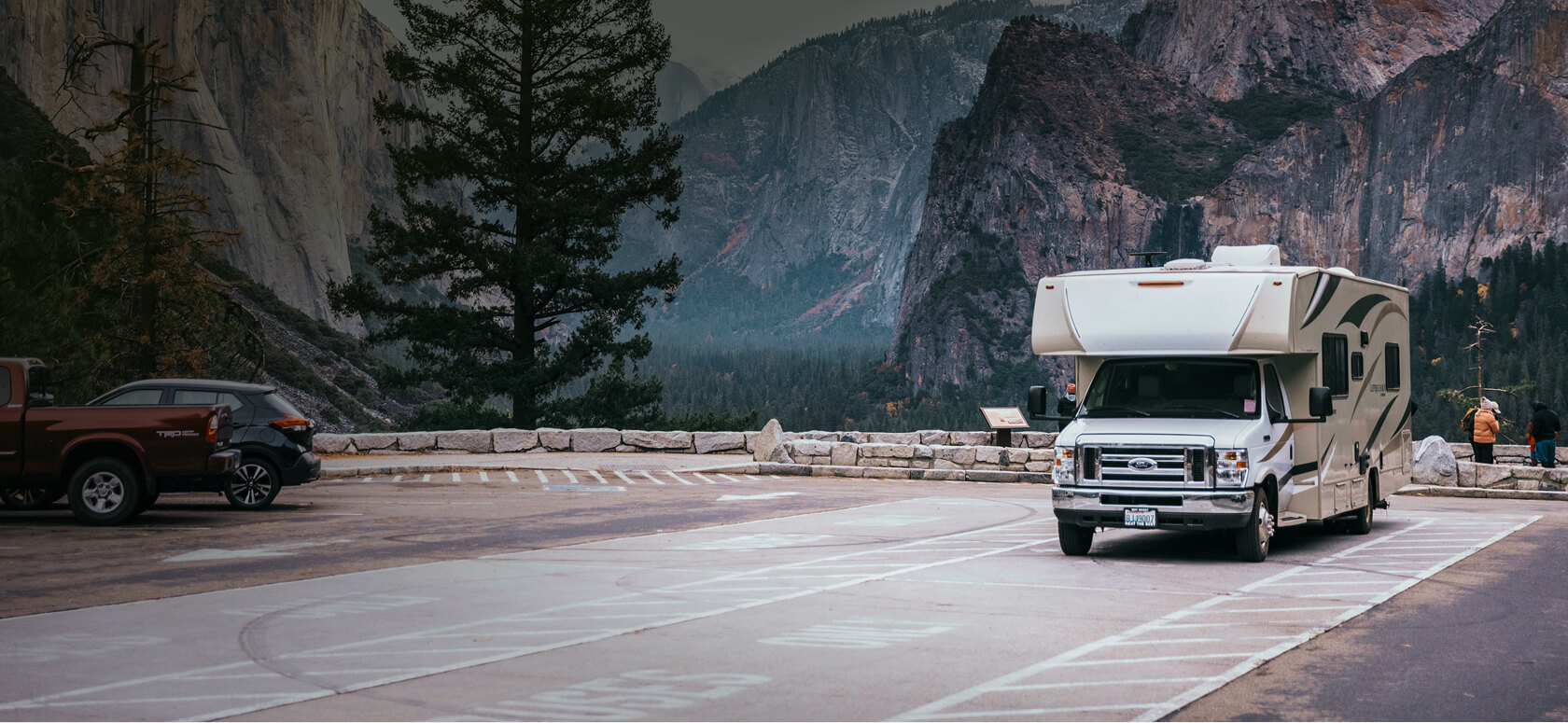
Motorhomes still feel unfamiliar to many travelers. Practical questions come first: How difficult is a large vehicle to drive? Where can you stay overnight? How do you refill the water and manage the onboard systems? A rental car with hotel stays feels more familiar, predictable and easier to understand while planning.
Neither format suits every route. An RV gives you more independence and lets you stay closer to nature. A car and hotels work better in cities and remove most of the practical work around accommodation. The comparison below follows the same questions as our original article about motorhomes and hotels, with added detail for a USA road trip.
Neither format suits every route. An RV gives you more independence and lets you stay closer to nature. A car and hotels work better in cities and remove most of the practical work around accommodation. The comparison below follows the same questions as our original article about motorhomes and hotels, with added detail for a USA road trip.
What an RV trip feels like
With an RV, you can set off at a convenient time and control the route within your rental dates. You do not need to plan every drive around hotel check-in and check-out times. If plans change, you can stay longer in a place you enjoy, shorten the next stop or move toward better weather.
That freedom still requires preparation. Pickup and return dates are fixed, and popular campgrounds often need advance reservations during peak season. Changing the route may cost money when campsites have already been paid for. A practical approach is to secure the essential nights and leave a few flexible days between them.
An RV means you do not have to keep driving while tired simply to reach a booked hotel. However, a large gas station parking lot is not automatically a legal overnight stop in the USA. Rules depend on the state, municipality and property owner. Use a campground or a location where overnight RV parking is explicitly allowed.
A car and hotels can also provide flexibility, especially when bookings allow free cancellation. A car is easier in city centers, on narrow roads and in parking garages. An RV influences the route more: you need to consider its length, height, braking distance and any road restrictions.


Campgrounds and overnight parking
RV travelers usually look for campgrounds first. During peak season, sites near national parks, the coast and other popular destinations can fill well before the trip. Many campgrounds on federal land use Recreation.gov, but there is no single booking window. Check the rules for every park and campground.
Campgrounds offer very different facilities. A basic site may provide only a parking space. A developed site may include electricity, fresh water and sewer connections, known in the USA as hookups. Sometimes each site has its own connections; elsewhere, travelers fill water and empty wastewater tanks at a shared service point. Showers, laundry, Wi-Fi and mobile reception are also far from guaranteed.
Before booking, check the maximum RV length and access conditions. An available site may still be unsuitable for a large model. It is also useful to confirm whether electricity is included, whether generator use is restricted and how late you may arrive.
You do not have to use a commercial campground every night. Travelers share free and low-cost locations through specialist apps. These reports are useful leads, but permission must be confirmed separately. The owner controls private property, and local rules apply on public land. In some national parks, including Yosemite and Joshua Tree, sleeping in a vehicle is allowed only in a legally occupied site within a designated campground. Check the rules for every park.
Luggage
A car has limited luggage space, and hotel travel means carrying suitcases into and out of each room. In an RV, clothes remain in the cabinets, food stays in the refrigerator and outdoor equipment can stay in the storage compartments. Your everyday setup moves with you.
This can be especially useful with children: snacks, medication, spare clothes and toys remain accessible during stops. After a supermarket visit, groceries can be put away immediately instead of being packed with the rest of the luggage.
International airline baggage limits still apply. Pillows, blankets, cookware and some camping equipment may be easier to rent from the RV company or buy after arrival. Check the vehicle package before booking, since cookware, bedding and towels are often paid extras.
RV storage is also limited. Large hard-shell suitcases can be awkward inside, so soft bags are often more practical. If you plan to carry bicycles, a stroller or bulky sports equipment, ask about exterior compartment dimensions, weight limits and compatible racks for the chosen model.
Comfort and RV maintenance
In a hotel, you do not need to think about water, electricity or wastewater. In an RV, travelers monitor these systems themselves: fresh water, wastewater tanks, battery charge and the fuel or propane used by onboard equipment.
The systems are usually straightforward after the pickup orientation. Wastewater is emptied through the designated sewer hookup at the campsite or at an approved dump station. This is not necessarily a daily task; frequency depends on tank capacity, group size and water use. Full-hookup campsites simplify the routine, while stays without connections give you a limited supply of water and power.
Before each drive, secure loose items, close cabinets and windows, disconnect campsite utilities, check the awning and make sure nothing has been left outside. These steps soon become routine, but they take time. With hotels, the equivalent work is checking out, moving luggage and checking in again.
Comfort depends on the actual floor plan. The advertised sleeping capacity does not guarantee that adults will be comfortable on a converted sofa or dinette. Check bed, shower and refrigerator sizes, walking space after the beds are set up, and how the heating and air-conditioning systems work. If the living-area air conditioner relies on shore power or a generator, confirm electrical hookups and generator hours: many campgrounds prohibit generator use at night.


Family travel with children
Children often see an RV as part of the adventure, while parents can organize meals, rest and hygiene more easily. The refrigerator, kitchen and toilet stay nearby, so the family depends less on restaurant hours and hotel locations. You mainly need to restock food and monitor the water supply.
While the RV is moving, each passenger should remain in a designated travel seat and use an appropriate seat belt or child restraint. Check the laws in every state on the route, and follow both the RV and child-seat instructions when installing a restraint. Children can play at the table, lie down to watch television or use the living area after the vehicle has stopped. Sleeping capacity is not the same as safe passenger capacity. Before booking, request the seat-belt layout and confirm where the required child seats can be installed.
The onboard toilet saves long searches along the route, but it is safer to use it during a stop. Plan short breaks just as you would in a car. Families with young children should also check the entrance steps, cabinet latches and stroller storage.
Choose the vehicle by its real floor plan. A family of four may find a nominal four-berth model cramped if two beds must be made from the sofa and dining table every night. A larger vehicle may improve comfort, but it also makes parking and city driving harder.
Costs
The numbers vary. A large RV for two people will often cost more than a compact car and one modest hotel room. For a family or group of five or six, an RV can be more economical, especially when the alternative requires two hotel rooms and frequent restaurant meals.
Compare the complete cost for the same dates. An RV budget can include the rental, taxes and fees, insurance, fuel, campgrounds, mileage charges, generator use, cookware and bedding kits, cleaning and a possible one-way fee. Terms differ between rental companies, and some items may already be included in the rate.
For a car and hotels, include the vehicle, insurance, fuel, tolls, parking, every hotel room, additional hotel fees and meals. City parking can materially increase the budget, while accommodation price and location become especially important near national parks.
Illustrative cost comparison
Illustrative scenario: 2 adults and 2 children, 10 days and 9 nights, a 1,900 km route, and either one hotel room or a Class C motorhome. Fuel is calculated at $ 0.95−1.05 per litre. These figures show how to compare the options and are not a current rental quote.
Expense
Class C motorhome
Car and one hotel room
Vehicle rental
10 × $250–320 = $2,500–3,200
10 × $40–50 = $400–500
Fuel
1,900 km × 26 l/100 km × $0.95–1.05/l = $470–520
1,900 km × 8 l/100 km × $0.95–1.05/l = $145–160
Overnight stays
9 × $50–90 = $450–810
9 × $180–280 = $1,620–2,520
Tolls and parking
$100–250
$150–350
Food
$700–1,000
$1,100–1,600
Total
$4,220–5,780
$3,415–5,130
Flights, park and attraction tickets, a refundable deposit and a possible one-way fee are excluded. If the family needs two hotel rooms, add the second room to the hotel option. If an RV rate includes mileage or equipment kits, adjust the corresponding rows.
Travel pace has a strong effect on RV costs. Long daily drives increase fuel use and may add mileage charges. A slower route makes better use of the kitchen, removes repeated hotel check-ins and can replace several rooms for a group. There is no universal trip length after which an RV is guaranteed to become cheaper.
Also confirm the security deposit, how it is collected and when it is returned. A refundable deposit should not automatically be counted as a trip expense, but the funds must be available. International travelers should check the rental company’s driver-document and payment-card requirements in advance. Whether an International Driving Permit is needed depends on the states in the route, the country that issued the national license and the rental company. If an IDP is required, obtain it before the trip and present it together with the national driving license.
Conclusion
Some travelers value hotel service, a private room and easy parking. Others prefer campground life, unusual overnight stops and the ability to carry their daily setup with them. The rhythm of the trip changes significantly even though both formats are independent road trips.
An RV works best on national-park routes, longer family or group journeys and trips where staying close to nature is part of the experience. A car and hotels are often more convenient for a shorter holiday, a couple or an itinerary with many cities. On a mixed route, you can leave the RV at a campground outside the center and use public transport or rideshare.
Before choosing, map the route day by day, mark likely overnight stops and calculate both trips in full. Then decide which routine suits you: managing an RV and staying in campgrounds, or moving luggage and checking into hotels.
Great RV Trip can compare several motorhomes for your dates, group and route, explain the rental conditions and help arrange campgrounds. This gives you real options based on total cost and the floor plan you actually need.

E-mail: info@greatrvtrip.com


Contact us. We will answer the questions, help with the choice
We will answer your questions and help you choose
Contact us
GREAT RV TRIP Inc.
Address:
2093 PHILADELPHIA PIKE #7170
CLAYMONT, DELAWARE 19703, USA
© GREAT RV TRIP, 2017–2026
Motorhome travel agency
Let's go on an adventure!
Address:
2093 PHILADELPHIA PIKE #7170
CLAYMONT, DELAWARE 19703, USA
© GREAT RV TRIP, 2017–2026
Motorhome travel agency
Let's go on an adventure!
Manage cookies
We use cookies and similar technologies to improve your browsing experience, analyze site traffic and serve targeted advertisements.
For more details, read our Privacy & Data Protection Policy and Cookies Policy.
We use cookies and similar technologies to improve your browsing experience, analyze site traffic and serve targeted advertisements.
For more details, read our Privacy & Data Protection Policy and Cookies Policy.