


Motorhome travel
Motorhome travel
The discount is valid for bookings over 10 days
Motorhome rental
Leave your contacts so we can contact you
Route with Full Travel Support
We will create a personalized route tailored specifically to your wishes and interests. You’ll receive a detailed travel guide with descriptions of must-see attractions, up-to-date prices, and helpful tips. We’ll book your campsites in advance and mark convenient stopovers, so everything is planned for you.
Prefer spontaneous travel and making decisions on the go? We’ve got you covered with full support along the way. We’ll be in touch with you 24/7 to:
Find and book a great restaurant or tour along the route;
Help locate nearby service points, like water disposal or refueling stations;
Quickly adjust your route if you’re in the mood for new experiences.
With us, your journey will be easy, well-organized, and truly free.
Introduction: Designing Your Dream Journey
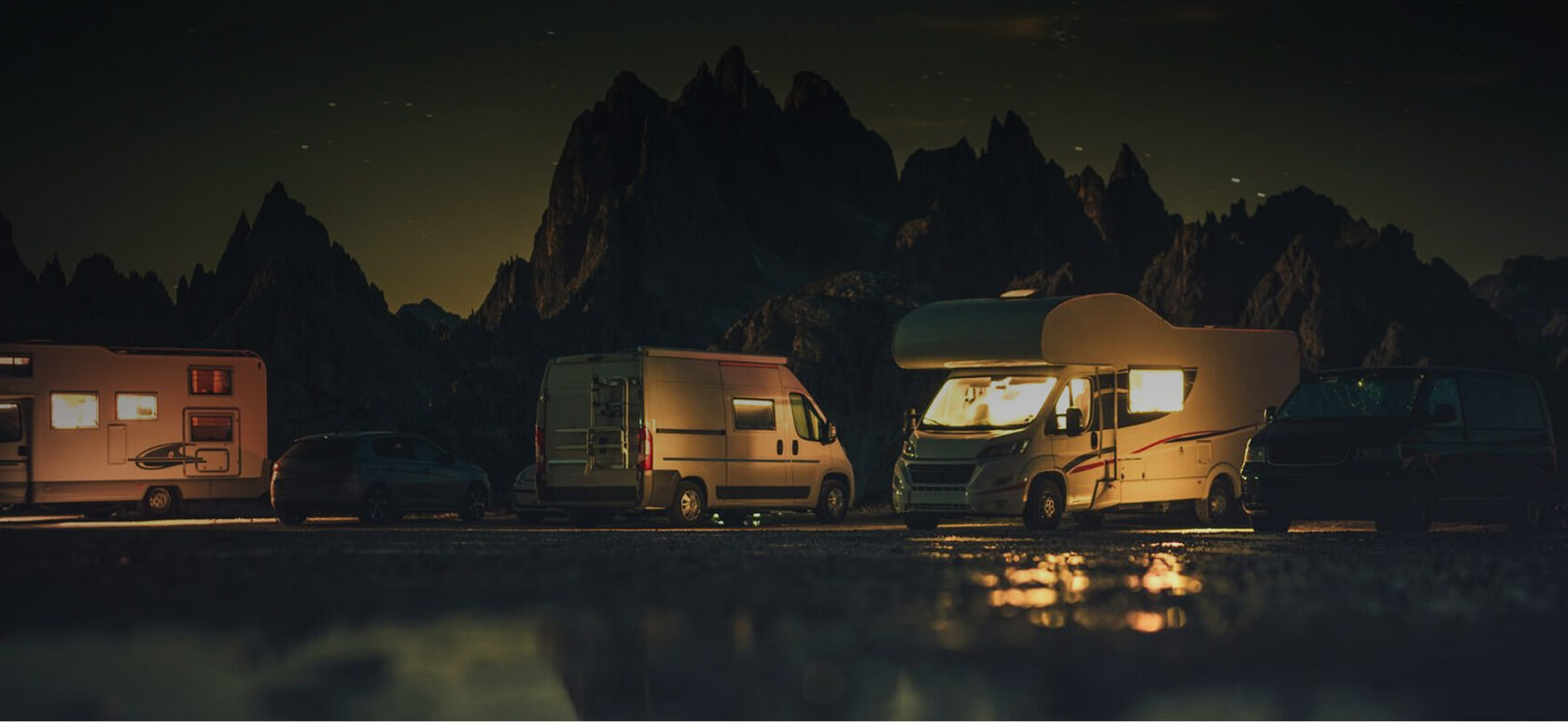
A motorhome trip offers freedom and the comfort of home—your favorite mug and a hot shower are always with you. While spontaneous trips are excellent, a little preparation makes the journey flawless. We have gathered 6 steps to organize your adventure.
If this is your first time driving an RV, start with our Beginner’s Guide (F.A.Q) to answer the most frequent questions.
If this is your first time driving an RV, start with our Beginner’s Guide (F.A.Q) to answer the most frequent questions.
Step 1: Destination, Documents, and Seasonality
The first question is: "Where are we going?" Globally, there are two distinct travel styles:
USA vs. Europe: Choosing Your Style
It depends on the scale of adventure you prefer.
- North America (USA/Canada): Space and Scale. Built for road trips with wide lanes (3.6 meters/12 ft) and huge infrastructure. Large liners with slide-outs (expanding walls) are the norm here.
- Europe: Coziness and History. Ideal for scenic, narrow roads. Manufacturers build agile, compact campers (2.1−2.3 m


Turkey: The Spirit of Freedom
For maximum flexibility, choose Turkey. It offers high tolerance for caravanners: you can legally stay overnight almost anywhere (except private property and archaeological zones). Perfect for "old school" spontaneous travel.
Pro Tip: The Benefits of Early Booking
Spontaneous trips work, but planning ahead using an RV itinerary planner guarantees the best options.
- The Rule: The booking window for summer opens in October-December of the previous year.
- The Benefit: Early booking often gives discounts up to 20−30% and guarantees specific models (e.g., new automatic transmissions).
The "First Night" Rule: Start Your Vacation Right
If flying across the ocean (e.g., to the USA or Canada), motorhomes are handed over the day after arrival for safety. Book a hotel near the airport, rest, and pick up your RV fresh the next morning.
Important Details: Documents and Nuances
Check these items for peace of mind:
Heat: In peak seasons (Andalusia or Arizona), remember that living area AC usually requires a 220V/110V campsite connection.
- International Driving Permit (IDP): Mandatory alongside your national license in countries like Italy, Austria, and Greece.
- Cross-border Fee: Verify insurance extensions if crossing borders (e.g., Germany to the Czech Republic or Poland).
- Child Safety: Requirements match regular cars (Isofix). Confirm the RV layout fits your specific seats.
- Weather Factors:
Heat: In peak seasons (Andalusia or Arizona), remember that living area AC usually requires a 220V/110V campsite connection.
Step 2: Choosing a Motorhome and Rental Conditions: Europe vs. USA
Choosing a motorhome is like choosing a hotel room, only more interesting. However, the rules of the game in the Old and New Worlds differ significantly. The main thing is to select a model that fits your license and comfort expectations.
Licenses and Weight: Where Does Category "B" End?
The most frequent question: "Do I need a special heavy vehicle license?" The answer depends on which continent you are on.
USA and Canada: Complete Freedom. Here, automotive paradise reigns. You can rent a huge 30-foot (9-meter) motorhome (Class A or C) weighing 5−6 tons and drive it with a standard car license (Category B). Legislation allows tourists to drive almost any rental camper without special commercial licenses.
Europe: Strict Scales. Here, the rules are stricter.
- Category B (up to 3500 kg / 7700 lbs): Most European rental campers (compact and mid-sized) are specifically designed to fit within this limit.
- Weight Nuance: Modern campers are well-equipped, and their "dry" weight often approaches 3 tons. If you add passengers, a full water tank, and luggage, you might accidentally exceed the 3.5-ton limit. In Austria or Switzerland, this is strictly monitored.
- The Solution: For Europe, simply do not overload the vehicle with unnecessary luggage. And if you have a large family and want to take everything, consider models in category C1 (up to 7.5 tons)—there is a huge weight reserve there, but corresponding licenses will be required.
Transmission: Manual or Automatic?
There is a clear geographical division here too:
- USA and Canada: Relax. Here, 100% of the rental fleet is automatic transmission. You don’t need to think about the clutch, just enjoy the cruise control.
- Europe: Historically, manual transmission rules here (especially on the Fiat Ducato base). However, now the share of automatics is growing, reaching 30−40% in the premium segment. New ZF gearboxes work smoothly and comfortably.
Diesel or Electric? A Look into the Future
- Fuel: In Europe, almost all motorhomes are diesel (economical). In the USA, the majority are gasoline/petrol (thirstier, but fuel is cheaper there).
- Electric Campers (e-RV): Already appearing in rentals. This is interesting and eco-friendly, but currently, the real range of a heavy camper on a battery is about 200−250 km. If you want complete independence, a classic internal combustion engine remains the most reliable choice for now.
Financial Security: Deposit and Excess
Motorhome rental works the same way as regular car rental. A security deposit is blocked on your card.
- Basic Insurance (CDW): Included in the price. It has an excess (deductible)—the amount within which the renter is responsible.
- Super Cover: If you want maximum peace of mind, you can purchase full protection (reducing the excess to zero). This costs extra per day, but you stop thinking about possible scratches.
Understanding the Budget: Transparency of Conditions
To ensure the final sum is not a surprise, pay attention to differences in contracts:
In Europe: Most often, mileage is unlimited, but it is better to check this in the specific vehicle conditions.
- Mileage Limit:
In Europe: Most often, mileage is unlimited, but it is better to check this in the specific vehicle conditions.
- One-way Fee: Want to pick up the car in Paris and drop it off in Nice? Or drive from New York to Los Angeles? Convenient, but a fee is charged for return logistics (from 300 to 1000 euros/dollars).
- Cleaning Fee: Usually, the car must be returned clean (dishes washed, tanks empty). If you don’t want to do this, you can pay for final cleaning.
- Pets: 60% of caravanners travel with pets. Usually, there is a small surcharge (Pet Cleaning Fee). The main thing is to agree on this in advance.
Step 3: Itinerary, Eco-Zones, and Parking
Many beginners try to "blitz" all of Europe in a week. But the joy of caravanning is in the ability not to rush anywhere.
Philosophy of Slow Travel: The 3−3-3 Rule
To ensure road trip tips work for you and the trip brings joy rather than turning into a race, experienced travelers use a simple comfort rule: "3-3-3":
- Distance: Plan to drive no more than 300 km (or miles) per day. That’s just 3–4 hours of calm driving with coffee stops.
- Time: Try to arrive at the campsite by 3:00 PM. This gives you time to park calmly, connect to utilities, and enjoy the evening and sunset.
- Stay: Stop for at least 3 nights in one location. The motorhome becomes your "base camp," from where it is convenient to make radial trips light.
- Plan to drive no more than 300 km per day.
- Try to arrive at the campsite by 3:00 PM.
- Stop for at least 3 nights in one location.
The "Test Night" Strategy
In addition to the 3−3-3 rule, experienced caravanners use the "Zero Kilometer" rule.
- The Problem: You picked up the car, loaded your things, and immediately drove 300 km away. In the evening, it turns out that a cupboard door rattles, suitcases are falling, and you forgot how to turn on the boiler.
- The Insight: Spend the first night at a campsite as close as possible to the rental station (10−20 km). This allows you to return in the morning if a malfunction is discovered (pump not working, no cable) or buy forgotten items in a familiar city.
Navigation: Secrets of Convenient Routes
While Google Maps works, it ignores vehicle dimensions. To avoid low bridges, we recommend specialized apps like RV Trip Wizard or CoPilot GPS. Enter your height and weight, and the app builds a safe route.
Toll Roads and Vignettes
Road tolls vary by country, but the rules are simple:
- France: Motorhomes over 3 meters pay more (Class 3). Many campers are built 2.99m high to save money.
- Norway: Length matters (<6m is cheaper on ferries). Registering for AutoPASS ensures discounts.
- Austria and Switzerland: Vehicles >3.5 tons need a special device (GO-Box); lighter ones just need a standard vignette found at gas stations.
Cities and Ecology: Driving Without Fines
- Stickers: France (Crit'Air) and Germany (Umweltplakette) require environmental stickers. Order them online a few weeks in advance to avoid fines.
- ZTL (Italy): Avoid Limited Traffic Zones in historic centers. Do not drive past the "red circle on white background" signs.
- Park & Ride Hack: Park in spacious lots on the outskirts and take the metro to the city center (e.g., to the Eiffel Tower). It is cheaper, faster, and stress-free.
- Crit’Air (France)Required for entering Paris, Lyon, Grenoble, and many other major cities (and their metropolitan areas).
- Umweltplakette (Germany)Required for entering the city centers of most large German cities (Berlin, Munich, Cologne, etc.).
- ZTL — Zona a Traffico Limitato (Italy)Restricted traffic zones in historic city centers.
Step 4: Where to Sleep? Choosing a Spot
The second most important question is where you will wake up. There are tons of options: from luxurious campsites with pools to secluded spots in nature.
Booking: Freedom or Guarantees?
Can you go without a plan? Yes! Many of our clients do just that, especially outside of peak season. Apps like park4night allow you to find excellent places as you go. However, in high season (July-August), popular locations (the coast of Italy, Grand Canyon) are in huge demand. To guarantee a spot in the first row by the sea, we recommend booking campsites in such top places in advance, a couple of months ahead. It’s simply a matter of your comfort.
Wild Camping: Where is it Possible?
Rules vary everywhere, but the logic is simple:
- Scandinavia, Turkey: There is a lot of freedom here. You can park almost anywhere that isn’t prohibited.
- Southern Europe (Portugal, Croatia): Organized campsites are preferred. Portugal allows stays only in specific ASA zones, while Croatia and Iceland offer countless sites for every budget. Use apps (Park4Night, CamperContact) to find legal, scenic spots.
Plan "B": Flexibility is Everything
Sometimes plans change, and that’s normal.
- Late Arrival: If you are running late, just call the campsite. They will send you the gate code or offer to spend the night in the parking lot in front of the entrance.
- Helper Apps: Keep a list of backup sites (Stellplatz) or farms (via apps like France Passion) within a 30 km radius—this is a unique experience of staying at wineries or cheese dairies, often for free in exchange for buying products.
Step 5: Technical Routine: Service and Daily Checks
A motorhome is a smart home. And operating it is no more difficult than a modern washing machine.
Day 0: Getting to Know the Motorhome
At the vehicle handover, they will show and tell you everything. Don’t be shy to ask questions.
- Recording Damages: Film the entire body on your phone, including the roof (there is often damage from branches there) and the windshield—this is useful for your peace of mind and to remember how to turn on a particular button.
- System Check: Ask them to show how to turn on the heating, how to change gas bottles, and where the fuses are. Make sure the AdBlue tank is full.
Driving: Dimensions and Help from a Friend
Driving a motorhome is easy; you get used to the dimensions in a couple of hours.
- The Co-pilot Role: The passenger in a motorhome is the main helper. The simplest way to park safely in reverse is to ask the passenger to get out and guide the process. "Four eyes" are always better than two.
- Height: Simply memorize the height of your vehicle (usually about 3 meters). Stick a note with this number on the dashboard. Height barriers at entrances to beach parking lots are the main enemies of the motorhome roof.
- Tail Swing: On long motorhomes, the rear part behind the axle turns in a wide arc. When turning the steering wheel left, the "tail" swings strongly to the right. Be careful when leaving parking spots so as not to hit neighboring cars or posts.
Ecology and Daily Life: Green Chemicals
Servicing a motorhome takes 15 minutes every 2−3 days.
- Toilet: Everything is civilized. Use "Green chemicals" (organic additives)—they are eco-friendly and allowed in all campsites. Traditional blue formaldehyde fluids are often banned.
- Water Dumping: Drain "grey" (soapy) water in designated places (Sanitary Stations/Dump Stations)—they are at almost every campsite. It is a question of respect for the country and its nature.
- Gas: Europe has different cylinder standards, but rental companies usually provide a set of adapters for refueling.
Daily Safety Ritual
A simple habit that takes 2 minutes before departure:
- Roof hatches closed? (A torn-off hatch is a frequent insurance claim).
- Gas turned off?
- Retractable step stowed?
- Cupboards latched, dishes cleared from the table?
- Tire pressure checked? Let's go!
Drop-off: An Easy Finish
To make the return of the car go quickly:
- Return the motorhome with a full tank of fuel and top up AdBlue if specified in the contract.
- Empty the water tanks.
- Do a simple clean inside (sweep the floor, throw away the trash). Plan the last overnight stay 50−100 km from the drop-off location to arrive and hand over the keys without rushing in the morning.
Step 6: Living and Packing: Coziness on the Road
Packing for a motorhome differs from packing for a hotel, but in a good way—you don't need to pack and unpack suitcases every day!
Connectivity and Work
If you need the internet for work or social media:
- Wi-Fi at campsites exists, but is not always fast.
- Solution: Buy a local SIM card with high data traffic or use Starlink (it is increasingly found in new models). You will be connected even in the most beautiful remote corners.
Financial Logistics: Cards and Cash
- Automatic Gas Stations: In Europe (especially France and Italy), automatic pumps block a "deposit" amount on the card before dispensing fuel (about € 120-€ 150). Sometimes the difference is not returned immediately, but after a few days. If you refuel often, you can freeze your entire budget. Keep a reserve of funds on the card.
- Cash: In Scandinavia, cards are used almost everywhere, but in the cozy German countryside, coins may be useful for paying for a shower machine or parking.
Luggage: The Soft Solution
The golden rule of the caravanner: soft bags are better than suitcases. Hard suitcases are difficult to fit in motorhome lockers. Sports bags or backpacks are easy to roll up and put on a shelf, freeing up precious living space.
Waste and Culture
In Europe, waste sorting is a way of life. Campsites always have clear containers for glass, plastic, and paper. Just follow the country’s rules, and you will feel like a local.
Specific Equipment
- Voltage Conflict: If you are flying from the US to Europe (or vice versa), your hairdryers and appliances will not work due to the voltage difference (110V vs 230V). You will need a powerful transformer, but it is easier to buy local appliances.
- Bike Rack Signs: In Italy and Spain, any cargo protruding from the rear (bicycles) must be marked with a striped reflective board. Important: the boards are different! In Italy—5 red stripes, in Spain—3. The fine for using the "wrong" sign is real.
Food Logistics
You don’t have to eat in restaurants 3 times a day—you have your own kitchen with a million-dollar view!
- First Shop: Immediately after picking up the vehicle, head to a hypermarket. Buy a basic set: oil, salt, water (lots of water!), and household chemicals. In small tourist shops, prices are double.
- Fridge: It is smaller than a home one. Don’t buy perishable food for a week in advance. Plan a menu for 2−3 days—this is a great excuse to visit local markets more often for fresh vegetables and fish.
How Great RV Trip Makes Your Journey Carefree
Plan motorhome trip logistics can take time if you do everything from scratch: studying traffic laws, looking for parking, figuring out socket types and eco-zones. Or it can become easy and pleasant if you entrust the technical part to us.
We offer the "Turnkey Itinerary" service.
We offer the "Turnkey Itinerary" service.
- Expertise: We already know where in Norway to save on a ferry by choosing the right motorhome length, and which sticker to buy for entering Paris.
- Savings: We save your money by protecting you from hidden fines and overpayments for the wrong toll roads and rental conditions.
- Peace of Mind: We design the route, book the best campsites, and provide a detailed "Road Book" with instructions. You don’t need to learn foreign laws—you simply enjoy the road, music, and landscapes.
Conclusion
A good plan is not a rigid framework, but the foundation of your freedom. When you know where you will sleep and how to refill water, the fuss goes away, and pure pleasure from the journey remains.
Don’t be afraid of complexities—thousands of people set off on their first motorhome trip every year and return with shining eyes, planning the next one. These are absolutely solvable tasks, and we are always in touch to help.
To make packing a joy and ensure you forget nothing, we have prepared a convenient checklist.


E-mail: info@greatrvtrip.com


Contact us. We will answer the questions, help with the choice
We will answer your questions and help you choose
Contact us
GREAT RV TRIP Inc.
Address:
2093 PHILADELPHIA PIKE #7170
CLAYMONT, DELAWARE 19703, USA
© GREAT RV TRIP, 2017–2026
Motorhome travel agency
Let's go on an adventure!
Address:
2093 PHILADELPHIA PIKE #7170
CLAYMONT, DELAWARE 19703, USA
© GREAT RV TRIP, 2017–2026
Motorhome travel agency
Let's go on an adventure!
Manage cookies
We use cookies and similar technologies to improve your browsing experience, analyze site traffic and serve targeted advertisements.
For more details, read our Privacy & Data Protection Policy and Cookies Policy.
We use cookies and similar technologies to improve your browsing experience, analyze site traffic and serve targeted advertisements.
For more details, read our Privacy & Data Protection Policy and Cookies Policy.