




Motorhome travel
Motorhome travel
The discount is valid for bookings over 10 days
Motorhome rental
Leave your contacts so we can contact you
Route with Full Travel Support
We will create a personalized route tailored specifically to your wishes and interests. You’ll receive a detailed travel guide with descriptions of must-see attractions, up-to-date prices, and helpful tips. We’ll book your campsites in advance and mark convenient stopovers, so everything is planned for you.
Prefer spontaneous travel and making decisions on the go? We’ve got you covered with full support along the way. We’ll be in touch with you 24/7 to:
Find and book a great restaurant or tour along the route;
Help locate nearby service points, like water disposal or refueling stations;
Quickly adjust your route if you’re in the mood for new experiences.
With us, your journey will be easy, well-organized, and truly free.
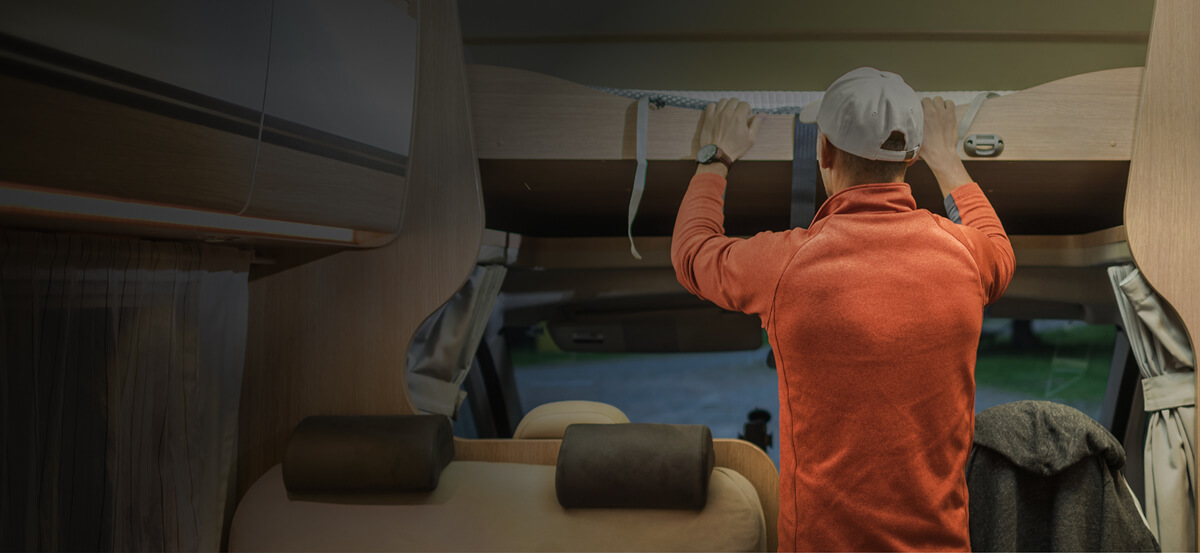
Motorhome rental promises freedom, but a carefree trip requires sorting out insurance in advance. Deciding on protection during booking—not at the rental counter—prevents spontaneous costs and ensures your deposit is safe.
Insurance is financial confidence. Driving a camper differs from a car; dimensions and repair costs are unique. Insurance conditions are designed to protect you from these unforeseen expenses. At Great RV Trip, we believe in transparency: understanding rental conditions before you travel is the best budget protection.
This guide explains the real mechanics of insurance to help you choose the best option. Beginners should also check our Beginner's Guide (F.A.Q).
The Basics: Main Types of Coverage
Rental agreements use abbreviations to define liability. Here is what they mean in plain language, starting with vehicle protection.
CDW/LDW (Damage Waiver — Damage to the Motorhome)
Collision Damage Waiver (CDW) or Loss Damage Waiver (LDW) protects the vehicle. Legally often a "Waiver of Claims," it means the rental company won’t demand full repair costs for accidents, fire, or vandalism, provided you followed contract terms (no drunk driving, no off-roading).
- Without CDW: You are liable for the full vehicle value (€ 60,000-€ 100,000).
- With CDW: You pay nothing? No. CDW limits your liability to the excess (deductible), discussed later.
Liability (Third Party Liability)
The policy foundation. Called TPL in Europe and SLI/RLI in the USA, it covers damage you cause to others (fences, other cars, cyclists).
- Europe: EU laws are strict. Basic TPL is mandatory, included in the price, and covers € 1−50 million. You rarely need extra extensions; protection is already maximal.
- USA: Basic rentals often cover only "State Minimums" (sometimes just $ 5,000-$ 10,000).
Comprehensive Coverage (Protection from Nature)
Traffic isn't the only risk. The Comprehensive clause covers fire, vandalism, falling trees, animal collisions (common in Canada/Scandinavia), and weather like hail. With frequent storms, this is critical: hail can damage the roof and sides, and without comprehensive coverage, repairs are your cost.
Theft Protection
Protects against theft. Like CDW, it uses an excess (e.g., you pay € 2,000, insurance pays the rest). Two Golden Rules (violations void insurance):
- The Key Rule: If the RV is stolen, you must return all original keys. Losing them or leaving them in the ignition is Gross Negligence, making you liable for the full vehicle cost.
- Personal Belongings: Vehicle insurance never covers laptops, cameras, or clothes inside. If thieves break a window to steal gear, the rental fixes the window; you pay for the gear. For this, you need personal Travel Insurance.
The Great Myth: "My Credit Card Will Cover It"
One of the most persistent and dangerous myths among experienced travelers is the hope for insurance built into premium credit cards (Visa Infinite, Amex Platinum, and others). Many are used to the card covering risks when renting a regular car.
Reality: Almost all credit card user agreements contain strict exclusions for the "Recreational Vehicles" category. Banks deny payouts for three reasons:
You cannot rely on a credit card when renting an RV. You risk being left alone with a multi-thousand repair bill.
Reality: Almost all credit card user agreements contain strict exclusions for the "Recreational Vehicles" category. Banks deny payouts for three reasons:
- A motorhome is a vehicle with an open bed or living module.
- The vehicle weight exceeds allowable limits (usually 10,000 lbs or 4.5 tons).
- The number of wheels (many large campers have dual rear wheels, totaling 6).
You cannot rely on a credit card when renting an RV. You risk being left alone with a multi-thousand repair bill.
The Main Question: What is Excess (Deductible)?
This is the most difficult to understand and frightening point for beginners. Excess (in US contracts you will see the word Deductible) is the maximum amount you pay out of your own pocket in case of any damage to the motorhome. Everything above this amount is paid by the insurance company.
The size of the excess depends on the country and class of the motorhome.
The size of the excess depends on the country and class of the motorhome.
- Europe standard: 1000 € - 2500 €.
- USA/Canada: $ 500 — $ 2500.
- Iceland (due to difficult roads): up to 3000 €.
The Math (Scenarios)
Imagine your contract specifies an Excess of 1500€. Let's look at three real scenarios.
Scenario A: "Annoying Trifle" You hit a concrete post in a supermarket parking lot and smashed the rear bumper. The cost of a new bumper and labor is 800€.
Scenario A: "Annoying Trifle" You hit a concrete post in a supermarket parking lot and smashed the rear bumper. The cost of a new bumper and labor is 800€.
Result: Since 800€ is less than your excess (1500€), you pay for the repair entirely. The insurance company does not participate. Your loss: 800€.
Scenario B: "Serious Accident" An accident occurred, the entire right side, suspension, and furniture inside the cabin are damaged. Damage assessment — 18,000 €.
Result: You pay only the amount of your excess — 1500 €. The remaining 16,500 € is covered by the insurance company. Your loss: 1500 €.
Scenario C: "Series of Incidents" On the first day, you broke a mirror (200 €), and a week later scratched a fender (600 €).
Result: Rental companies often count each incident separately. In this case, you will pay 200 € + 600 € = 800 €, as each individual case did not exceed the excess threshold.
Block vs. Liability: What's the Difference?
Frequent question: "If my excess is 1500 €, why was 2000 € blocked?" Distinguish two concepts:
Reverse situation: Buying full insurance (Zero Excess) doesn't always mean zero deposit. Rentals may still block 300-500€ to guarantee against traffic fines, fuel shortages, or interior damage not covered by full insurance.
- Liability: The legal limit of your insurance payments (e.g., 1500 €).
- Security Deposit: The amount physically frozen on the card.
Reverse situation: Buying full insurance (Zero Excess) doesn't always mean zero deposit. Rentals may still block 300-500€ to guarantee against traffic fines, fuel shortages, or interior damage not covered by full insurance.
Super Cover Option: How to Reduce Excess to Zero
Rental companies provide an opportunity to buy out your risk. This option may be called Super Cover, VIP Package, All Inclusive, Peace of Mind, or Zero Excess.
The essence of the deal is simple: you pay a fixed amount for each day of rental (usually from 15 € to 45 €), and the rental company lowers your excess.
Economic Calculation: When is it profitable? Replacing one plastic "skirt" part (lower body part) costs about 500−700 euros with painting. One damage already outweighs the cost of insurance.
Which strategy to choose?
The essence of the deal is simple: you pay a fixed amount for each day of rental (usually from 15 € to 45 €), and the rental company lowers your excess.
- Reduced Excess: Liability reduction, for example, from 1500 € to 500 €.
- Zero Excess: Liability reduction to 0 €. If you return the car with a scratch, you won’t be charged a cent for body repair.
Economic Calculation: When is it profitable? Replacing one plastic "skirt" part (lower body part) costs about 500−700 euros with painting. One damage already outweighs the cost of insurance.
Which strategy to choose?
- Take Super Cover (Full coverage from rental company) if: This is your first experience in a large motorhome; you are going to countries with narrow roads (Italy, Scotland, Norway); you want complete peace of mind and do not want to block large deposit sums on your card.
- Stay on Basic (Basic insurance) if: You are a professional driver; the route passes through wide highways (USA, Finland).
Third-Party Insurance (Reimbursement Insurance)
There is an alternative path often offered by brokers (including Great RV Trip partners) — Excess Reimbursement Insurance.
- How it works: You do not buy expensive insurance from the rental company (Zero Excess for 40 €/day). Instead, you buy a policy from a third-party company (for example, for 10−15 €/day).
- In case of an accident: You pay the rental company the full excess (e.g., 1500 €) out of your pocket. Then, upon returning home, you send receipts and reports to the broker, and they reimburse you these expenses.
- Plus: It is significantly cheaper.
- Minus: You need to have free funds on the card to "freeze" them for the duration of the proceedings and be ready to collect paperwork.
Security Deposit is Not a Payment
The deposit guarantees honest equipment use. Distinguish between two transaction types when inserting your card:
Blocking Mechanics: Authorization vs Charge
- Blocking (Authorization/Hold): Major companies "freeze" the amount. Money remains in your account but is unavailable. This is the safest method.
- Charge and Refund: Some local rentals actually debit the money and refund it later.
Risk: Double conversion. If currencies differ, you lose percentage fees on both the debit and the refund.
Card Requirements: Credit vs Debit
Contrary to old myths, most major chains now accept Debit Cards.
Using a Debit Card:
Summary: A classic debit card with sufficient balance works fine; no need for a specific credit card.
Using a Debit Card:
- Funds: Unlike credit, "live" money is frozen. Ensure the full deposit (up to 2500€) plus a reserve for currency fluctuations is in the account. These funds remain unavailable during the trip.
- Card Class: Must be named (main driver) Visa or Mastercard. Avoid entry-level (Maestro, Visa Electron) or Prepaid/Virtual cards without name embossing.
Summary: A classic debit card with sufficient balance works fine; no need for a specific credit card.
What can money be deducted for from the deposit?
Not just for accidents. The deposit melts in the following cases:
- Fuel: Didn’t return a full tank? They will deduct the cost of diesel at an inflated rate + 20−50 euros "refueling service fee."
- Cleaning: If final cleaning is not included in the contract, and you returned the car with crumbs on the table or a dirty floor — fine from 100 to 150 euros. In case of heavy soiling (for example, after Burning Man), the fine can reach $ 1,500.
- Water Dumping: Forgot to drain "grey" water or empty the toilet cassette? This is the "dirtiest" and most expensive fine — up to 150−200 euros for violating sanitary norms.
- Late Return: Lateness of 1−2 hours is often tariffed separately; in some companies, it may be counted as an additional rental day.
Return Deadlines
Money is not returned instantly. Usually, the block "falls off" automatically 15−30 days after returning the motorhome. The rental company keeps a pause to ensure that fines for speeding or parking dating from your rental period do not come from the police.
What is Usually NOT Included in Standard Insurance?
Even if you have CDW insurance, there are elements of the motorhome that are in the "grey zone" of exclusions. Damage to these parts is often considered the result of negligence, not accident.
"Glass House": Windshield and ADAS
Many are surprised why glass insurance costs so much or why the excess on them is separate. It’s about technology.
- Price: Replacing a windshield on an integrated Class A motorhome costs from $ 3,000 to $ 5,000.
- Why so expensive? It’s not just a piece of glass. It is a panoramic surface of complex shape. In modern models, cameras and Driver Assistance Systems (ADAS) sensors stand behind the glass. After replacing the glass, complex electronics calibration is required for systems to work correctly. Catching a stone on the highway takes a second, but the bill will be impressive. Basic insurance often excludes glazing, requiring a separate payment for "Glass Protection".
Achilles' Heel: Awning
The awning (retractable canopy) is the most frequently broken element of a motorhome and a classic trap for a beginner.
- The Problem: The awning has huge windage. A sudden gust of wind can rip it out by the roots in seconds, damaging the side of the motorhome. Also, drivers often forget to retract it before leaving and hit the very first tree.
- Status: Many companies completely exclude awning damage from CDW coverage.
- Price: Replacing an awning costs from $ 1,500 to $ 3,000.
Tires and Wheels
The motorhome is heavy (3.5 tons), and the load on tires is maximum. Hitting a curb, a sharp stone at a campsite, or a pothole can lead to a sidewall cut.
- Nuance: 90% of modern motorhomes DO NOT have a spare wheel. There is only a repair kit (glue and compressor), which is useless for a blowout.
- Expenses: You will have to pay not only for a new tire but also for calling mobile tire service, which on a European autobahn can cost 200−300 euros. Standard CDW does not cover this.
Roof and Undercarriage
This is a classic of exclusions.
- Roof: Damage to the alcove (superstructure above the cab) or air conditioner against branches, low bridges, balconies, or gas station canopies is considered Gross Negligence. You saw the height restriction sign but ignored it. Insurance will deny payment 100%. You will pay yourself, and roof repair is the most expensive (up to $ 15,000).
- Undercarriage: Damage to the crankcase, waste water tank, or exhaust system usually means you drove onto a dirt road or off-road (unpaved roads), which is directly prohibited by the rental agreement of most regular (non-4×4) campers.
Interior and Equipment
Vehicle insurance works outside. Everything inside is your zone of responsibility. A refrigerator handle broken by children, a burnt countertop, wine stains on the mattress, or a mosquito net torn by a dog — all these losses are deducted from your deposit. No CDW will cover this.
P2P Rental Nuance: If you rent a motorhome from a private individual via platforms (like RVshare), pay attention to the Interior Damage Protection option. Private owners treat their cars more tenderly than corporations and will check every scratch on the furniture.
P2P Rental Nuance: If you rent a motorhome from a private individual via platforms (like RVshare), pay attention to the Interior Damage Protection option. Private owners treat their cars more tenderly than corporations and will check every scratch on the furniture.

What is Usually NOT Included in Standard Insurance?
The Art of Check-in & Check-out Protocols
The most effective way to protect your deposit is not expensive insurance, but a thorough inspection. Most disputes arise over scratches that "were already there, but we didn’t notice them."
Importance of Check-in (Pickup)
Do not rush. The handover procedure is the only moment you can document the vehicle’s condition.
Cleanliness: Accept only a clean motorhome. It’s easy to hide scratches under a layer of road dust or mud, which will be "found" upon return when you wash the vehicle.
Blind Spots: Take your phone and film a video in high quality. Walk around the vehicle slowly.
Protocol: Demand that any, even the smallest dot, be entered into the inspection sheet (Pick-up sheet/Departure Sheet). The manager’s phrase "It's nothing, don’t worry" is not a guarantee. In two weeks, a different manager will receive the car, and for them, it won’t be "nothing."
Cleanliness: Accept only a clean motorhome. It’s easy to hide scratches under a layer of road dust or mud, which will be "found" upon return when you wash the vehicle.
Blind Spots: Take your phone and film a video in high quality. Walk around the vehicle slowly.
- Film the lower bumper edge (often scratched against curbs).
- Look at the rearview mirrors (edges are often chipped). Replacing a mirror can cost up to $ 1,200 as they have heating and electric drives.
- Ask for a ladder or climb an elevation (use a selfie stick) to inspect the upper corners of the alcove. This is damage zone #1.
- Check mosquito nets and blinds on all windows. They are fragile and expensive.
Protocol: Demand that any, even the smallest dot, be entered into the inspection sheet (Pick-up sheet/Departure Sheet). The manager’s phrase "It's nothing, don’t worry" is not a guarantee. In two weeks, a different manager will receive the car, and for them, it won’t be "nothing."
Importance of Check-out (Return)
Return the car clean. If the car is dirty outside, the manager has the right to write in the act "Inspection impossible due to contamination." If scratches are found after washing, they will simply send you an invoice and deduct money from the card retroactively when you are already home and cannot dispute anything. Be sure to demand to sign a copy of the return act (Drop-off report), where the checkmark "No new damages" stands, before leaving the rental office.
Rental Channels: Where is it Safer?
Insurance conditions also depend on where you take the car.
- Traditional Operators (Direct): Full transparency, settlement on the spot, but high deposits and expensive additional options.
- P2P Platforms (Private Owners): The owner’s personal insurance does not work here. Platforms provide their commercial insurance, but you definitely need to buy interior protection, as dispute risks are higher.
- Brokers (Great RV Trip): We often offer products with Refundable Excess, which are cheaper than direct offers at the counter but require a temporary blocking of funds from you.
How Great RV Trip Protects Its Clients
Motorhome rental is a complex product. Our mission is to be your safety buffer in this process.
Reliability Filter
The rental market is uneven. There are premium companies with new vehicles, and there are "low-costers" who make money specifically on fines for scratches. At Great RV Trip, we know the reputation of every partner. We do not work with companies that have "predatory" conditions or hidden fees in their contracts.
24/7 Support
Getting into an accident in a foreign country is huge stress. Explaining things to Italian police or German doctors is difficult. Our support team helps clients in critical situations: we advise on how to correctly fill out the Accident Report, what photos to take for insurance, and how to minimize consequences. You can also request a call to discuss details with our expert.
Honest Prices Without Hidden Fees
Honest Prices Without Hidden FeesIn the motorhome catalog on GreatRVtrip.com, you see the excess amount and the required deposit BEFORE you click the "Book" button. We highlight these conditions so that the blocked amount on your card doesn’t come as a surprise at the rental counter.
Conclusion
Insurance is purchasing your peace of mind. Driving a motorhome in a foreign country, the last thing you want to think about when seeing a picturesque sunset is the width of the passage and the cost of the bumper.
Our advice is simple:
Our advice is simple:
- If the budget allows — take packages with full coverage (Zero Excess). This switches the trip from "expedition with risks" mode to "real vacation" mode. Investment in the right package makes up only 10-15% of the trip budget but protects against risks capable of exceeding the cost of the tour itself tenfold.
- If you want to save money — take basic insurance or consider an option with third-party excess reimbursement, but be extremely careful during pickup and driving.
Your Next Step
Don't want to pay for old scratches? We have prepared a professional inspection tool.


E-mail: info@greatrvtrip.com


Contact us. We will answer the questions, help with the choice
We will answer your questions and help you choose
Contact us
GREAT RV TRIP Inc.
Address:
2093 PHILADELPHIA PIKE #7170
CLAYMONT, DELAWARE 19703, USA
© GREAT RV TRIP, 2017–2026
Motorhome travel agency
Let's go on an adventure!
Address:
2093 PHILADELPHIA PIKE #7170
CLAYMONT, DELAWARE 19703, USA
© GREAT RV TRIP, 2017–2026
Motorhome travel agency
Let's go on an adventure!
Manage cookies
We use cookies and similar technologies to improve your browsing experience, analyze site traffic and serve targeted advertisements.
For more details, read our Privacy & Data Protection Policy and Cookies Policy.
We use cookies and similar technologies to improve your browsing experience, analyze site traffic and serve targeted advertisements.
For more details, read our Privacy & Data Protection Policy and Cookies Policy.