




Motorhome travel
Motorhome travel
The discount is valid for bookings over 10 days
Motorhome rental
Leave your contacts so we can contact you
Route with Full Travel Support
We will create a personalized route tailored specifically to your wishes and interests. You’ll receive a detailed travel guide with descriptions of must-see attractions, up-to-date prices, and helpful tips. We’ll book your campsites in advance and mark convenient stopovers, so everything is planned for you.
Prefer spontaneous travel and making decisions on the go? We’ve got you covered with full support along the way. We’ll be in touch with you 24/7 to:
Find and book a great restaurant or tour along the route;
Help locate nearby service points, like water disposal or refueling stations;
Quickly adjust your route if you’re in the mood for new experiences.
With us, your journey will be easy, well-organized, and truly free.
The short answer
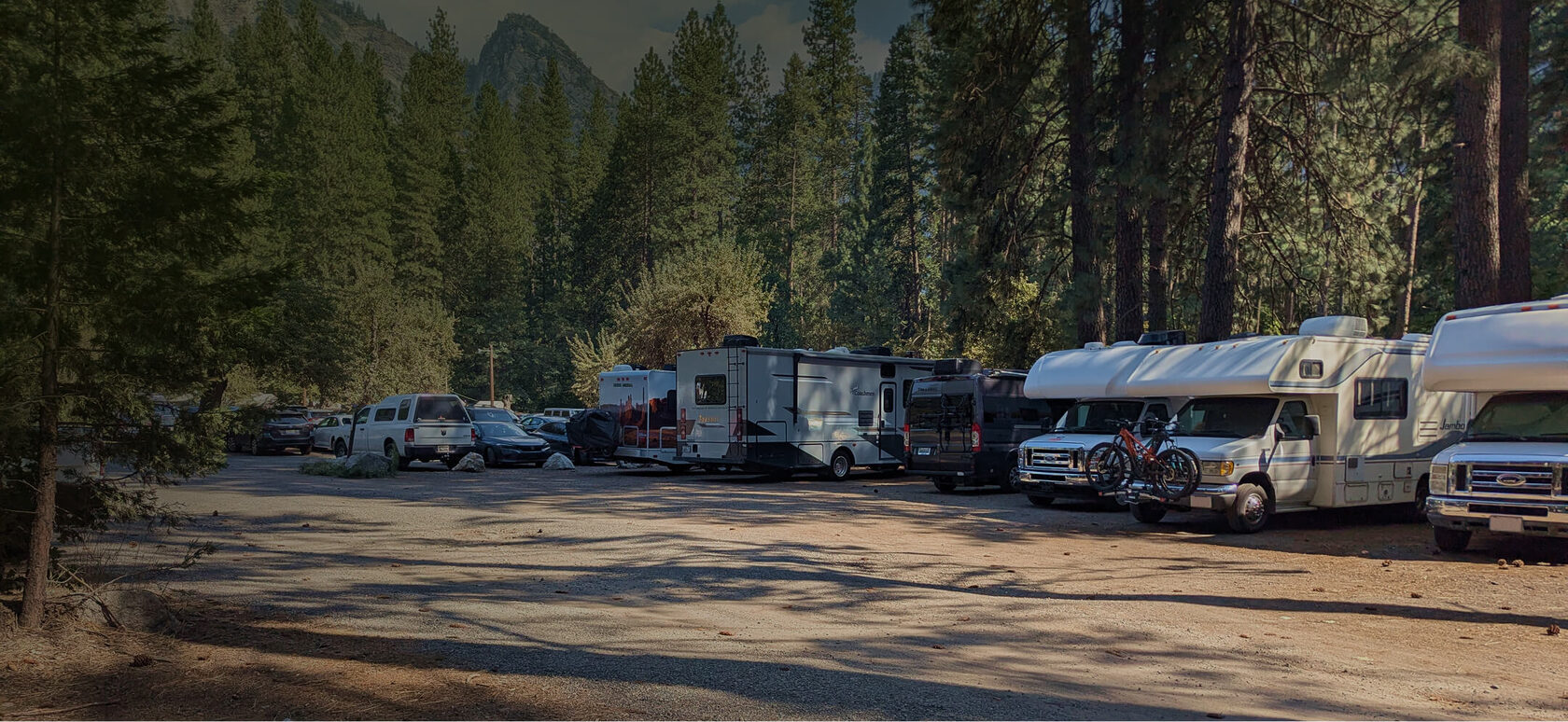
North American rental sites use Class C, Class A and Class B for three broad types of self-propelled RV. The booking screen may still show Compact, Standard, Large, Van Camper, Midi or Maxi instead of the class letter. Use the class to narrow the search, then choose the actual rental category by vehicle length, belted seats, bed sizes, bathroom layout, storage and supplier terms.
For travellers familiar with European terminology, the nearest rough matches are Class B to a campervan or van conversion, Class A to an integrated or A-class motorhome, and many Class C vehicles to coachbuilt overcab models. The comparison is approximate: North American rentals are often larger and supplier categories do not map one to one.
For travellers familiar with European terminology, the nearest rough matches are Class B to a campervan or van conversion, Class A to an integrated or A-class motorhome, and many Class C vehicles to coachbuilt overcab models. The comparison is approximate: North American rentals are often larger and supplier categories do not map one to one.
- Start with Class C for most family trips. It is widely represented in major US and Canadian rental fleets and covers a broad range of sizes.
- Treat Class A as a more specialised rental choice for travellers deliberately seeking a large, roomy motorhome and willing to plan around parking and campsite limits.
- Choose Class B for one or two travellers who expect frequent driving, smaller stops and limited luggage.
Class C vs Class A vs Class B at a glance
The size ranges below reflect vehicles found in current large rental fleets, not a fixed definition of each class. Availability, floor plans and equipment change by supplier and depot.
Class
How to recognise it
Rental-fleet size guide
Best fit
Main trade-off
Class C
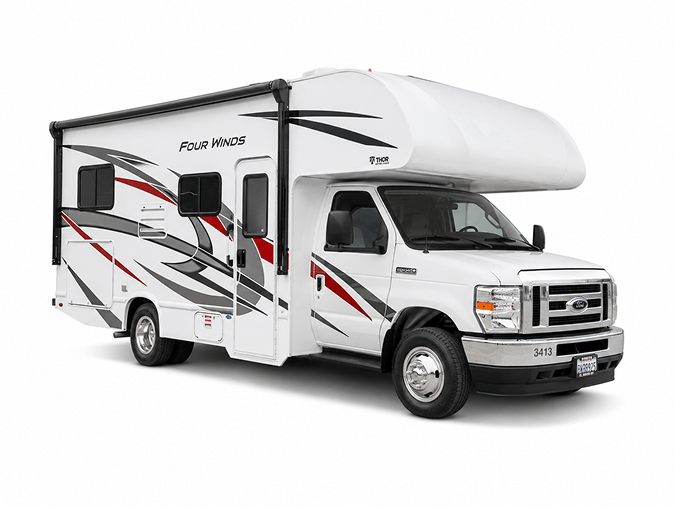
Van or light-truck cab with a wider coach body and over-cab section
About 21–32 ft /
6.4–9.8 m
Families, small groups and first long rentals
Wider and taller than a van; large versions reduce parking choice
Class A
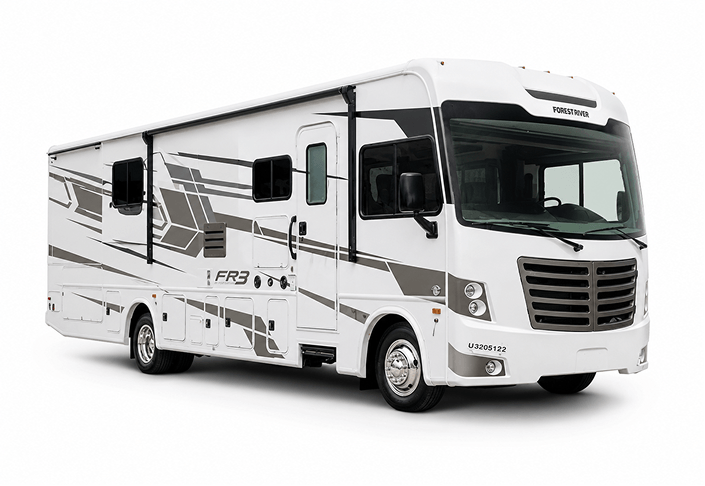
Integrated bus-style body with a broad flat front
Current rental examples around
30–34 ft /
9.1–10.4 m
Longer stays, several adults and interior-space priority
Higher fuel use, more demanding manoeuvres and fewer fitting sites

Class B
Original van body converted into a compact living space
Usually about 20–22 ft /
6.1–6.7 m; B+ can be longer
Solo travellers, couples and frequent moves
Limited luggage, compact bathroom and little privacy
A stated capacity such as sleeps six is only a starting point. The total may include children’s beds, a converted dinette and a sofa. For a group of adults, check the dimensions of every bed and the number of belted travelling seats.
Class C: the mainstay of North American rental fleets
A Class C uses a van or light-truck cab with a wider coach body behind it. The section above the cab is the easiest visual clue and often contains a bed. On smaller models it may be a compact sleeping platform or simply part of the body design.
Class C covers a surprisingly wide range. El Monte lists small units around 21−23 ft (6.4−7 m) and a Family Sleeper up to roughly 32 ft (9.8 m).
Cruise America and CanaDream also split their Class C fleets into compact, medium and large categories. Two Class C rentals can therefore produce very different driving and living experiences.


Beds, seatbelts and real-world capacity
Treat passenger capacity, sleeping capacity and adult sleeping comfort as separate specifications. A family layout can work well for two adults and several children while feeling cramped for the same number of adults. Over-cab beds are usually generous, but dinettes and sofas vary considerably.
A rental Class C will often include a kitchen, refrigerator, heating, bathroom and storage, yet no single feature should be assumed across every supplier. Generator access, awnings, bedding, kitchen kits and reversing cameras can depend on the model, country and rental package.
Mainstream Class C rentals in the USA and Canada are predominantly petrol-powered. El Monte’s current highway planning range is about 10−12 mpg, or roughly 20−24 L/100 km. Body size, load, speed, wind and terrain can shift the result substantially.
- Day
- Night
What it is like to drive
The cab feels more familiar than a Class A cockpit, which is one reason Class C works well for first-time renters. It is still wider, taller and longer than a car. Allow extra braking distance, watch the rear overhang during turns and remember the roof when approaching fuel-station canopies, trees and covered parking.
A compact Class C suits couples or small families moving most days. A larger version adds separate beds and storage for longer trips, but reduces the number of campsites and parking spaces that will fit.
A compact Class C suits couples or small families moving most days. A larger version adds separate beds and storage for longer trips, but reduces the number of campsites and parking spaces that will fit.
- Height Clearance
- Tail Swing
- Wide Right Turn
Where Super C fits
Super C is a market label for a Class C built on a medium- or heavy-duty truck chassis. These motorhomes can provide more load and towing capacity, but they are not a normal category in most large tourist rental fleets. Confirm availability before building a trip around one.
Class A: more room, more route planning
Class A motorhomes use a bus-style body with a broad, flat front. The cockpit becomes part of the living space when parked, which can make the interior feel much larger. A current El Monte/Mighty rental example is around 30–34 ft (9.1–10.4 m), although privately owned Class A vehicles span a wider range.


The key advantage is living space rather than an automatic increase in beds. Several adults may value the open floor area and storage on a long trip, but the exact sleeping arrangement and number of seatbelts still come from the floor plan.
Class A also brings wider turns, more bodywork ahead of the front wheels, larger blind areas and greater sensitivity to crosswinds. Parking and campsite choice become more restrictive, while fleet availability is narrower and varies by depot.
Petrol is the normal fuel in the mainstream rental segment covered here; diesel Class A rentals exist but are much less common. El Monte’s current highway guide is about 8−10 mpg (24−29 L/100 km). Allow more for urban traffic, mountains and strong winds.
Class A is not the usual default for most renters. It works best for travellers who specifically want a large, roomy motorhome, plan longer stays and will genuinely use the extra interior space.
Class B: a campervan for frequent moves
Class B keeps the original van body. US rental examples are commonly around 20–22 ft (6.1–6.7 m), making it the closest of the three classes to driving a large everyday van.


A full Class B generally combines a convertible bed, small kitchen, heating and a compact bathroom. Some rental campervans have no fixed shower, toilet or complete water system, so the category name alone is not enough.
Rental Class B vehicles are usually petrol-powered. El Monte’s highway planning range is about 14−18 mpg (13−17 L/100 km). That is the lowest fuel use of the three classes.
Class B suits a solo traveller or couple who changes location often and does not want to plan every stop around a large motorhome. The compromise is tighter storage, a small bathroom and less privacy.
What does B+ mean
B+ is not a separate official class. Suppliers and manufacturers use it for larger van conversions or compact coach-built motorhomes that overlap with small Class C models. CanaDream, for example, describes its 23−25 ft Super Van Camper as Class B+. Compare width, beds, bathroom, storage and body construction instead of assuming the plus sign guarantees a specific layout.
Slide-outs add space only when parked
A slide-out is a section of wall and interior that extends after parking to increase floor space. It is more likely to appear on larger Class C and selected Class A rentals than on compact vans. CanaDream currently lists a slide-out on its Maxi Motorhome and publishes separate operating guidance for Maxi Plus. Confirm the actual category and floor plan before booking: a supplier may provide an equivalent vehicle, the slide needs clear space outside, and it must be fully retracted before driving.


Why rental companies use different category names
Cruise America lists Ultra Compact, Compact, Standard and Large rather than asking customers to choose a letter. CanaDream uses names such as Deluxe Van Camper, Compact Motorhome, Midi, Maxi and Maxi Plus. These are supplier categories built around fleet size and floor plan.
A booking may guarantee the category rather than a particular manufacturer, production year or exact interior. If a fixed bed, separate shower or a specific number of seatbelts matters, choose a category that commits to those requirements.
A booking may guarantee the category rather than a particular manufacturer, production year or exact interior. If a fixed bed, separate shower or a specific number of seatbelts matters, choose a category that commits to those requirements.
How the choice changes by trip
Class C or Class A for a family
Class C usually provides the easier balance of beds, storage, driving and campsite access. Class A is the more specialised family choice when a group deliberately wants a large living area, plans longer stays and accepts the extra route planning. Do not use the class letter as a proxy for the number of comfortable beds.
Class C or Class B for a couple
Class B is easier when the route includes frequent moves, towns and smaller parking areas. A compact Class C makes more sense when you want a permanent bed, a more usable bathroom and additional luggage space. On a long trip, that daily living difference may matter more than a small change in the rental rate.
Three or four adults
Count separate adult-size beds before comparing floor area. A large Class C may require the dinette to be rebuilt every night, while a roomy Class A can still provide the same number of practical sleeping places. Review the night-time floor plan first, then confirm the belted seats.
What travellers often choose for Burning Man
Burning Man changes the priorities: many travellers value interior space, storage, water capacity, generator terms and somewhere to shelter from heat and dust more than easy city parking. Great RV Trip commonly sees requests for 25−30 ft Class C rentals and Class A motorhomes. Confirm that the supplier permits the event and check deposit, cleaning, mileage, generator and return terms before paying.
Driving licences for international renters
The large suppliers reviewed for this guide do not normally require a commercial licence for standard Class A, B and C vehicles in their fleets. El Monte requires a current original licence and a translation when it is not in English. CanaDream accepts a valid licence from the driver’s country of residence and strongly recommends an International Driving Permit when the original is not in English or French.
An International Driving Permit is used with the original licence, not instead of it. Supplier policy does not replace state or provincial rules, and very heavy or long motorhomes can fall into separate noncommercial licence categories. Travellers should confirm the exact vehicle and pickup jurisdiction rather than relying on general assumptions.
At pickup, learn the vehicle systems before leaving the depot. Save the vehicle’s height, width and length in both feet and metres.
- Turn wider and allow for the rear body to swing out.
- Use a passenger as a spotter for tight parking and reversing.
- Check mirrors as well as the reversing camera.
- Read height restrictions before entering parking structures, tunnels or covered fuel stations.
- If you normally drive on the left, keep the first driving day short and avoid beginning in dense city traffic.
RV size, campgrounds and national parks
The class letter does not decide whether a campsite will fit. Exact vehicle length does. Mather Campground at Grand Canyon sets a 30 ft (9 m) maximum for motorhomes or trailers. Yosemite Valley has only eight sites for RVs up to 40 ft, while substantially more sites accept RVs up to 35 ft.
Canadian limits also vary by campground and road. Some Banff campgrounds list spaces for RVs up to about 27 ft, and Parks Canada notes that large-RV sites are limited in Glacier National Park.
Sequoia National Park adds a road-specific example: larger vehicles may face route restrictions on certain roads, such as the Generals Highway section between Potwisha Campground and Giant Forest Museum.
For a route built around national parks, smaller campgrounds and frequent roadside stops, match the exact rental length to critical campsites before booking.
Other rental formats
A truck camper places the living module in a pickup bed and can work well for a couple who wants a smaller footprint. A travel trailer requires a compatible tow vehicle, hitch, supplier permission and separate insurance checks. For an international traveller flying into the USA or Canada, that usually means a more complicated booking than one self-propelled RV. Fifth wheels, toy haulers and folding trailers are more common among local owners, so they remain alternatives rather than the main recommendation here.
A practical way to choose
-
 Compare belted seats with the actual dimensions of every bed.
- List adults and children separately.
- Check the RV length against roads, parking and the campsites already on your route.
- Decide how often you will move: daily driving rewards a different vehicle from a week in one campground.
- Choose the non-negotiables, such as a permanent bed, separate shower, large refrigerator or exterior storage.
- Calculate the full trip cost and compare available categories for your dates and depot: rental, mileage, fuel, campgrounds, insurance, kits and supplier extras.
FAQ
Class C combines a van or light-truck cab with a coach body and often an over-cab bed. Class A uses an integrated bus-style body. Class B keeps the original van body and is usually the most compact.
Often, yes. The cab is familiar, while the living space is more generous than in a Class B. A first-time renter should still choose the right length for the route rather than simply selecting any Class C.
Class C is usually easier to balance for beds, luggage and driving. Class A helps when the group values interior room during long stops. Check bed sizes and seatbelts in either class.
Class B favours frequent driving and easier parking. A compact Class C offers more living space, storage and often a more practical bathroom. The better choice depends on how much time you spend moving versus living inside.
Many major suppliers accept a valid national licence for their standard fleet, but translation or an IDP may be required or recommended. Rules vary by supplier, pickup location and vehicle, so confirm them for the booking.
For trip budgeting, El Monte’s current highway guides are about 14−18 mpg (13−17 L/100 km) for Class B, 10−12 mpg (20−24 L/100 km) for Class C and 8−10 mpg (24−29 L/100 km) for Class A. Petrol is the normal fuel in mainstream rental fleets; diesel models are much less common. Confirm the selected category because load, speed, wind, terrain and urban traffic can all change the result.
Park entry and campsite fit are separate questions. Campgrounds set limits by vehicle length and sometimes by road, height or combined trailer length. Check each reservation rather than relying on the class.
B+ is an informal label for a larger van conversion or compact coach-built motorhome between B and C. Super C is a heavier Class C on a truck chassis. Neither is a standard category across all rental companies.
Submit a Request for Motorhome Options
We’ll answer your questions and help you choose the right one.

E-mail: info@greatrvtrip.com


Contact us. We will answer the questions, help with the choice
We will answer your questions and help you choose
Contact us
GREAT RV TRIP Inc.
Address:
2093 PHILADELPHIA PIKE #7170
CLAYMONT, DELAWARE 19703, USA
© GREAT RV TRIP, 2017–2026
Motorhome travel agency
Let's go on an adventure!
Address:
2093 PHILADELPHIA PIKE #7170
CLAYMONT, DELAWARE 19703, USA
© GREAT RV TRIP, 2017–2026
Motorhome travel agency
Let's go on an adventure!
Manage cookies
We use cookies and similar technologies to improve your browsing experience, analyze site traffic and serve targeted advertisements.
For more details, read our Privacy & Data Protection Policy and Cookies Policy.
We use cookies and similar technologies to improve your browsing experience, analyze site traffic and serve targeted advertisements.
For more details, read our Privacy & Data Protection Policy and Cookies Policy.