


Motorhome travel
Motorhome travel
The discount is valid for bookings over 10 days
Motorhome rental
Leave your contacts so we can contact you
Route with Full Travel Support
We will create a personalized route tailored specifically to your wishes and interests. You’ll receive a detailed travel guide with descriptions of must-see attractions, up-to-date prices, and helpful tips. We’ll book your campsites in advance and mark convenient stopovers, so everything is planned for you.
Prefer spontaneous travel and making decisions on the go? We’ve got you covered with full support along the way. We’ll be in touch with you 24/7 to:
Find and book a great restaurant or tour along the route;
Help locate nearby service points, like water disposal or refueling stations;
Quickly adjust your route if you’re in the mood for new experiences.
With us, your journey will be easy, well-organized, and truly free.
Prefer spontaneous travel and making decisions on the go? We’ve got you covered with full support along the way. We’ll be in touch with you 24/7 to:
Find and book a great restaurant or tour along the route;
Help locate nearby service points, like water disposal or refueling stations;
Quickly adjust your route if you’re in the mood for new experiences.
With us, your journey will be easy, well-organized, and truly free.
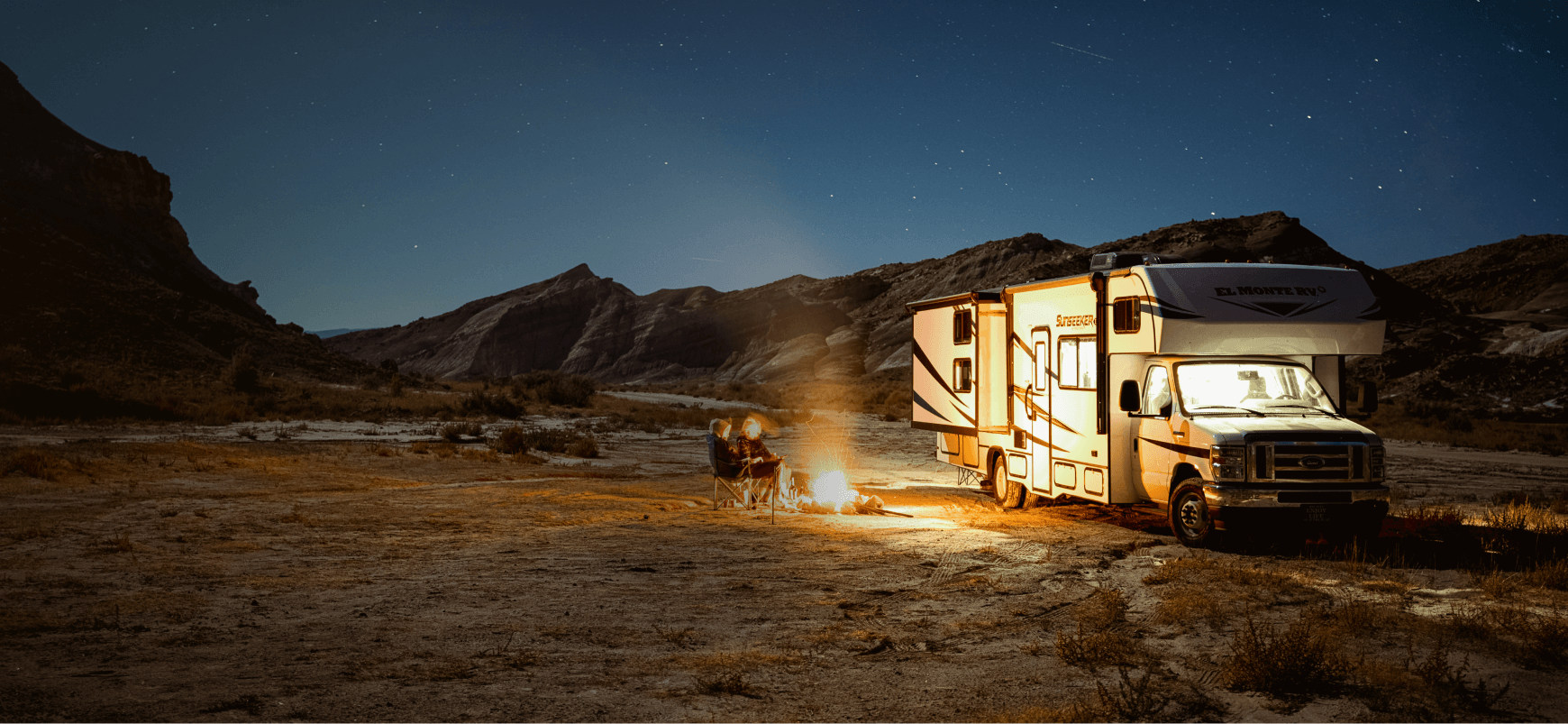
What Is Camping in the USA
Camping in the USA is a popular way to spend time outdoors and escape the hustle of city life. The country offers a huge number of campgrounds with varying levels of comfort and amenities.
RV campgrounds in the USA provide different accommodation options and services. These sites typically include designated spots for tents or RV parking. Each site may have a fire pit for campfires and picnics. On-site infrastructure can include restrooms, showers, laundry facilities, BBQ areas, playgrounds, shops, restaurants, and other entertainment options. Some campgrounds also offer equipment rentals and access to outdoor activities such as hiking and biking trails.
RV campgrounds in the USA provide different accommodation options and services. These sites typically include designated spots for tents or RV parking. Each site may have a fire pit for campfires and picnics. On-site infrastructure can include restrooms, showers, laundry facilities, BBQ areas, playgrounds, shops, restaurants, and other entertainment options. Some campgrounds also offer equipment rentals and access to outdoor activities such as hiking and biking trails.
There are several types of campgrounds in the USA, each with its own features
- Commercial Campgrounds (RV Parks): Privately owned and operated by individuals or companies. Some offer basic tent sites with essential amenities like restrooms and showers. Others provide more developed infrastructure, including full-service RV sites with electricity, water, and sewer hookups (full hookups). The largest network of such RV parks is KOA (Kampgrounds of America).
- National Park Campgrounds: A great option for staying close to major natural attractions. These typically include tent sites and RV sites with varying levels of comfort, often without full hookups. Prices are usually lower than in commercial campgrounds, and they offer a more immersive nature experience.
- State Park Campgrounds: Similar to national park campgrounds but managed by individual states. They are often located in scenic areas near lakes, rivers, or forests.
- BLM and National Forest Campgrounds: Managed by the Bureau of Land Management (BLM) and the U.S. Forest Service. These campgrounds usually offer the most basic amenities.




Best Time to Travel: When Should You Go?
Choosing the right time for an RV trip across the USA is crucial due to the country’s vast size and diverse climate zones.
- High Season (Summer, June–August): Peak tourist activity, especially in national parks (Yellowstone, Grand Canyon, Yosemite) and coastal areas. All campgrounds are open, but prices are at their highest, and reservations should be made 6–12 months in advance. Southern states (Arizona, Texas, Florida) can be extremely hot during this time.
- Shoulder Season (Spring and Fall): Considered the best time for many routes. In spring (March–May), it’s ideal to explore the deserts of the Southwest before extreme heat sets in. In fall (September–October), you can catch the famous fall foliage in New England and enjoy comfortable weather across most states. Fewer crowds and lower prices.
- Low Season (Winter, November–February): Popular with “snowbirds”—travelers who head south in RVs to warmer states like Florida, Arizona, and Southern California. At the same time, many northern and mountainous regions are covered in snow, and numerous roads and campgrounds are closed.
How to Find and Book a Campground
Before searching for specific places, it’s helpful to map out your route and mark points where it would be convenient to stop or stay overnight.
Where to Search
- Use Google Maps. The easiest place to start. Open your target area and search for "RV park," "RV camping," or "campground." You’ll see available options, ratings, and photos.
- Specialized websites and apps. After an initial map search, use dedicated platforms for more detailed information:
- Recreation.gov: The official website with information on campgrounds in national parks and other federal lands. One of the most widely used resources.
- ReserveAmerica: A booking platform for campsites across the USA, including state parks and some commercial campgrounds.
- Campendium, The Dyrt, iOverlander: Apps with large databases of campgrounds, including reviews, photos, and tips—covering both paid and free options.
- KOA (Kampgrounds of America): The app and website of the largest network of commercial RV parks.
- RV Advisor: An informational and review-based resource for RV travelers.
What to Consider When Choosing a Campground
When choosing a place to stay, consider several factors. Think about your preferred level of comfort and available amenities. Some campgrounds offer only basic facilities, such as restrooms and showers, while others provide more developed infrastructure with shops, restaurants, and entertainment.
Also consider the campground’s location and its proximity to attractions or natural sites you want to visit. Be sure to check ratings and reviews from other travelers.
Also consider the campground’s location and its proximity to attractions or natural sites you want to visit. Be sure to check ratings and reviews from other travelers.
Additional Restrictions
When choosing a campground, it’s important to review any rules and limitations:
- RV size: Some RV parks have length or width restrictions. In certain sites, you may not be able to extend slide-outs.
- Pet policies: Check whether pets are allowed.
- Campfires: Fire restrictions are important, especially in many western states during summer due to wildfire risk.
- Utility availability: Water, sewer, or electricity may have temporary limitations.
Do You Need to Book in Advance?
Booking strategy depends on how popular the location is:
- Popular destinations (national parks, tourist hotspots): Reservations are essential, often 6−12 months in advance. Places like Yosemite, Yellowstone, and the Grand Canyon sell out within minutes. Booking is usually done online through official websites (e.g., Recreation.gov).
- Less popular and commercial campgrounds: Much more flexible. You can often call during business hours (for example, 9 AM-6 PM) to check availability. In many cases, you can simply arrive without a reservation—sites are usually available.
- First-Come, First-Served system: Some sites in state and federal parks operate on this basis. Prices may not be listed online, and to secure a spot, it’s best to arrive early, ideally in the morning.
Self Check-In (After Office Hours)
If you arrive at a commercial campground late in the evening or on a weekend when the office is closed, a self check-in system is usually available. You simply choose an available site, then go to the registration kiosk near the entrance. Fill out the form (including your site number), attach cash or provide your card details, and drop it into the designated box. The staff will process your registration in the morning. This is a very common and convenient practice.



Campground Prices in the USA
Campground prices in the USA vary widely depending on the type, location, season, length of stay, level of comfort, and available amenities such as electricity, water, and sewer hookups.
What Determines the Price
Unlike in Europe, pricing in U.S. RV parks is usually set per site, per night, regardless of the number of people. The listed price typically includes access to on-site amenities. However, local taxes are almost always added on top.
Typical Price Ranges
Here are approximate nightly rates for different types of campgrounds:
- Commercial campgrounds: $30–$100 per night, depending on site size, comfort level, and hookups (electricity, water, sewer). In popular locations (e.g., California), prices can reach $200+ per night.
- State park campgrounds: $20–$60 per night.
- National park campgrounds: $15–$40 per night.
Payment and Ways to Save
In most public and many commercial RV parks, payment is typically made online at the time of booking by credit card, as many locations do not accept cash or on-site payments.
At first-come, first-served sites, payment is usually made in cash through a self-registration system (payment envelope).
To save money when frequently staying at commercial RV parks, consider discount programs like Good Sam Club or Passport America, which offer 10−50% discounts at partner campgrounds.
For national parks, an annual pass like the America the Beautiful Pass can be a good investment—it covers entrance fees to all national parks in the country.
At first-come, first-served sites, payment is usually made in cash through a self-registration system (payment envelope).
To save money when frequently staying at commercial RV parks, consider discount programs like Good Sam Club or Passport America, which offer 10−50% discounts at partner campgrounds.
For national parks, an annual pass like the America the Beautiful Pass can be a good investment—it covers entrance fees to all national parks in the country.
What to Bring for Your RV Trip
To stay comfortably at U.S. campgrounds, you’ll need specific equipment, as hookup standards differ from those in Europe.
Essential Equipment for Hookups and Campsites
- Power cord: In the U.S., 30-amp and 50-amp (120V) connections are standard. Make sure your cord matches your RV.
- Adapters (dogbones): Essential. The most common are 50-to-30 amp and 30-to-15 amp (for standard outlets).
- Fresh water hose: A dedicated potable water hose (usually white or blue).
- Water pressure regulator: Water pressure can vary and may be too high. A regulator protects your RV’s plumbing system.
- Sewer hose: Needed for dumping gray and black water at full-hookup sites or dump stations.
- Leveling blocks: Campsites are often uneven—these help level your RV.
- Black tank treatment: Chemicals for maintaining the RV toilet system.
Additional Comfort Items
- Folding chairs and a table for outdoor relaxation.
- Outdoor rug for your campsite.
- Grill (gas or charcoal), if allowed.
- Insect repellent, especially in wooded or wet areas.
- Flashlights or headlamps.
- First aid kit.
Daily Life at U.S. Campgrounds
Arrival and Setup: Types of Sites
Upon arrival, you either take your reserved site or choose an available one. It’s important to understand the types you’ll see when booking:
- Back-in: The most common type. You reverse into the site.
- Pull-through: A drive-through site with two exits. You pull in from one side and drive out the other without reversing. More convenient for large RVs and beginners.
Hookups and Electricity
In the U.S., campsites are clearly categorized by the type of hookups:
Electrical connections come in two types:
- Full hookup: Includes all three connections—electricity, water, and sewer. You can connect your RV directly to the water supply and keep faucets open; water flows straight into the system, bypassing the tank, and wastewater goes directly into the sewer. Your RV functions like a regular home, with no need to manage tank levels.
- Partial hookup: Typically includes electricity and water only. You’ll need to use a dump station periodically.
- No hookups / Dry camping: No utilities—just a parking spot.
Electrical connections come in two types:
- 30 amp: Standard for smaller and mid-size RVs (Class C, small trailers).
- 50 amp: Higher-capacity connection for large RVs (Class A, large trailers).



RV Maintenance and Services
- Dump station: If your site doesn’t have a sewer hookup, you can use a shared dump station, available at most developed campgrounds.
- Propane: Used to run the refrigerator, stove, and heating. You can refill onboard tanks at many large gas stations (e.g., Pilot, Flying J) or at specialized service centers (e.g., U-Haul).


Rules and Etiquette
- Quiet hours: Usually from 10 PM to 8 AM. Noise and generator use are not allowed during this time.
- Generators: Use during the day is often limited to specific hours (e.g., 8–10 AM and 4–6 PM).
- Pets: Dogs must be on a leash and not left unattended. Always clean up after your pets.
- Cleanliness: Leave your site clean. Dispose of all trash in designated containers, which are often wildlife-proof.
Facilities and Amenities
- Restrooms, showers, and laundry: Commercial RV parks almost always have well-equipped facilities with restrooms, paid showers, and laundromats (washers and dryers). In public campgrounds (national and state parks), facilities may be more basic, and hot showers or laundry may not be available.
- Toilet paper: Unlike in some European campgrounds, it is usually provided in U.S. restrooms.
Cooking
Cooking outdoors is a big part of campground life in the U.S. Most sites with a fire pit also have a metal grate for grilling. Portable gas or charcoal grills are also common. Shared kitchens are very rare—campers are expected to cook at their site or inside the RV.
Internet and Connectivity
Wi-Fi is often advertised in commercial RV parks, but the quality can be unreliable and speeds may be low, especially when the park is full. In state and national parks, Wi-Fi is usually unavailable, and cell service can be weak or nonexistent in remote areas.
Safety
Campgrounds in the U.S. are generally safe, but you should always lock your RV.
In regions with bears (such as the Rocky Mountains and the Sierra Nevada), strict food storage rules apply. Food, trash, and any scented items (even toothpaste) must not be left outside or in your vehicle. Instead, use designated metal storage boxes (bear boxes) provided at campsites.
In regions with bears (such as the Rocky Mountains and the Sierra Nevada), strict food storage rules apply. Food, trash, and any scented items (even toothpaste) must not be left outside or in your vehicle. Instead, use designated metal storage boxes (bear boxes) provided at campsites.
Activities
U.S. campgrounds offer a wide range of activities to help you enjoy nature and spend time with family or friends. Common options include:
- Hiking and biking
- Fishing
- Kayaking and canoeing
- Swimming and beach activities
- Campfires
- Picnics and BBQ
"Wild Camping": Rules, Risks, and Legal Alternatives
In the U.S., there is a well-established culture of free camping in nature, known as dispersed camping or boondocking. This means staying on public land outside designated campgrounds. It allows you to camp for free in remote areas without formal infrastructure.
Where Free Camping Is Allowed
There are several places in the U.S. where free overnight stays are legal:
- National Forests: Managed by the U.S. Forest Service. Many areas allow dispersed camping. You can find locations and rules on the official Forest Service website.
- BLM land (Bureau of Land Management): Large areas of public land, especially in the western states, where free camping is widely permitted. Use the BLM website and maps to find available spots.
- National Parks: Some parks allow limited free camping in specific areas, but this is rare. Always check the rules for each park.
Other Free Overnight Options
In addition to remote areas, there are also convenient free overnight options for transit stops:
- Near some casinos
- Parking lots of large retail chains such as Walmart, Cabela’s, and Cracker Barrel (always ask the store manager for permission)
- Certain truck stops (e.g., Pilot, Flying J), which often have designated RV parking areas
Rules and the “Leave No Trace” Principle
- 14-day limit: On BLM land and in National Forests, you can usually stay in one spot for no more than 14 days.
- Keep your distance: Set up camp at a reasonable distance from other campers, roads, and water sources.
- Fire safety: Always check local fire regulations. In many areas, campfires are completely banned during summer.
- Leave No Trace: A strict rule. You must leave the area cleaner than you found it. Take all your trash with you. Dumping gray water (from sinks) or black water (from toilets) anywhere except designated dump stations is strictly prohibited.
Useful Resources
- Booking public campgrounds: Recreation.gov, Reserveamerica.com.
- Finding campgrounds and reviews: Campendium.com, TheDyrt.com, iOverlander.com.
- Finding free camping spots: FreeCampsites.net.
- Official agency websites: fs.usda.gov (U.S. Forest Service), blm.gov (Bureau of Land Management).
- Commercial campground networks: koa.com (KOA).
- Other tools: Google Maps, RV Advisor.
Conclusion
This information will help you plan and organize your RV camping trips across the USA. When choosing where to stay, consider your preferences, needs, and the specific rules of each location. Proper preparation and respect for nature will ensure a pleasant and memorable journey across America.

E-mail: info@greatrvtrip.com




Contact us. We will answer the questions, help with the choice
We will answer your questions and help you choose
Contact us
GREAT RV TRIP Inc.
Address:
2093 PHILADELPHIA PIKE #7170
CLAYMONT, DELAWARE 19703, USA
© GREAT RV TRIP, 2017–2026
Motorhome travel agency
Let's go on an adventure!
Address:
2093 PHILADELPHIA PIKE #7170
CLAYMONT, DELAWARE 19703, USA
© GREAT RV TRIP, 2017–2026
Motorhome travel agency
Let's go on an adventure!
Manage cookies
We use cookies and similar technologies to improve your browsing experience, analyze site traffic and serve targeted advertisements.
For more details, read our Privacy & Data Protection Policy and Cookies Policy.
We use cookies and similar technologies to improve your browsing experience, analyze site traffic and serve targeted advertisements.
For more details, read our Privacy & Data Protection Policy and Cookies Policy.