Burning Man by RV: A Practical Guide for Your First Trip

    Leave a number with WhatsApp / Telegram
    Evgeny Byakin, founder of Great RV Trip

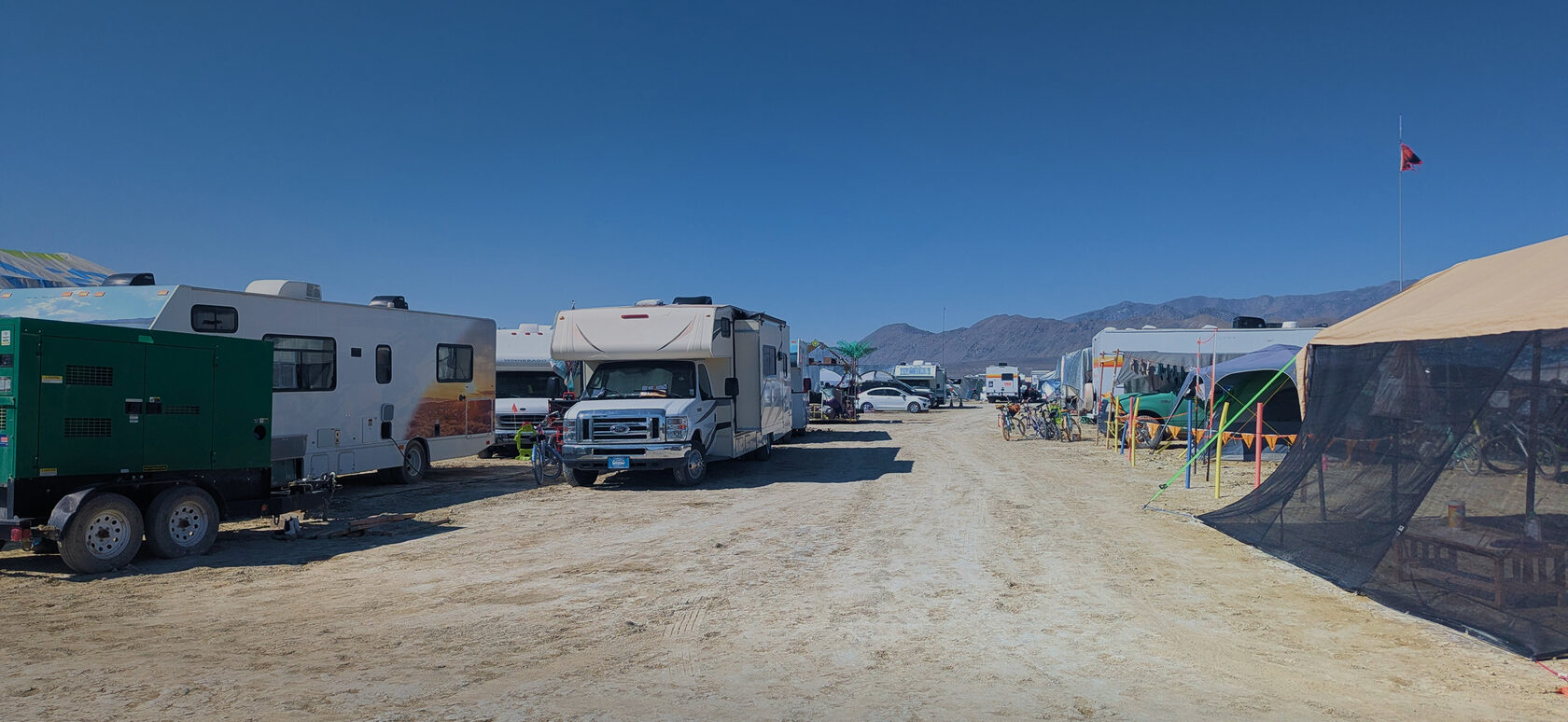
    Hi! I'm Evgeny Byakin, founder of Great RV Trip. For the past five years, we have helped Burners find RVs for the journey to the Playa. In 2025, I decided to experience the whole process myself: choosing a vehicle, driving to Black Rock City, living through the Burn in an RV, and handling the return after the desert.

    On the Playa, an RV gives you a bed, kitchen, shower, toilet, refrigerator, air conditioning, and somewhere to close the door and catch your breath. But it also gives you fresh water, wastewater tanks, a generator, fuel, dust, and strict return requirements to manage. This trip takes more preparation than a regular RV road trip.

    This guide combines my own experience, what our team has learned, and the current Burning Man rules. Whenever something varies by rental company or changes from year to year, I say so: check it again before booking.

    Updated for 2026. Black Rock City will run from Aug 30, 2026 to Sep 7, 2026. The year’s theme is Axis Mundi. Public ticket tiers range from $ 550 to $ 3,000, while approved Ticket Aid applicants can buy a $ 250 ticket. A separate Vehicle Pass costs $ 165. Taxes, fees, and delivery are extra, and availability changes. This section should be updated each year; the rest of the guide is not tied to a particular annual theme.

    First, understand where you are going

    Burning Man is not a festival. It is a temporary city that participants build together in Nevada’s Black Rock Desert. There is no single main stage or program prepared for an audience. Participants create the camps, art, music, workshops, food, support, and countless small events for one another.

    I see the Ten Principles less as a manifesto to memorize and more as an explanation of how life in the city works.
    Principle
    What it changes in practice
    Radical Inclusion
    Strangers are welcomed with respect. Ticketing and age rules still apply at entry.
    Gifting
    A gift can be an object, help, a skill, food, or time. Nothing is expected in return.
    Decommodification
    Advertising and commerce are out of place in the city. Coffee is no longer sold at Center Camp; ice at Arctica locations is the remaining official retail sale to participants.
    Radical Self-reliance
    We bring our own water, food, medication, and protection from sun and dust.
    Radical Self-expression
    Costume, art, and participation matter more than status or brands.
    Communal Effort
    A camp is not a ready-made accommodation service; it comes with shared responsibilities.
    Civic Responsibility
    Federal law, Nevada law, and the event rules all apply in the city.
    Leaving No Trace
    Everything brought in, including tiny pieces of trash and wastewater, must leave with us or go to an authorized service.
    Participation
    Decide what you want to contribute: a camp shift, workshop, help for neighbors, or your own project.
    Immediacy
    Do not let your phone or schedule become the only way you experience the week. Connectivity will be unreliable anyway.

    Step 1. Tickets, Vehicle Pass, and documents

    An RV trip requires two separate items: a participant ticket and a Vehicle Pass. The pass lets you enter and park at your camp, but it does not allow you to drive around Black Rock City. Once you are placed, the RV stays put until you leave.

    Outside the regular sales, the safe way to buy tickets is the official Secure Ticket Exchange Program, or STEP. Organizers describe it as the only guaranteed safe way to resell tickets and Vehicle Passes outside regular sales. Tickets or passes listed above face value plus permitted fees may be canceled without notice or refund. STEP may pause during the final OMG Sale, so check the current status on the official ticketing page.

    Before the trip, keep these together in one folder:

    • Ticket, or the details you need to collect it at Will Call
    • Passport and a driver's license accepted by the rental company
    • Vehicle Pass
    • Rental agreement, insurance documents, and roadside assistance number
    • Camp confirmation and its time-and-street address
    • Offline copies of important documents
    • A short medical card listing allergies, medication, and an emergency contact
    Requirements for foreign driver’s licenses depend on the rental company and the country of issue. An International Driving Permit does not replace your national license. If one is required, carry both.

    Entry requirements for the United States depend on your passport, citizenship, immigration status, and travel history; your country of residence may affect where you apply. Check your own requirements before paying for non-refundable bookings.
    Where Super C fits
    When
    What to do
    6–10 months before
    Set the group and budget, compare pickup cities, and start looking for an RV
    Once the trip is confirmed
    Arrange entry to the US, tickets, Vehicle Pass, and camp
    1–2 months before
    Review insurance, bicycles, route, supplies, and responsibilities
    1–2 days before the drive
    Pick up the RV, test its systems, buy water and food, and get used to its size
    After Exodus
    Allow at least one full day for the drive, tank dump, cleaning, refueling, and return

    Step 2. Choose an RV by real comfort, not advertised capacity

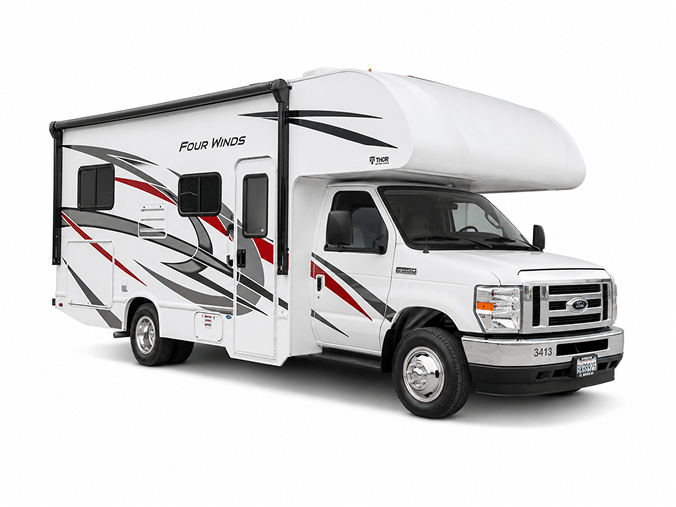
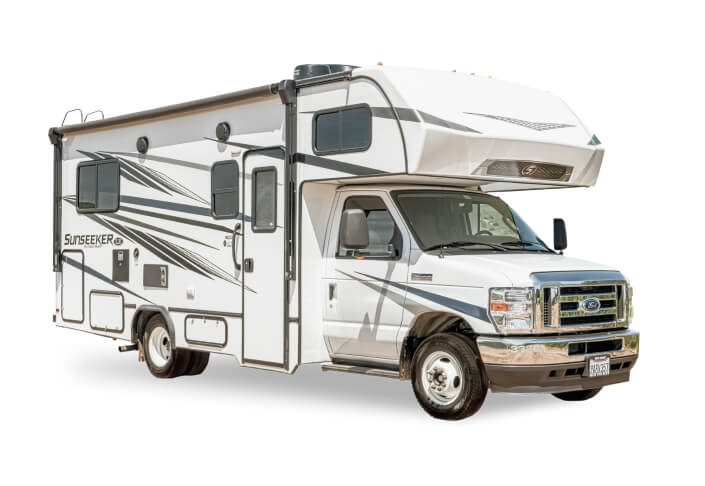
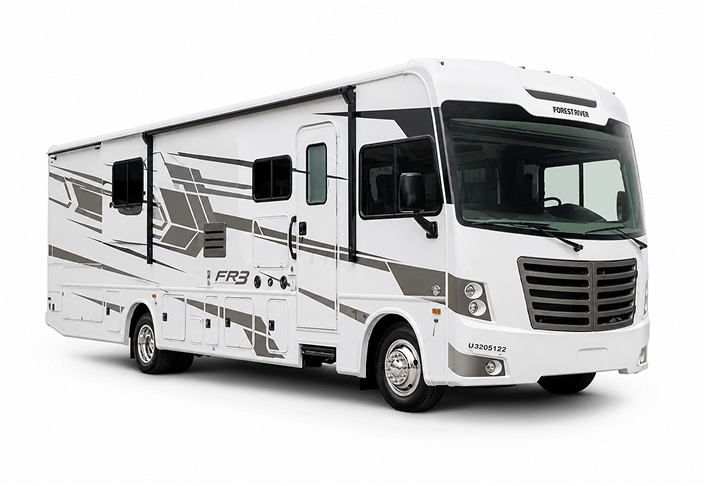
    The number of sleeping spaces in a listing says very little about comfort on the Playa. A converted dinette may count as a double bed, but the cabin also needs to hold water, clothing, food, bicycles, and gear. I focus on the space in which a group can actually live for more than a week, not the maximum stated capacity.
    RV type
    Comfortable on the Playa
    What to consider
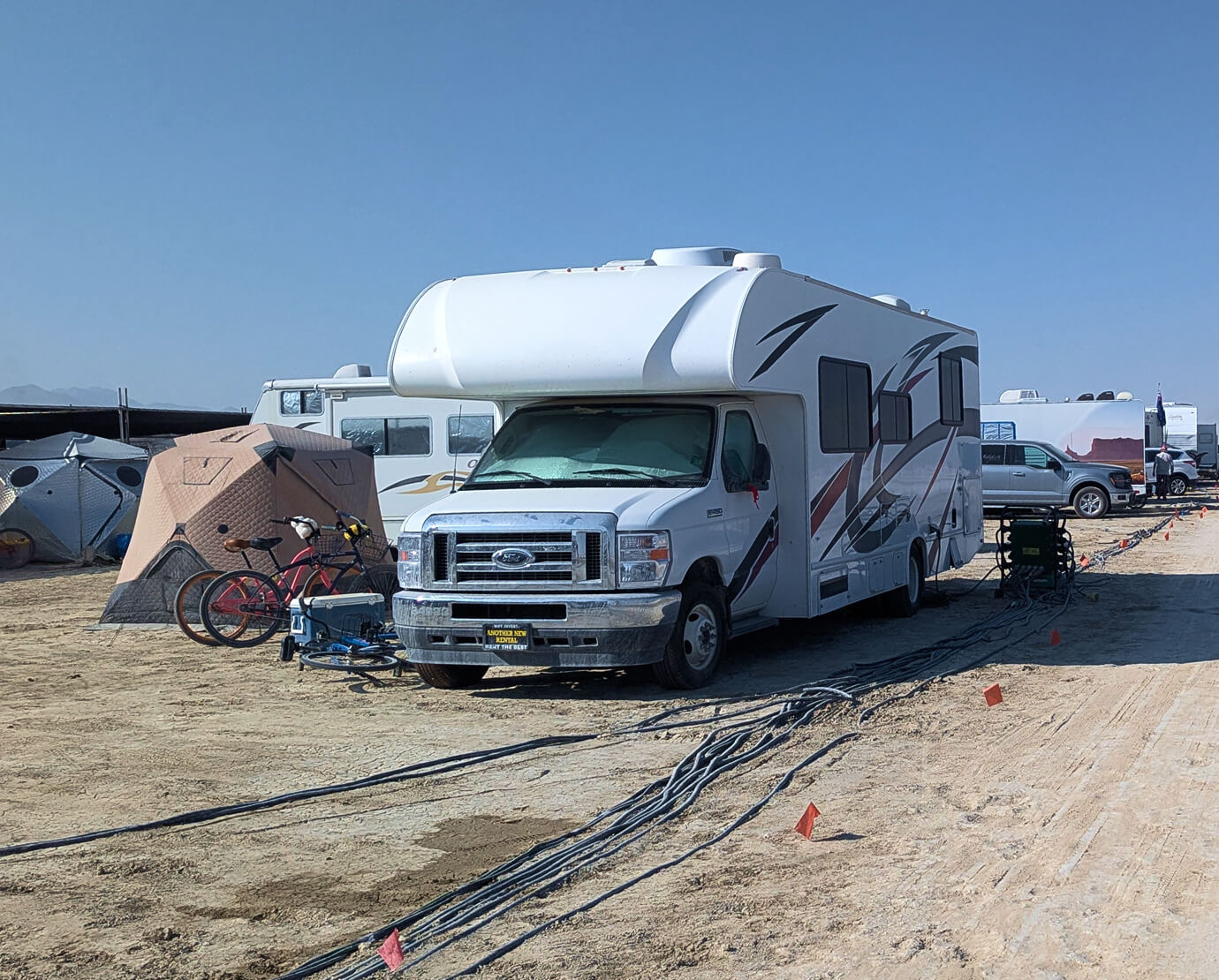
    Compact Class C motorhome
    Compact Class C, 20–23 ft
    2 people
    Three people leave little room for water and gear; easier to drive and park
    Mid-size Class C motorhome
    Mid-size Class C, 24–27 ft
    3 people
    A good balance of kitchen, beds, and drivability; cramped for a larger group
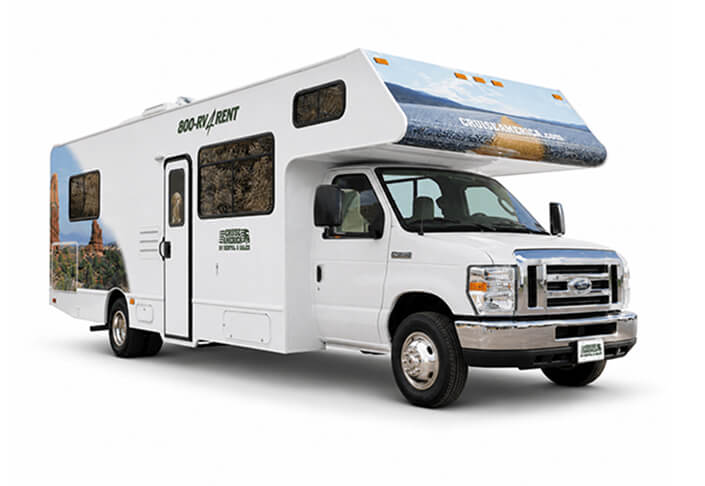
    Large Class C motorhome
    Large Class C, 28–30 ft
    4–6 people
    A practical choice for four or more; more storage but higher fuel use
    Class A motorhome
    Class A
    4–6 people
    More living space and larger tanks; more expensive and harder to drive
    Beyond price, I compare whether Burning Man is permitted; the security deposit; included mileage; generator allowance and charges; insurance and exclusions; prep fees; post-Playa cleaning rules; pickup and return hours; kitchen and linen kits; fresh, gray, and black tank capacities; roadside assistance; and its coverage area.

    Rental terms vary. Never carry the deposit, mileage allowance, or cleaning fee from one quote into another, even when the vehicles look identical.

    Step 3. Choose your pickup city and allow enough road time

    Reno is closest to Black Rock City, but RV supply is limited and prices during Burning Man week are usually high. San Francisco, Los Angeles, and Las Vegas all offer a broadly comparable range, with more RVs and more international flights.
    Reno
    Why choose it: The shortest drive: about three hours before the Gate line

    What to consider: Limited supply, high demand, and usually higher prices
    San Francisco
    Why choose it: A fairly direct route; many groups reach the Gate line in one long day

    What to consider: In the quotes we compare, similar RVs are often 20–30% more expensive here than in Los Angeles or Las Vegas; the gap changes
    Los Angeles
    Why choose it: A large choice of RVs and flights

    What to consider: A longer drive; multiple drivers can rotate, while a solo driver should plan a stop
    Las Vegas
    Why choose it: A large selection and often good prices

    What to consider: A long drive through hot areas; allow extra time and watch engine temperature
    In 2025, I saw a common pattern: pick up the RV on Saturday, buy supplies, reach the Gate line by evening or night, and wait for Gate to open. Groups leaving Los Angeles or Las Vegas often make the drive without an overnight stop by rotating drivers. If you have only one driver, stopping on the way is safer.

    Do not schedule a late arrival and RV pickup back to back. The handover takes time, and you still need to learn the vehicle, buy food and water, test the systems, and get used to its size. Always allow more time than your navigation app suggests: include pickup, shopping, rest stops, fuel, and a potentially hours-long Gate line.
    The final approach to Gate
    Stay on the official highways until the turn onto Gate Road, and do not take unpaved shortcuts. Navigation may suggest a 'shorter' route, but organizers specifically warn that Jungo Road is dangerous for passenger vehicles and RVs: multiple flat tires can leave you stranded beyond the reach of help.

    From Reno, the main route follows I-80 to Wadsworth, then State Route 447 through Gerlach and State Route 34 to the official 8-Mile entrance. Do not navigate to 3-Mile or 12-Mile: neither is an entrance to Burning Man.

    Fill the fuel tank, save the route offline, and keep water, food, and medication inside the RV. Make sure people can rest safely while the vehicle is stationary in the Gate line.

    Step 4. Prepare the RV for the Playa

    First, photograph the RV in daylight: exterior, roof, windows, interior, tires, generator, fuel level, mileage, and tank levels. Test the air conditioner, refrigerator, stove, water pump, toilet, and drains. Ask the rental staff to show you how the power sources switch and where the fuses are.

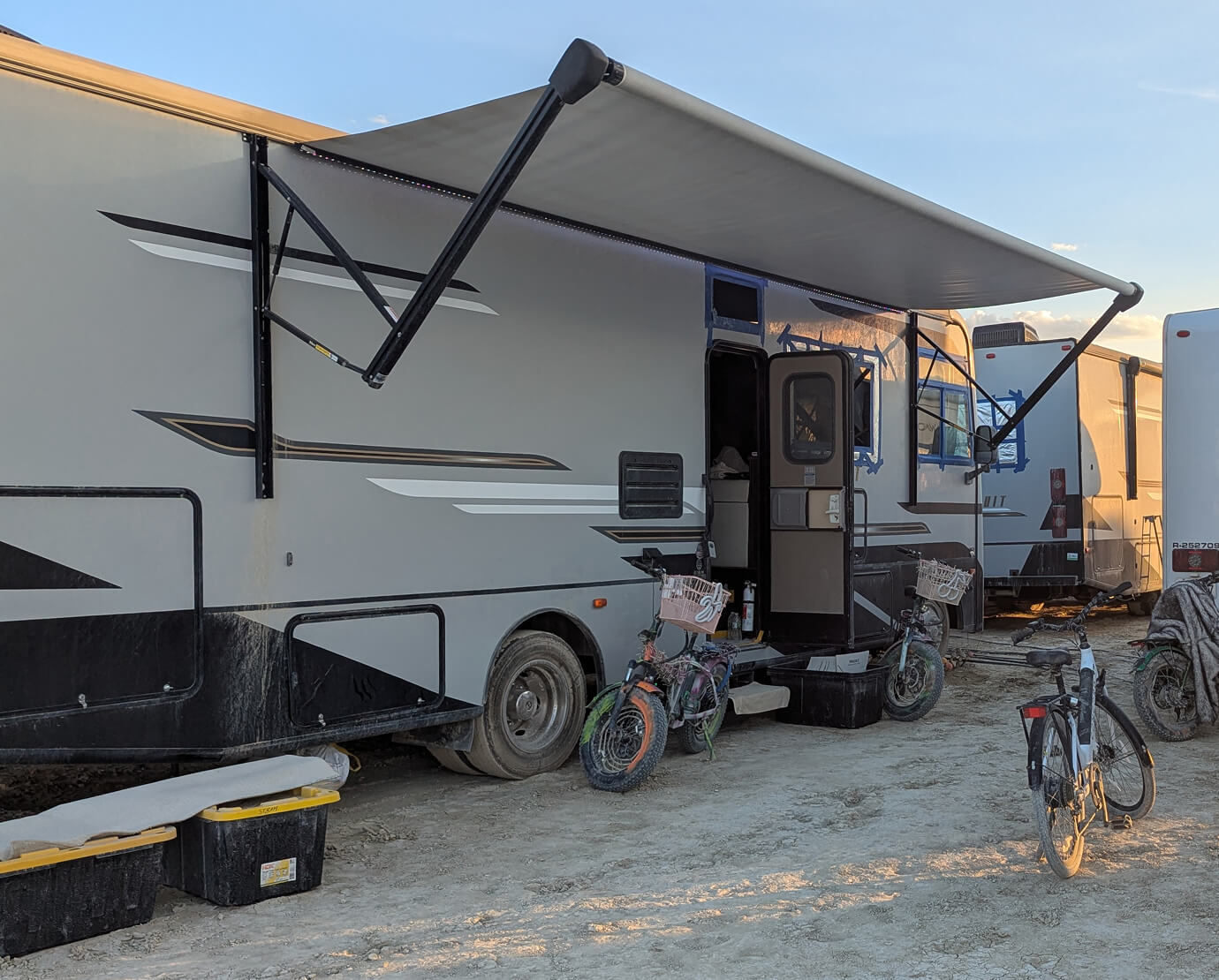
    You cannot completely dust-proof an RV. Playa dust is so fine that it comes in whenever the door opens; opening it once during a dust storm can coat the interior again. Floor paper, covers, and sealed containers do not make the RV airtight. They simply make cleanup easier.

    Here is what I would do:
    • Remove unnecessary packaging before leaving the city.
    • Cover the floor with heavy paper or removable flooring without blocking vents or access panels.
    • Cover furniture with sheets and keep clean clothes in sealed bags or containers.
    • Set up a dirty-shoe area, mat, and brush by the door.
    • Use painter's tape only where the rental company allows it. Never tape over vents or sensors.
    • Keep the built-in awning closed. Wind can damage it, and dust inside the mechanism is nearly impossible to remove.
    Taping every other gap is mostly a matter of personal reassurance; it will not stop the dust completely. I found it more useful to give each person a separate storage bin. When goggles, lights, chargers, and keys are not piled on one table, a small cabin remains livable.

    Step 5. Pack by purpose

    The official water guideline is 1.5 gallons, or about 5.7 liters, per person per day for all needs, including drinking and washing. Treat that as a baseline and add a reserve for the heat, the size of your group, and the way you cook.
    Need
    Essential
    Useful
    Dust and sun
    Sealed goggles, respirator, hat, sunscreen, lip balm
    Clear goggles for night, saline spray, eye drops
    Cold, night, and rain
    Warm layer, jacket, rain gear, closed shoes, gloves
    Spare socks, footwear for a wet Playa, blanket, earplugs
    Light and communication
    Headlamp, lights on your body and bicycle, batteries
    Radios, power bank, battery radio for BMIR 94.5, meeting point
    Water and food
    Personal bottle, water, electrolytes, simple food
    Insulated cup, containers, food that will not melt
    RV
    Tape, zip ties, multi-tool, gloves, RV-safe single-ply toilet paper; check the fire extinguisher
    Microfiber cloths, brush, storage bins, black-tank treatment
    Bicycle
    Working bicycle, lock, front and rear lights
    Pump, spare tube, repair kit, basket
    Trash
    Heavy-duty bags, small container for loose debris
    Sorting bags, portable ashtray
    Bring extra medication in its original packaging. Build the first-aid kit around your group: dressings, antiseptic, pain and allergy medication, electrolytes, and any regular prescriptions.

    Step 6. Plan for water, tanks, and power

    Fresh water
    There is no general fill station where you can top up an RV with potable water after arrival. Under the official rules, the trucks that pump wastewater tanks do not supply fresh water. Water delivery must be arranged in advance with a separate authorized provider. If your camp promises this service, ask who is organizing it and whether the order is confirmed.

    Some placed camps share infrastructure: breakfast, showers, a generator, or prearranged RV service. It varies by camp and usually comes with dues, shifts, and communal work. Do not read the word 'camp' as a promise of full service.
    Gray water and black water
    Gray water comes from sinks and showers; black water comes from the toilet. Neither may be dumped on the ground, even when the product used is labeled biodegradable.

    A placed camp may arrange RV pumping for the whole camp. In Open Camping, you usually need to flag down a truck marked 'RV servicing.' Other service trucks may be working for city infrastructure and may not serve private RVs.
    In 2025, I was able to arrange a pump-out for about $ 80-$ 100 per visit. That is not a future rate: price and availability change, and payment is usually cash. The service covers gray and black tanks, not potable water.

    Even a short shower uses fresh water and gray-tank capacity faster than you expect. On the first day, agree how many showers the group plans to take, what may go down the sink, and who will monitor the tank levels.

    The more people use the RV toilet, the faster the black tank fills and the greater the risk of odor. Many Burners use the city’s portable toilets as their main option and keep the RV toilet for nighttime or emergencies. On my own trip, I quickly learned that letting the whole group use it was a bad idea.
    Power and the generator
    The house battery usually powers 12-volt lighting, the water pump, and control systems. Standard 120-volt outlets work when the generator is running, the RV is connected to shore power, or an onboard inverter is switched on, if fitted. Air conditioning usually requires the generator or shore power.

    Every American RV I encountered on my trip or through Great RV Trip’s partners had a built-in generator drawing from the main fuel tank. You can expect this setup in most of our options, but I still recommend checking the specific vehicle at pickup.

    Before leaving the pickup location, find out:
    • how many generator hours are included and how excess use is charged;
    • whether the air conditioner works while parked;
    • where the generator exhaust points;
    • whether the smoke and carbon monoxide detectors work;
    • what noise rules apply in your camp.
    If you are driving when a dust storm hits, stop and wait whenever visibility drops to zero. People, bicycles, and structures may be close by even when you cannot see them.
    Fuel
    Fill up before the final drive: fuel is not sold to general participants on the Playa. Do not carry spare cans 'just in case.' If you genuinely need a reserve, check both Burning Man and rental-company rules in advance. Only approved containers and a separate safe storage area away from living space are acceptable.

    Placed camp or Open Camping

    Placed camp

    Placed camp

    What you get

    Community, a defined location, shared tasks, and whatever infrastructure the camp has organized

    What you are responsible for

    Dues, shifts, and participation; confirm the camp's water, power, and RV-service arrangements

    Open Camping

    Open Camping

    What you get

    More independence and flexibility

    What you are responsible for

    Water, power, cleaning, tanks, and every part of daily life; camp only on land not marked by blue survey flags

    Open Camping does not mean one RV sitting alone in an empty desert. Several vehicles can arrive together and create a small camp. Agree on parking, supplies, and responsibilities in advance, but never block roads or emergency access. Do not point generator exhaust toward neighbors' tents or doors.

    How not to get lost or stranded without communication

    Before your first trip away from camp:
    • photograph your camp address and write it down on paper;
    • agree on two meeting places and two meeting times;
    • mark your bicycle so you can identify it among hundreds of similar ones;
    • carry water, goggles, a dust mask, and a warm layer even on a short outing;
    • light yourself and your bicycle from every direction.
    If you need help, look for Black Rock Rangers. They are on duty around the clock and can direct you to the nearest medical station. If someone's life is in danger, immediately ask people nearby to summon emergency services.

    Leave, clean the RV, and return it

    The mass departure from Black Rock City is called Exodus. It can take many hours, so do not book a flight with a tight connection or schedule the RV return too closely. Keep water, food, and a sober driver available for the journey.

    If the RV becomes stuck after rain, do not dig it out or rock it back and forth unless organizers instruct you to do so. Traffic on a wet Playa is restricted to protect the surface.

    After leaving Black Rock City:
    1. If the tanks lasted through the Burn, empty them at an authorized RV dump station outside the Playa. This is usually cheaper than arranging a pump-out in Black Rock City.
    2. Take all trash with you and secure the bags properly.
    3. Remove dust first with a dry brush and microfiber cloth, then clean surfaces with approved products. Do not flood ventilation grilles or electrical components.
    4. Remove the interior coverings by folding the dust inward.
    5. Check the roof, awning, storage compartments, cab, and spaces beneath furniture.
    6. Refill fuel and propane, empty the tanks, and meet every other return requirement in your agreement.
    7. Photograph the clean RV, tank and fuel levels, mileage, and return location.
    Set aside a full day for proper cleaning. I would also avoid flying straight home after the Burn. Many people spend a few quiet days at Lake Tahoe: showering, sleeping, sitting by the water, and letting the experience settle. In 2025, I chose Tahoe as the transition between the Playa and everyday life. After a week of dust, noise, and constant interaction, that pause genuinely helped.

    One-minute check before departure

    • Tickets, Vehicle Pass, documents, and camp address are available offline.
    • The rental company has confirmed in writing that Burning Man travel is permitted.
    • You understand the mileage, generator, insurance, deposit, and cleaning terms.
    • You have budgeted at least 1.5 gallons (5.7 liters) of water per person per day, plus a reserve.
    • All RV systems have been tested and existing damage photographed.
    • Your route leads to the official 8-Mile entrance.
    • You have goggles, respirators, lights, rain gear, warm clothing, locks, and a first-aid kit.
    • Your schedule includes buffer time for the drive, Gate line, cleaning, and return.

    How we help with the trip

    At Great RV Trip, we compare options from major US rental companies and match an RV to your pickup city, group size, and trip requirements. I recommend looking beyond model and price to mileage, generator terms, insurance, deposit, fees, tank capacities, and post-Playa return rules.

    Send us your dates, pickup city, and group size. We will compare suitable options and show you the terms that matter for Burning Man from the start.
    Contact us. We will answer the questions, help with the choice
    We will answer your questions and help you choose

    Contact us

    GREAT RV TRIP Inc.

    Address:
    2093 PHILADELPHIA PIKE #7170
    CLAYMONT, DELAWARE 19703, USA

    © GREAT RV TRIP, 2017–2026
    Motorhome travel agency
    Let's go on an adventure!
    Manage cookies

    We use cookies and similar technologies to improve your browsing experience, analyze site traffic and serve targeted advertisements.

    For more details, read our Privacy & Data Protection Policy and Cookies Policy.
    Accept All