






Motorhome travel
Motorhome travel
The discount is valid for bookings over 10 days
Motorhome rental
Leave your contacts so we can contact you
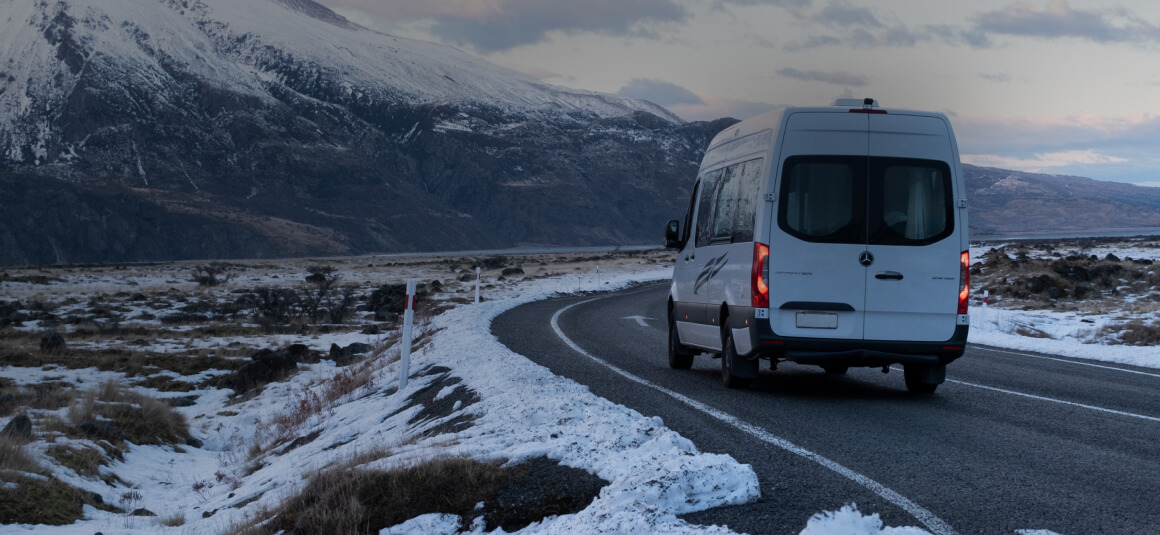
Introduction — appeal and challenges of winter motorhome travel
Winter caravanning is not just a "summer vacation with snow." It is a distinct type of leisure that is closer to an expedition than relaxed tourism. While in summer your main concern might be finding a scenic view and avoiding sunburn, in winter the priorities shift: how to preserve heat, where to refill propane on a Sunday evening, and how to prevent a water pump worth €300 from freezing.
In 2025, the demand for winter motorhome rental has grown by 25%. Travelers are heading to the Alps for powder snow, chasing the Northern Lights in Norway, or crossing the snowy Rocky Mountains. Modern RVs and campervans allow you to do this with the comfort of a city apartment (+22°C inside when it is -20°C outside). However, this is only possible if you understand the physics of a mobile home and know how to prepare.
Before their first trip, beginners often ask: should I rent a motorhome in winter? The answer is yes, provided you are ready for some discipline. In this guide, we will analyze technical nuances, explain the differences between rental practices in various regions, and provide a step-by-step plan to save your security deposit.
In 2025, the demand for winter motorhome rental has grown by 25%. Travelers are heading to the Alps for powder snow, chasing the Northern Lights in Norway, or crossing the snowy Rocky Mountains. Modern RVs and campervans allow you to do this with the comfort of a city apartment (+22°C inside when it is -20°C outside). However, this is only possible if you understand the physics of a mobile home and know how to prepare.
Before their first trip, beginners often ask: should I rent a motorhome in winter? The answer is yes, provided you are ready for some discipline. In this guide, we will analyze technical nuances, explain the differences between rental practices in various regions, and provide a step-by-step plan to save your security deposit.
What is a "winter" motorhome? Key differences
When searching for a winterized RV rental, it is crucial to understand that a standard summer camper is unsuitable for sub-zero temperatures. Thin walls (20–25 mm) do not retain heat, and the water tank is often suspended underneath the chassis. In freezing weather, water turns to ice within hours, rupturing the plastic tank, fittings, and pump.
A true winter motorhome (often marked in specifications as "Winterized" or "4-Season") differs constructively in three key aspects.
A true winter motorhome (often marked in specifications as "Winterized" or "4-Season") differs constructively in three key aspects.
Insulation and thermal protection
Manufacturers of winter vehicles (such as Scandinavian Kabe, German Hymer, or Slovenian Adria) use sandwich panels with a thickness of 35 to 45 mm containing XPS foam, which does not absorb moisture.
The main indicator of a true winter class is the Double Floor. This is a space 20–40 cm high between the chassis and the floor of the living module. It acts as a thermal buffer:
If there is no double floor, be prepared to wear warm shoes inside: the cold from the ground will penetrate through standard flooring.
The main indicator of a true winter class is the Double Floor. This is a space 20–40 cm high between the chassis and the floor of the living module. It acts as a thermal buffer:
- Heating ducts run here, warming the floor from below.
- Fresh and grey water tanks are hidden here, protected from freezing.
- You can walk barefoot inside even in severe frost.
If there is no double floor, be prepared to wear warm shoes inside: the cold from the ground will penetrate through standard flooring.
Types of heaters (gas, diesel, electric)
The heating system is the heart of a motorhome winter travel guide. Three types are commonly found in rentals:
Gas Air Heaters (Truma Combi)
The most common option (90% of the European market). It heats air and water in a boiler.
Diesel Air Heaters (Webasto / Eberspächer)
Draws fuel directly from the vehicle's tank.
Hydronic/Liquid Heaters (Alde)
Premium segment. Works like home radiators: hot antifreeze circulates through pipes along the walls and in the floor. Provides soft heat, does not dry the air, and operates silently. Rarely found in standard rentals due to high cost.
Gas Air Heaters (Truma Combi)
The most common option (90% of the European market). It heats air and water in a boiler.
- Pros: Quiet operation, quick cabin heating.
- Cons: High gas consumption. At -10°C, an 11 kg (22-liter) cylinder lasts for 2–3 days. You will need to constantly plan for cylinder exchange points.
Diesel Air Heaters (Webasto / Eberspächer)
Draws fuel directly from the vehicle's tank.
- Pros: High autonomy (diesel is available at any gas station).
- Cons: Noisier operation (fuel pump clicking and fan hum may disturb sleep) and higher electricity consumption from the leisure battery.
Hydronic/Liquid Heaters (Alde)
Premium segment. Works like home radiators: hot antifreeze circulates through pipes along the walls and in the floor. Provides soft heat, does not dry the air, and operates silently. Rarely found in standard rentals due to high cost.
Protecting the water system from freezing
Even in a winter motorhome, there is a risk of the system freezing. To avoid this, manufacturers (specifically Truma) install an emergency water dump valve — FrostControl.
How it works: This is a mechanical valve requiring no electricity. If the air temperature in the boiler compartment drops to approx. +3°C (for example, if you go for a walk and turn off the heating to save fuel), the valve automatically opens and drains all 100 liters of water from the tank and boiler onto the ground.
Practical tip: Do not attempt to block this valve. A burst boiler will cost €800–1200. Simply maintain heat inside at all times. This is the main answer to the question of how to protect the water system from freezing.
How it works: This is a mechanical valve requiring no electricity. If the air temperature in the boiler compartment drops to approx. +3°C (for example, if you go for a walk and turn off the heating to save fuel), the valve automatically opens and drains all 100 liters of water from the tank and boiler onto the ground.
Practical tip: Do not attempt to block this valve. A burst boiler will cost €800–1200. Simply maintain heat inside at all times. This is the main answer to the question of how to protect the water system from freezing.

Renting in winter: Europe vs North America
This is where beginners make the most critical mistake. The term "Winterized" in Europe and the USA means diametrically opposite things.
European standards (internal tanks, continuous heating)
European rental companies (McRent, Touring Cars, Indie Campers) typically provide vehicles ready for full living in winter.
- Comfort: You use the shower, toilet, and sink just as you would in summer. Tanks are located inside the heated contour.
- Condition: You are obligated to maintain a positive temperature in the cabin 24/7.
- Tires: In most Central and Northern European countries, vehicles come standard with winter tires or all-season tires marked with the 3PMSF symbol (Snowflake inside a mountain), complying with local laws.
Winterization in USA/Canada (water systems drained)
In North America (especially giants like Cruise America and El Monte), the approach is different. In northern states (New York, Denver, Seattle, Chicago), from October to April, vehicles are handed over in a Winterized status.
What this means for you:
This mode is called Dry Camping. You cook on gas and use bottled water for drinking and washing. The toilet is either not used or flushed manually with a mixture of water and automotive antifreeze (if the rental company permits the "Wet Method" for the toilet). The shower cannot be used.
Warning: If you violate the rule, fill the tank with water, and the system freezes — insurance (CDW/VIP) is voided. Repairs ($1,500–$5,000) are fully paid by the renter.
What this means for you:
- Water drained: All tanks and pipes are empty.
- Antifreeze: The system is filled with special pink non-toxic RV antifreeze.
- Prohibition: You are STRICTLY FORBIDDEN from filling the fresh water tank or connecting to City Water.
This mode is called Dry Camping. You cook on gas and use bottled water for drinking and washing. The toilet is either not used or flushed manually with a mixture of water and automotive antifreeze (if the rental company permits the "Wet Method" for the toilet). The shower cannot be used.
Warning: If you violate the rule, fill the tank with water, and the system freezes — insurance (CDW/VIP) is voided. Repairs ($1,500–$5,000) are fully paid by the renter.
The "Snowbird" Scenario: Many people rent a motorhome in winter in the cold North (e.g., New York) to drive to the warm South (Florida).
- While driving through the cold — the system is dry (RV winterization USA rules apply).
- Once you reach the stable warm zone (Florida, Texas) — you can flush the antifreeze, fill with water, and fully use the shower.
- Crucial: When returning north to drop off the vehicle, you must re-winterize the RV (drain water and fill with antifreeze) before entering the freezing temperature zone. Returning a vehicle with frozen water will result in fines and repair costs.
Canadian Exception: True Winter RVs
In Canada, specialized companies (e.g., CanaDream) offer "Maxi Motorhome" (MHA) class models that allow water use at temperatures down to -20°C. This is possible due to factory preparation:
- Reinforced insulation and double-glazed windows.
- Water tanks wrapped in heating pads or blown with warm air from a powerful furnace.
- Four auxiliary batteries to power the heating system autonomously.
- These units cost more but offer European-level comfort.
Comparison Table: Europe vs USA
The approach to winter operation in the Old and New Worlds differs radically.
Parameter | Europe (EU) | North America (USA / Canada) |
System Status | Ready for living. RV handed over with water. | Winterized. Water drained, pipes filled with antifreeze. |
Water Supply | Tanks inside heated contour. | Water use forbidden (Dry Camping) in cold zones. |
Shower & Toilet | Fully functional. | Shower forbidden. Toilet flushed manually (if allowed). Exception: MHA models in Canada. |
South-North Trip | No action required. | Requires self-de-winterization and re-winterization upon return. |
Heating | Strictly mandatory 24/7 (+5...+8°C min). | Not mandatory if there is no water in the system. |
Tires | Winter (3PMSF) mandatory in Alps/Scandinavia. | Usually All-Season (M+S). True winter tires are rare. |
Choosing a rental company
- In Europe: Look for companies that guarantee "Winter Tires" (not just Snow Chains). In Germany, Austria, and Scandinavia, this is the law.
- In USA/Canada: If a shower and toilet are essential, look for specialized Canadian MHA models or plan a route immediately to southern states to de-winterize the system on the second day. Alternatively, search for private owners on rental platforms who explicitly allow water use.
Cost of winter rental: myths and reality
Many tourists are attracted to winter travel by the low base price. Indeed, rental rates in January or February drop by 30–50% compared to the peak in July. However, the final estimate of the trip often approaches summer levels due to operating expenses.
Low season vs premium winter packages
The base rental rate looks attractive:
- Europe: A mid-class semi-integrated motorhome for 4 people costs €80–110 per day in winter. In summer, the same vehicle goes for €160–200.
- USA: Prices drop to $50–80 per day plus mileage. Summer rates start at $150.
Extra costs (heating fuel, winter campgrounds, insurance)
Three factors will eat into your budget: heating, electricity, and winter campground surcharges.
1. Gas (Propane/LPG)
This is the main expense item. In summer, an 11 kg cylinder lasts for 3–4 weeks. In winter, with a Truma Combi heater running around the clock, one cylinder runs out in 2–4 days. Exchanging a cylinder in Europe costs €25–35. Bottom line: Budget €150–200 just for gas for a two-week trip.
2. Electricity
In winter, you spend more time inside. Lights are on from 4:00 PM, gadgets are charging, and the heater fan consumes electricity non-stop. You will need to connect to 220V every 1–2 days. Winter campsites (especially in the Alps) often charge for electricity by the meter (€0.70 to €1.00 per kWh) rather than a flat rate. The cost per night can reach €5–10 just for energy.
3. Winter Campgrounds
Many budget sites close from October to April. To find an open site nearby with reviews, we recommend using the Park4Night app. Year-round complexes with heated infrastructure are open, but their maintenance is expensive, so the price per night is €35–60.
1. Gas (Propane/LPG)
This is the main expense item. In summer, an 11 kg cylinder lasts for 3–4 weeks. In winter, with a Truma Combi heater running around the clock, one cylinder runs out in 2–4 days. Exchanging a cylinder in Europe costs €25–35. Bottom line: Budget €150–200 just for gas for a two-week trip.
2. Electricity
In winter, you spend more time inside. Lights are on from 4:00 PM, gadgets are charging, and the heater fan consumes electricity non-stop. You will need to connect to 220V every 1–2 days. Winter campsites (especially in the Alps) often charge for electricity by the meter (€0.70 to €1.00 per kWh) rather than a flat rate. The cost per night can reach €5–10 just for energy.
3. Winter Campgrounds
Many budget sites close from October to April. To find an open site nearby with reviews, we recommend using the Park4Night app. Year-round complexes with heated infrastructure are open, but their maintenance is expensive, so the price per night is €35–60.

Where to go in winter: best motorhome routes
Christmas markets
A classic route for beginners: roads are cleared, infrastructure works, and a festive atmosphere is guaranteed.
- Europe (Alsace and Germany): The Frankfurt — Heidelberg — Strasbourg — Colmar route. This is the epicenter of European Christmas.
- USA (Northeast): If you're not afraid of the cold, New York and its surroundings offer incredible illuminations. Leavenworth, WA, is also popular — a Bavarian village in the heart of America.
- Specifics: Parking in city centers is packed. Use the P+R (Park and Ride) system on the outskirts or city campsites. In Germany, you will need a special environmental sticker (Umweltplakette).
Ski resorts
Caravanning in the mountains is well-developed. The main rule here is to book spots in advance and have snow chains.
- Alps (Italy, Austria): The Dolomites and Tyrol. The benchmark winter campsite is Caravan Park Sexten (Italy), offering 5-star service with heated outdoor pools.
- USA (Rocky Mountains): Colorado (Aspen, Vail) and Utah (Park City). American ski resorts are RV-friendly but require strict adherence to parking rules. Overnight stays in the lift parking lot are usually prohibited — look for the nearest RV Park with electrical hookups.
- Safety: Before heading into the mountains, be sure to check the avalanche danger level and weather forecasts.
Northern lights routes
An expedition format for experienced drivers on specially prepared vehicles.
- Scandinavia: Norway (Tromsø, Lofoten) and Lapland. Here you drive on packed ice (Snow Pack), so studded tires are mandatory. Daylight hours are very short — plan your drives for the morning.
- North America (Alaska and Canada): For those renting Canadian "winter" motorhomes (MHA). A trip to Yellowknife (Canada) or Fairbanks (Alaska) will give the best chances to see the Aurora but requires full autonomy and readiness for temperatures down to -30°C.
Wintering in the south
This is the ideal option for those who want to travel in winter but don't want to bother with winter tires, gas consumption, and pipe purging. Just drive to where it's warm!
- USA (Snowbirds): A classic escape from winter. Rent a motorhome in the north and drive down to Florida (Florida Keys), Arizona (Grand Canyon, Sedona), or California. In desert parks (Death Valley, Joshua Tree), it's a comfortable +20°C in winter, and you can fully use water and the shower. Remember the Dry Camping rule: while driving through the cold north, do not use water. When planning a route through national parks, be sure to check official road closure alerts on the NPS website, as many passes (e.g., Tioga Road in Yosemite) are closed all winter.
- Southern Europe: The coast of Spain (Andalusia) and Portugal (Algarve). Here, winters are mild, there is plenty of sun, and campsites are open year-round.
- Turkey: The Mediterranean coast (Antalya, Kaş, Fethiye). Excellent climate, delicious food, low parking prices, and complex winter equipment is simply not needed here.

Tips for operating a motorhome in cold
Living in a compact space with a temperature difference of 40 degrees (-20°C outside, +20°C inside) requires observing the laws of physics.
Fighting condensation
Moisture is the main enemy of winter caravanning. A family of 3 exhales and evaporates up to 5–7 liters of water per day. If you don't ventilate, water will run down the walls, soak the mattresses, and freeze on the windows.
- Open vents: Keep roof vents in micro-ventilation mode at all times. Heat loss is minimal, but moist air escapes.
- External insulation: Do not use internal curtains on the windshield — it isolates the glass from the cabin heat, and it instantly freezes over. Buy or rent an external thermal cover for the cabin. It shifts the dew point and leaves the glass dry and warm.
Fuel and gas choices
Gas in cylinders varies.
- Butane: Stops evaporating at around 0°C. Your stove and heater will simply go out, even if the cylinder is full of liquid.
- Propane: Works down to -42°C. In winter, always look for pure propane. Avoid blue Campingaz cylinders (often contain butane). Look for grey or red steel cylinders.
- Diesel: If you have a diesel motorhome, fill up with "winter" diesel (Winter Diesel), which is sold at local gas stations in cold regions, to prevent the fuel from gelling.
Power management and autonomy
In frost, battery chemical processes slow down. The leisure battery (usually AGM or GEL) loses up to 30–50% of its capacity.
- Do not leave the motorhome unplugged from 220V for more than 24 hours.
- If the voltage drops below 12.0V, the protection system may shut down the heater. You will be left without heat at night.
- Take a long cable (25–40 meters) and a set of CEE adapters (blue plug) with you, as the socket at the campsite may be far away or buried in a snowbank.
Driving and parking in winter
- Braking distance: An RV weighs 3.5 tons. On ice, its inertia is enormous. Keep a distance 3 times greater than usual.
- Parking: Do not use the handbrake (parking brake) overnight in severe frost. The pads can freeze to the discs. Use gear (for manual transmission) or Parking mode (for automatic transmission) and wheel chocks.
- Roof clearing: Before setting off, be sure to clear snow from the roof of the motorhome. An ice crust flying off on the highway into the windshield of a car behind you creates an emergency situation and threatens a large fine.
Checklist: questions to ask the rental company
Winter rental requires a more meticulous vehicle pickup. Ask the manager these questions before signing the handover act. It is better to record the answers in the Check-out form to avoid disputes.
- Tires. "What specific tires are installed?" Verify the "Alpine symbol" (3PMSF) on the sidewall. In Germany and Austria, simple M+S marking is no longer legally sufficient since October 2024.
- Snow chains. "Are chains included and do they fit?" Ask for a demonstration of how to install them. Figuring this out at night in a blizzard is dangerous.
- Waste water tank. "Is the grey water tank insulated/heated?" If not, the drain valve will freeze. You will need to drive with the valve open and a bucket underneath (if allowed).
- Gas. "Is the gas 100% propane?" Avoid butane mixtures as they fail at freezing temperatures.
- Fridge covers. "Where are the winter covers for the external vents?" These are needed for the fridge to work correctly below +5°C.
- Insurance. "Does the policy cover underbody damage?" Standard CDW often excludes this, but ice damage is a high risk in winter.
Winter Departure Checklist
Ensure you have checked all these items before leaving the rental station.
1. Wheels & Safety
- Tires: 3PMSF marking verified (Europe) or studded tires (Scandinavia).
- Snow Chains: Kit located in trunk, size matches wheels.
- Roadside Assistance: Emergency number saved in phone and written on paper.
2. Heat & Insulation
- Heating: System (Truma/Webasto) tested and heating all zones.
- Gas: At least 2 full cylinders of 100% Propane.
- Windows: External Thermal Cover for the cabin available.
- Drafts: Duct tape available for emergency sealing.
3. Water & Systems
- FrostControl: Valve located and closed (reset), system airtight.
- Waste Tank: Heater verified. If none — valve open, bucket ready.
- Power: Long cable (25m+) and CEE adapter included.
4. Documents & Contacts
- Insurance: Covers underbody/roof damage (crucial for ice ruts).
- Contact: Direct manager number and procedure for frozen systems recorded.
- Route: Mountain passes and weather (avalanche risk) checked.
Conclusion — summary and final tips
Winter motorhome rental is a compromise between comfort and adventure. It is not the cheapest way to travel (gas and campsites will eat up savings), nor the simplest.
But in return, you get a unique experience: morning in a warm house in the middle of a snowy forest, living in the front row at a ski slope, and the freedom to chase the weather.
If you are ready to captain this "spaceship," start preparing in advance. Choose reliable equipment on GreatRVtrip.com, checking for "Winter Pack" availability, and do not skimp on gas.
But in return, you get a unique experience: morning in a warm house in the middle of a snowy forest, living in the front row at a ski slope, and the freedom to chase the weather.
If you are ready to captain this "spaceship," start preparing in advance. Choose reliable equipment on GreatRVtrip.com, checking for "Winter Pack" availability, and do not skimp on gas.
Your next step

Popular questions
For most motorhomes up to 3.5 tons (including alcove models), a standard category 'B' license is sufficient. Category 'C' is required only for heavy premium liners or large Class A motorhomes (USA).
In Europe, tanks are in a heated area — water won't freeze with the heater on. In the USA and Canada (North), vehicles are rented out winterized (no water), and plumbing use is forbidden until reaching warm states.
In Europe €80–120/day, in the USA $50–90. This is 30–50% cheaper than summer, but consider high costs for heating gas and paid campsites.
A standard 11 kg cylinder at -10°C lasts for 2–3 days of continuous heating. You need at least 2–3 full cylinders for a week.
In winter, it is difficult and often prohibited. Batteries discharge quickly in the cold (need 220V), and wild spots are often snowed in. It is better to choose official campsites.
Yes, a set is mandatory. In the Alps, police often require chains on passes during snowfall, even with winter tires.

E-mail: info@greatrvtrip.com




Contact us. We will answer the questions, help with the choice
We will answer your questions and help you choose
Contact us
© GREAT RV TRIP, 2017–2025
Travel agency on motorhomes. Let's go on an adventure!
Privacy Policy
Cookies Policy
Terms
Travel agency on motorhomes. Let's go on an adventure!
Privacy Policy
Cookies Policy
Terms
Manage cookies
We use cookies and similar technologies to improve your browsing experience, analyze site traffic and serve targeted advertisements.
For more details, read our Privacy & Data Protection Policy and Cookies Policy.
We use cookies and similar technologies to improve your browsing experience, analyze site traffic and serve targeted advertisements.
For more details, read our Privacy & Data Protection Policy and Cookies Policy.